

I Am the Daily Deal
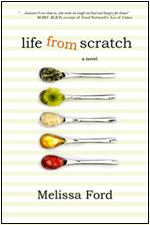
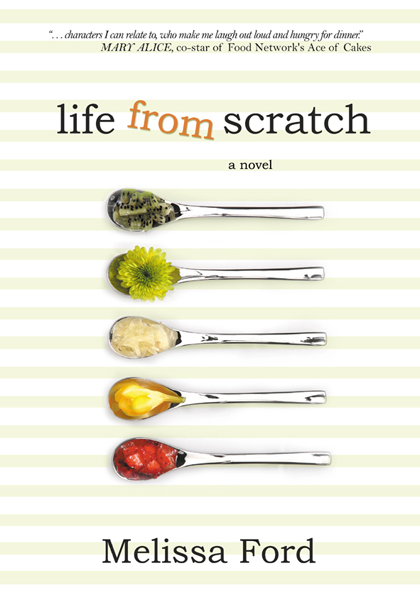
My book, Life from Scratch, was chosen as the Daily Deal today on Amazon. (I wanted to rename the twins Amazon I and Amazon II in gratitude to the site for all of their help in getting books into reader’s hands, but for some reason, the kids balked). For 24 hours — from midnight to midnight (Pacific time) — they are offering the book at a discount.
I’ve spent days watching each Daily Deal pop up, and it feels a little bit like the trophy ceremony the Wolvog just had when they ended spring baseball season. Each child stepped up and the coach spoke about him for a moment, and we applauded each kid not to unnaturally inflate their self-esteem, but because hard work should be acknowledged. For some kids, it’s what makes them try again vs. walk away; knowing that someone out there celebrates their work.
Being chosen by Amazon is similar. Authors need those accolades sometimes in order to show up and try again. If the book hadn’t been well-received, would I have written the sequel? Perhaps not. And the saddest thing of all is that there are written works which are well-liked and yet no one bothers to tell the author — blog or book — so the person stops writing, never knowing their work was appreciated. When was the last time you took the time to write an Amazon review for a book? When was the last time you left a comment on a post, or wrote a whole blog post about something you read on someone else’s blog that you love (with a link back, of course)? The fact is that if we don’t tell people, they don’t know. And if they don’t know, they may not continue to do the hard work. They may not see the worth in dedicating their time to the process. And even if you see that other people have told them, tell them anyway, because you never know what that person’s threshold is, what their personal tipping point is to make them feel as if their work has been appreciated.
So thank you, Amazon. Thank you to everyone who wrote a review for Life from Scratch — your thoughts were very much appreciated (and hey, it’s not too late to write one now!). Thank you to everyone who read it and let me know.
And now the favour I’m asking of you. If you’ve ever thought to yourself, “damn, I really like Mel, and I’d like her to know that she’s appreciated,” here’s how you can do it: spread word of the Daily Deal today. As in, right now. Tweet about it, Facebook it, pin it on Pinterest (I even put in an image below for you), Stumble this post, email the news to people, blog about it, send out a link to this blog post, henna tattoo it across your face (it’s not worth a permanent tattoo since the deal is only good for today), employ a sky writer, shout it out to random people at the grocery store.
And most of all, don’t wait to do this later since the Amazon deal is only for these 24 hours. Run, don’t walk, to your preferred electronic device (wait… you must already be at your preferred electronic device if you’re reading this). Though, yes, feel free if you’re reading this after July 5th to still send out a link about the book. The publicity never hurts and is always very much appreciated.
One last enormous thank you in advance to everyone who helps spread word, who buys a copy of the book for a friend (or yourself), and who gave me the energy to write the sequel.*
* Yes, a draft is done. More news coming soon when I have news to give.
July 5, 2012 21 Comments
The Morality of IVF, the Will to Live, and the Empathy We’re Waiting For
I recently read Megan Garber’s piece in the Atlantic about the history of IVF, how people perceived it back when Louise Brown was born vs. today. While I was alive when Louise was born, I certainly wasn’t cognizant of the general public’s perception of IVF. I don’t really remember the first time I heard the term, but I do recall being in late elementary school or early middle school and having someone tell me that a child I had met was a “test tube baby.” I imagined a baby squished up in a test tube — one of those long skinny ones — with her chubby face pressed up against the glass. I thought they grew the whole baby in there and then… transferred the somewhat full-grown baby to the woman’s belly. Much in the same way you transfer a tiny potted plant into the garden outside once it outgrows its container.
The article explores the famous James Watson (as in the man who discovered the structure of DNA) quote about IVF: “All hell will break loose, politically and morally, all over the world.” The public was horrified. The science community was horrified. The religious world was horrified. And then in the middle of that storm, you have Lesley Brown who just wanted to be a mother after nine years of trying. Who wanted to be a mother and experience pregnancy badly enough that she would volunteer to be the guinea pig for IVF.
I know there are complicated ethical issues with ART. I know that we can’t just plow ahead with possibilities just because they’re possibilities. There are consequences to our actions, and ethics always needs to be at the forefront in science.
But I can’t help but think about the emotional side of infertility; the emotions Lesley Brown must have gone through in those nine years. How they fueled her decision to put herself not only in a risky situation, but to do it in the limelight. To know that nothing would be private; the protocol made public, debated, discussed, condemned. Can you imagine being Lesley Brown and reading these articles in the newspaper, knowing full well that those people writing the articles have never felt the suffocation that comes from not being able to conceive on your own?
This is coded in our biology, much like our will to live. And we can understand the strength of the will to live, that people will go to extreme measures to live, will gain superhuman strength in the face of danger due to the hormones that are released in our bodies. But for some reason, until people are faced with not being able to reproduce, they can’t really fathom the same intensity exists, the same type of measures will be taken, that we’ll become superhuman in our reaction — possibly due to hormonal reactions. We applaud people for their will to live. We condemn people for their will to procreate.
There are some people with a fairly weak will to live (just as there are people with a weaker will to reproduce — not everyone wants children — and some with a stronger will to reproduce), but for people with a strong will to live, you know what it feels like when you jump into water and fall too deep below the surface and fight your way to the top, your lungs feeling as if they’ll burst. Your brain can’t slow down; it is racing trying to find a Plan B and a Plan C and a Plan D because you. have. to. live. And sometimes your body goes on autopilot and guides you to safety. Thrashing and buckling, you break the surface and gasp in air. We can understand that, no?
Well, imagine all of that in the emotional sense and you have infertility.
Infertility feels like someone has their fingers around your neck and they’re strangling you. And you wonder how the hell you got yourself in this situation and how the hell you’re going to get yourself out.
So while I know the rest of the world looked at the morality of IVF back when Lesley Brown volunteered herself for that first, fateful transfer, and I understand the importance of ethical guidelines which are there to protect every member of society, I also looked at the Atlantic article through the lens of a woman who was willing to do whatever it took to be a parent. Which is why this quote moved me to tears:
While on bed rest, in a public hospital, during her pregnancy, Brown had to be moved from her room in response to a bomb threat (later proved a hoax). Later, she, John, and Louise had to move to a new home — one with a private backyard — so that she could take Louise outside without encountering camped-out reporters. As Louise, now 34 and a mother to her own son, put it: “Mum was a very quiet and private person who ended up in the world spotlight because she wanted a family so much.”
Because so many of us could have been Lesley Brown if we had been born years earlier. So many of us would have been the millions of women who simply couldn’t conceive and needed to live with that fact. And yes, while IVF has become normalized in a way, infertility is still something whispered rather than spoken about in matter-of-fact tones. Hurtful assumptions still exist — peruse the comment section of any New York Times article on infertility to see that. I don’t know how far we’ve come since I wasn’t cognizant of IVF when I was a preschooler, but I couldn’t disagree more with the hopeful ending of the article of how accepted IVF is now in 2012:
In the broader culture, though, IVF has won the best thing that a controversial technology can: widespread acceptance. Just a year after Lesley Brown gave birth to her first daughter, cultural normalization seemed a foregone conclusion.
THAT is what I’m still waiting for. Widespread acceptance. Cultural normalization. Empathy. Understanding. Open-mindedness.
July 3, 2012 31 Comments
The Blog is Dead; Long Live the Blog
Every few months, someone will write the obituary of the blog. I don’t mean their blog. I mean blogging in general. Blogging’s death is practically cat-like; it has died at least nine times since I started blogging in 2006.
I get why entertainment magazines keep half-written obits on celebrities so they can get them up quickly when the time comes, but entertainment magazines don’t post those obits when the celebrity is still alive and kicking. Can you imagine opening up a newspaper and seeing a long, thought-provoking obituary talking about your death as well as all the high points of your life that you read while you sip a cup of morning coffee? Post the blogging obituary when the last blogging body is in the morgue, not while our fingers are still typing.
According to WordPress.com, as of last year, 100,000 new blogs were started daily. While there will naturally be attrition of individual blogs, blogging as a whole is clearly still a popular medium.
With the blogging obituary, we usually get the cause of death too; prematurely, I might add since blogs aren’t dead. Sometimes the cause of death is other forms of social media such as Twitter or Facebook. Other times, pictures murder words and leave its decomposing corpse in the feed reader. And other reasons are given as well: they’re too long to read, too much work to produce, too slow to process. Blogs, for instance, according to USAToday, are slogs. Take a knife to the blog’s proverbial throat.
You may have guessed that I don’t believe blogging is dead; or, more accurately, I just don’t care.

As I said last week on my sixth blogoversary, I’ve been writing a personal blog for six years. Which means that I’ve not only been there for the birth of most of these social media sites that are murdering blogging, but I’ve seen bloggers come and go, memes circle round and round, and blog projects go viral and die. I feel a little bit like a cow, chewing her cud, only the cud is composed of blog posts. I’m just hanging out, watching the field change as people bounce across it, but the point is that even if the field changes, the world still needs cows.
We need milk, meat, or leather (and in this blogging analogy, words or ideas) and we usually need them in quantities larger than 140 characters. It’s a big field and there is room for the slow-moving blogosphere cows and the nimble rabbits bouncing around Twitter and the prancing horses boasting about their family on Facebook, in the same way that magazines, newspapers, and books all deliver the written world and exist together at the exact same time. And come to think of it, those three items are still kicking around too despite their demise predicted dozens of times in the last few years, mostly by people who would benefit from the downfall of the traditional publishing world.
Listen, no one maintains the same level of health and robustness their entire life, but that doesn’t mean that they aren’t still living, still well enough to be part of society. Let’s not put grandma on ice flow, right? Are blogs as shiny and fat as they were in their prime? No, but that doesn’t mean the blog’s new, mature body and mind isn’t just as valid, just as interesting.
Plus, these obituaries are written based on assumptions. That USA Today article is looking at a study on company blogs and transfers those findings to personal blogs. Whereas sites such as Technorati and BlogHer has been conducting the same surveys on social media usage for years in order to get a real sense of social media trends. Technorati posts their State of the Blogosphere yearly, and BlogHer’s findings from over 2000 participants found 98% of BlogHer women (and 81% of the general US population) trust information from blogs over information from Facebook or Twitter. As their survey found:
Blog readers prefer blogs for information. Facebook is our source for play and friendship.
So, fine, predict the death of blogs all you want, but I’m still going to be over here writing mine. Blogging, for me, is still an active, vibrant medium that challenges me to think, introduces me to new ideas, and strengthens my understanding of other people. And I just can’t get that from a Twitter feed or Facebook status. It’s not just the amount of space allotted to pass along ideas; it’s also the format of popular social media sites that doesn’t give people time to ruminate on the big thoughts that are contained in the words. And blogging does. I can chew over blogs… until the cows come home.
Do you think there will ever be a day when you won’t write or read blogs if the technology to support them is still around?
Cross-posted with BlogHer.
Photo Credit: Srboisvert via Flickr
July 2, 2012 18 Comments
MFA Sunday School (Twelve: Getting Past Writer’s Block)
 Welcome to MFA Sunday School, a once-a-week, free, online writing workshop. MFA Sunday School posts are uploaded on Sunday mornings, though you can read them or participate any time — the comment section is always open for people to post a link to their work or ask a question. You can subscribe to blog posts via the RSS feed, or look for them under the category heading “MFA Sunday School.” If this is your first time in “class,” you may want to jump back to the first post in the series in order to understand how things work, or peruse all of the past lessons as well as a glossary of terms by reading the MFA Sunday School Glossary and Course Archives.
Everyone goes through it: writer’s block. It almost sounds like a disease, and it certainly feels like a disease; something akin to the verbal flu where your head is stuffy with unspoken thoughts and your eyes are runny from staring at the computer screen. Wanting to write and not being able to write sucks. Needing that connection that comes after you hit publish on a post but unable to come up with a single post idea sucks too.
I think there are two sides to writer’s block: (1) there are the times that you know what you have to write and you can’t find the words to say what you need to say. And then (2) the times when you can’t find your entrance, your topic, your next great idea. Both are frustrating, but I think they need to be treated differently. In one case, you need a decongestant and in the other, you need an expectorant, and the mistake is taking the wrong medicine or bombing everything to hell with NyQuil.
Yes, NyQuil helps if really have all those cold symptoms, but too many times, we take it because we’re desperate for relief (and sleep). Of course, if you believe people like my doctor, treating colds this way does more damage than good in the long run even if it works in the short term. Treating a single symptom takes more time, takes long-term maintenance, but the tradeoff is that you rarely if ever get a cold because you have a strong immune system. Treating symptoms you don’t even have takes less time and doesn’t require maintenance, but you end up missing more of life because your immune system is shot to hell.
Now apply all of this to writing.
First, let’s treat Problem #1 — writing stuffiness. The words are in your brain, the ideas are there, you just can’t commit them to paragraphs. You’re spending a lot of time writing and then erasing. Or you can technically write, but it’s all coming out as garbage. Or you think it’s garbage, but think of it more like releasing excess mucous that it getting you closer to easier breathing.
Thomas Edison said: “I have not failed 700 times. I have not failed once. I have succeeded in proving that those 700 ways will not work. When I have eliminated the ways that will not work, I will find the way that will work.”* And that’s sort of how I feel about that type of writing. It doesn’t work and you know it doesn’t work, but that doesn’t mean it doesn’t have worth. It’s just the garbage you need to write in order to get to the perfect draft. So the perfect version isn’t coming on your timetable; sorry about that. But if you reframe the way you look at this time period, you’ll embrace it (even if you’re frustrated by it) because you know it’s one of those things you need to go through in order to get to that gorgeous, juicy writing.
Doctor’s orders: just keep writing. Don’t delete. Save all these drafts because you can sometimes mine from them later. When you really get stuck, open a new document and without bringing anything over from the document you were working on, start trying to write the piece again utilizing only your memory. When that fails, change something drastic: make your main character a boy instead of a girl, change the setting, or write the entire post in rhyme. Sometimes that can knock loose the right words with a big change.
Those drafts that go unused aren’t throwaway, they’re all part of the process to bring you to the words you want. Reframe how you think about writer’s block and realize that sometimes you need to go through these periods to record all the ways it won’t work in order to find how the piece will work.
Problem #2 — brain thickness. You can’t seem to get ideas to penetrate your brain or ideas to start flowing, so the desire to write sits in your brain like thick, immobile mucous.
These are those times when you sit and stare at the screen, wishing you knew how to start that young adult novel you’ve sort of dreamed up. Or you know you want to write, but you can’t think of anything to write about. Or you need to turn in a 500-word article by Thursday, but you have no idea how to get it started.
Doctor’s orders: move away from the computer but not too far away. Read a book in the same vein to get you in the mood (in other words, if you’re going to write a young adult novel, read some good young adult fiction). Go watch a movie. Go on a walk. Skip over to a museum that you’ve been wanting to explore (but take a notebook with you — or better yet, your laptop). Many times, just being ensconced in a related activity jars your brain to start the writing project you were wasting time not starting when you were just staring at the computer. But even if it doesn’t have an instantaneous effect, don’t feel guilty about using this time or think of it as time you’re not working. All of these moments are part of the process as well.
It is sometimes difficult for me to place reading a book over working on a chapter because at the end of working on a chapter, I can see progress. Whereas reading the book may be enjoyable, but I can’t clearly see what I accomplished that day. Still, taking in information and experiencing life and art feeds our writing. It’s the fuel you put in your writing tank that works the engine. At some point, you need to shut out the external distractions in order to get writing done, but when you’re feeling stuffy, it’s not the right time. Thin the mental mucous with a related-activity expectorant.
Your immune system: Daily writing goes a long way to helping keep you in a project so you don’t always feel like you need to get back into it. Follow these guidelines to ensure that you write a little bit every day. Think of it as your literary vitamin. During times when you absolutely can’t write, make sure you read something that could be construed as doing research. That way, you’ll continue to think about your project even while you’re away from it.
Homework: none this week. Just keep writing.
* It may actually be a myth that he said it, but it works well here.
July 1, 2012 3 Comments
That Sound Was My Head Exploding Again (or Why Sites Need to Take Responsibility For What They Post)
We still don’t have power in 2/3rds of homes in our area, though plenty of businesses have gotten power again and streets have been cleared. So since I have time on my hands and the ability to recharge this battery, you get my thoughts on the Carla Bruni post on The Stir. And yes, I am falling right into their link-bait trap, but I’m cranky from a perfect storm of shittiness beyond the power outage, and I think this post is the best example I’ve seen lately of the ABSOLUTE LACK OF RESPONSIBILITY of online sites. Because yes, if you’re positioning yourself to be a major site of news for women, you should probably take a little responsibility of what you put on the Web. But that is a sentiment that extends to every single site on the Internet — from the personal blogger to online magazine sites such as The Stir or Jezebel or Huffington Post.
Especially starting a post like this:
I’m going to get a lot of flack for saying this, but that’s okay. I think there is a big infertility myth that goes on with women over 35.
The bold is their emphasis, not mine. Anyone who begins by saying they are going to get flack pretty much puts up a flashing neon sign that says, “I am so desperate for page views that I’m going to put up something really crazy/offensive/off-putting in order to get people to click over and read it. Look at meeeeeeeeeeeeeeeeeeeeeeee.” And yes, as I said, I did fall into their link-bait trap by posting this, but unfortunately, there was no other way to point out this stupidity without giving you the opportunity to see it in all its glory.
She then goes on to hem and haw about how there’s a chance it may be harder to get pregnant and there may be more risks, and yet still states, “I believe it’s easier for women over 35 — or even 40 — to get pregnant than they think it is.” So science has it wrong, but Kiri Blakeley who writes about celebrities for publications such as Forbes and The Stir knows better than doctors.
And her evidence? She like totally doesn’t think that Carla Bruni did fertility treatments (Valley-girl emphasis mine because… come on):
Did Carla use fertility drugs or IVF to get pregnant at 44? It’s certainly possible — but I don’t think so. Here is why. Carla gave birth to her last child, daughter Giulia, only nine months ago! Plus, it’s reported that she suffers from postpartum depression. And since her husband lost the election, she wants to return to her former career as a pop singer.
Additionally, Carla doesn’t sound like she enjoyed pregnancy too much.
Super sleuth Kiri Blakeley* — think of her like the female Shaggy — sniffed out the situation and realized (without needing to resort to using Scooby snacks) that it was not likely that she used any assistance at 44 because apparently you can only conceive naturally if you just gave birth recently. Additionally, postpartum depression precludes the ability to utilize treatments. Did you know that? PPD means you can’t do treatments; you need to conceive naturally. And then there’s the fact that Bruni wants to be a pop singer. Pop singers absolutely never take hormones.
But not only that — she deduces that just because Carla Bruni conceived naturally, it means most women who are 44 can conceive on their own too.
And she knows the culprit, who would have gotten away with it if not for those pesky kids: fertility drug companies.
So why would there be an “infertility myth”? Sure, much of it is NOT a myth. Your chances of getting pregnant do decrease with age. But they don’t necessarily decrease to zero — or even decrease to the point where drugs are needed. Let’s think about how many millions of dollars the fertility industry makes — and whether or not it might be to its advantage to perpetuate difficulties beyond what might actually exist.
Or clinics. Or your friendly neighbourhood RE. Wait! It’s the whole ding dong industry!
I understand that The Stir wants page views. Most sites want page views, so I don’t fault them for wanting them. I fault them for how they’re trying to get them. Because yes, it matters what you put out there. It matters what I put on my personal blog, and it sure as hell matters what you put on an online magazine site such as The Stir. It matters the exact same amount in both places; people need to take responsibility for what they put out into the universe.
* Her bio reads: “I like to tell it like it is, almost as much as I like cats. I know a lot about celebrities and nothing about my neighbors.” Really, is this a person you want doling out medical advice or talking about fertility drug conspiracy theories? Seriously, The Stir?
Apologies to Kiri Blakely: I’m sure you’re a lovely person, and I’m sure you write celebrity pieces well. But your editor should have never run this post. And if you want to read up on the subject of age-related fertility, I’d suggest you start at ACOG — the American Congress of Obstetricians and Gynecologists. No one has ever said zero, but they have recorded deeply reduced fertility after 35.
June 30, 2012 31 Comments