

Why Does This Beyonce Quote Rub Me the Wrong Way?*
I was reading the People magazine feed and clicked on a story about Beyonce. As always, I openly admit that I read People magazine like the Bible. How else am I supposed to keep my stranglehold on the zeitgeist?
Of course, I like a Beyonce song as much as the next girl, but the headline stated “Beyoncé Discusses Miscarriage & Slams Surrogacy Rumors” so my interest was doubly piqued.
What I thought the title meant was that a tabloid had started a rumour that she was once again expecting a child but this time it was via a surrogate. I didn’t know if she would say that the rumours weren’t true because she wasn’t ready yet to try again because Blue Ivy is only one (isn’t she one?) and they want more time alone with her. Or maybe they’re not ready to talk about their surrogacy journey but reporters are pushing her private life into the spotlight before she’s ready.
But that’s not what it was:
After going public with her pregnancy at the MTV Video Music Awards, she soon faces rumors that she had used a gestational surrogate.
“A stupid rumor, the most ridiculous rumor I’ve ever had about me,” she says. “To think that I would be that vain …”
She continues, saying that giving birth is “the most powerful thing you can ever do in your life.”
Am I thrown off by the word “vain?” I don’t normally equate gestational surrogacy with vanity.
Is it because she has such a narrow view of family building? It’s only giving birth that makes a person powerful? Birth is such a finite event. Does it really determine a person’s worth? I would argue that parenting the child for 18 years regardless of how that child came into your life trumps a single day of squeezing out another human being (and I think that even if I’m generous and throw in the whole nine months too).
And then, beyond that, there are 3000 non-child-related ways to change the world. Isn’t changing a community, changing a town, changing the world just as much if not more powerful than gestating a baby? If parenting alone were enough, we would never strive to involve ourselves in activities outside the hearth and home. But we do. We get involved in our communities and schools and religious organizations. And sometimes we even take it wide scale.
And all of that does not demean the work of parenting if you happen to be parenting, but it explains why we’re never satisfied to simply do this one task and feel as if it’s enough, as if it the most powerful thing and all else pales before it. For what it’s worth, I think all of it — the paid work and the unpaid work that we do — enhances parenting. It’s the salt of parenting, what brings out the flavour.
I’m not trying to be down on Beyonce. She is certainly not the first person to speak about pregnancy and child birth in this way, and she certainly won’t be the last. But they weren’t what I expected to read when I clicked on the title.
* and why does “rub me the wrong way” make it sound as if she’s pushing up against me on a crowded Metro train to cop a feel?
January 31, 2013 24 Comments
Should You Write a Short Story or a Novel?
Being a novel writer but publishing a short story yesterday raises the obvious question: how do you know if you should write a short story or a novel? Are they structured the same way (no), are they similar to write (no), and can you take a short story and make it long (usually not well) or a novel and make it short (sometimes a little easier)? They really are two separate beasts, with the commonality being that they are written with words that are formed into paragraphs.
Before I explain the differences between short story writing and novel writing (and how you know which one to write), I want to thank everyone who downloaded my story, “Nidah,” yesterday. It meant a lot to me that you would jump from blog posts to women’s fiction all the way over to a vampire infertility story with me. To be honest, for me, it spoke volumes about trust: about trusting a writer to deliver a certain type of story, and I don’t take that trust lightly. So thank you. Enormously.
[And for anyone who still wants to read it, you can download “Nidah” right here, as well as read the first few pages of it over here. Please give it a chance. With sugar or whatever incentive you need on top.]
Okay, so short story vs. novel. How did I determine that Rachel Goldman would get the novel treatment and Nechama Tannenbaum would be contained in a short story? It all comes down to presence. You know how there are some people that you meet who immediately make a strong impression on you, and you know when you walk away from the first conversation that you have a connection or you were taken in or your interest is piqued? Those people are short stories. You know how there are other people that you meet who remain on fairly neutral ground until you get to know them? Those people tend to dig their roots deeply into your heart, and then one day you see them and you realize that you’re hooked: they are part of your life. Those people are novels. Neither one is better than the others; they’re just different.
I was in Spain for three weeks, and we only had two books to read: Portnoy’s Complaint and Lolita. (I know, seriously, who planned the novels for that trip?) I ended up reading Lolita about 8 times in a row while I was there. Even though it has one of the best novel openings of all times, (“Lolita, light of my life, fire of my loins. My sin, my soul. Lo-lee-ta: the tip of the tongue taking a trip of three steps down the palate to tap, at three, on the teeth. Lo. Lee. Ta.”) the story itself is a slow burn. You aren’t smitten with Humbert Humbert from the first page. He needs time to build some comfort with the reader (if it comes to you at all — I’ve heard tale of people who don’t like Lolita). I was pretty far into the book before I realized that I cared about the characters, I cared what happened next. A novel gave Nabokov the space and time to build that relationship between character and reader because, let’s face it, if he had tried to shove that character on us in short story form, we probably would have made a face and walked away. No one in that book is an easily likeable character. But the pace of a novel allowed the reader to warm up to them.
So first ask yourself: do my characters need time to allow the reader to warm up to them? Is my plot line immediately interesting, or do I need more time to build the action? Can people jump into the world easily, or will they need to be led in slowly?
The contrast is a Raymond Carver short story. Grab any of them. I’ve talked about “A Small Good Thing” before, so let’s go with that one. You immediately wonder why the baker is so curt with the woman. Carver hooks you on the first page, and you keep reading because his personality is like Chekhov’s gun. You know that it’s going to be explained by the last page because it’s the element Carver is waving around on the first page. And you have to assume that the reason is going to pack a punch. And it does.
Novels are a series of jabs. None of them do more than knock your head around for a bit. It’s a long drawn out fight. Short stories are a thirty second knockout with a single blow to the head. They pack a punch; they make you feel something deeply in a few pages. People usually read short stories in one sitting; it makes them feel something intensely in a short period of time. People usually read novels in many sittings; and while certain scenes may stick with you (remember, series of jabs), they don’t have the same impact. The exception being major events that occur after the reader is deeply invested. Think about all the jabs from the Harry Potter series that happen in books 5, 6, and 7. Now move those same deaths to books 1, 2, and 3. Would it have affected you in the same way? I’m guessing not. So remove those sorts of jabs because they are sucker punches, and go with your average free-standing novel (vs. series). Most of those jabs may stick with you as you go about your day, but they rarely have the impact that a story story has to affect your mood/occupy your brain.
So now ask yourself, do I have a slow burn type story on my hands or do I have a raging inferno of a plot line? Can you get under the reader’s skin in a short amount of time, or do you need space to build all those individual jabs until you take them to the emotional knockout at the end?
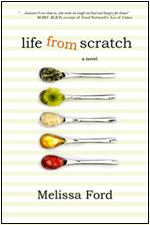
I started out my MFA program as a short story writer. My mentor asked me during my first semester if I wanted to try my hand at writing a novel. I said sure, and he gave me a few guidelines for building a novel and then told me that the only way to learn novel writing was to do novel writing. My first novel felt like a long short story. It’s in a box somewhere. My second novel felt like a weird novel/short story hybrid. I was getting closer. I graduated from my MFA program and wrote a third practice novel. This one read closer to a novel. I decided it was time to stop practicing and start attempting to do so I wrote my fourth novel (yes, we are talking about thousands of practice pages at this point). That novel is still unfinished, though I will complete it one day. And then I wrote my fifth novel: Life from Scratch. It took five long tries to move from short stories to novels.
“Nidah” is the first short story I’ve written in a long time. In some ways, it was hard to go backwards; to write a short story after getting comfortable with the pace of a novel. I will say that it’s a bit easier to go from novels to short stories (vs. going in the opposite direction) simply due to length. It is easier to keep a short story in your head as you edit and mentally see the whole trip from start to finish. It’s much messier to edit a novel. “Nidah” plodded along on the first try at a novel’s pace but edits fixed it. So why write practice novels and not practice short stories? It all comes down to length and commitment. Short stories are a short commitment and worth editing. A 400 page practice novel… not so much.
This is getting long. If people are interested, let me know and I’ll write a second post about structure; how one goes about constructing a short story or novel that keeps moving forward without getting away from the author. Especially the idea of tiny jabs vs. a 30-second knockout.
January 31, 2013 8 Comments
Infertile Vampires, Undead Babymaking, and a Short Story Project
Updated with a link to the story sample
So.
This winter, my agent and I kicked off a short story project, a receptacle for all those tiny ideas that aren’t big enough to warrant a novel but are delicious enough that to not use them seems wasteful. So in between books (and in this case, during the writing of a book), we’re going to release a few short stories each year. The first one — “Nidah” — is up on Amazon right now. And it is about infertile vampires.
Wait, scratch that, infertile Jewish vampires.
It would be Nechama Tannenbaum’s luck to not only bump into the world’s only Jewish vampire but to end up marrying him too.
Levi Tannenbaum, undead for 800 years, and his human wife, Nechama, have been trying to have a baby ever since they got married with no luck. Every month, their hearts break during the ritual separation of nidah, which they spend in separate apartments so that Levi doesn’t make short work of his wife like a lox platter at a Bar Mitzvah. Will they be blessed with a child — like Sarah and Abraham — during this final cycle before they move on to donor insemination; a child who is part-Levi and part-Nechama, to bring him generations of comfort in his eternity long after his beloved wife is gone?
It’s infertility, it’s vampires, it’s love, it’s paranormal romance. Levi and Nechama put Edward and Bella to shame.
You can read the first few pages over here.
At 34 pages, it’s a small bite of fiction. The perfect appetizer size to hold you over until April when the next Rachel Goldman book is released. And at $1.99, it’s less than a Starbucks coffee and will take you longer to read than that coffee would be to drink.
And no, you don’t need a Kindle to read it. You can read Kindle books directly on your computer. So think of it as just a really long, fancy blog post.
I’ll let you know whenever a new short story is released. Working on them have been such a happy thing, like turning on the radio and hearing a favourite song playing.
January 30, 2013 12 Comments
Things That Only an Infertile Person Can Do
Scratch what I said yesterday about how I wouldn’t be crotchety today. The truth is, I’m ovulating AND I’m evolutionarily backward. I always get bitchy when I ovulate instead of alluring. I like to think of it as my hormonal chastity belt. But really, The Stir is partially to blame too. I knew better than to click on the post titled “8 Things You Can Only Do if You’re a Parent.” I KNEW BETTER*. Yet I did it because I truly was curious: what can only parents do that all other people cannot?
I assumed the list would be something like:
1. Say, “I am a parent.” (okay, fair enough)
2. Say, “This is my child.” (okay, you got me)
And then 3 – 8 would be blank, a big in-joke because… guess what! Non-parents can do everything parents can do!
Except that isn’t how it went.
The list ranged from “Use your spit to clean something off another person’s face” (hi Stir author, you obviously haven’t spent enough time in brothels because water play with saliva especially concerning the face is par for the course) to “Say you’re tired and have people actually believe you” (yes, cancer patients, we never really believed you when you claimed exhaustion from chemotherapy. So get off your ass and help out parents — you know, the only ones who are really tired).
And then my head exploded and I had to spend a lot of time cleaning it up. (The Stir, I’ve come up with #9 for your list: clean grey matter off of children’s toys: since, you know, non-parents wouldn’t have children’s toys around the house unless they are professional toy testers or simply like toys.)
But then it dawned on me. This could be the next Shit Girls Say meme. Name 8 things only people in your position in life can do with extra points if you completely ignore the fact that all other people outside that situation can do it too.
So I had to do one for infertility. A list that completely ignored the fact that there are a multitudes of ways to resolve infertility and only focus on a tiny sliver of the population (mainly straight, upper middle class women since… you know… only straight, upper middle class women are infertile, right?). Diversity of experience be damned! If I didn’t do that, the list might actually be useful, and what fun would that be?
1. Have peanut oil drip slowly out of your vagina onto a pantiliner creating a fluorescent yellow stain: come on girls, you know you love this.
2. Create a baby without a penis coming anywhere near a vagina. In fact, your partner may not even be in the same building at the same time: talk about major plus sign.
3. Inject yourself with nun urine: actually, I don’t know if this one is true because I didn’t checked the fetish sites.
4. Cancel your long-standing vacation because it falls on CD3: staycations rock!
5. Spend loads of money to build your family: who needs free, right?
I paused here because it seemed unfair for me to claim all 8 slots. So feel free to leave your own below, and we can crowdsource our list. And then, it’s a fight to the meme death: may the best meme win!
* I’m not going to link because I’m not going to make it easy for your head to explode. You can Google the title if you wish to raise your blood pressure.
January 29, 2013 42 Comments
Don’t Like This
It started with one or two requests for likes per month. It never bothered me. My eye either passed over them, or sometimes I paused and read/looked even if I never also hit “like.” It was a part of Facebook, a small part of Facebook, and usually, the person posting it had some connection to the person/situation in the image. I could roll with it.
Then it became one or two a week, and that was still do-able. I mean, I’m on Facebook in order to stay in touch with people and feel part of their day-to-day world even though we live far apart. But that’s not why other people are on Facebook, and I can roll with that too. Some people like to use Facebook to play games or win contests or pass along all the memes they used to pass along via email but got yelled at by their friends for passing along the memes there. So just want to make this clear: it did not bother me even when the request for likes were coming once a week. Because, you know, small drop in the Facebook ocean.
But by now, my Facebook stream is clogged — CLOGGED — with requests for Facebook likes to the point where I could not tell you one thing happening in my friend’s lives today, but I can tell you that they believe a random stranger should clean his house, a random child is beautiful, and a random woman with breast cancer needs to know that a bunch of strangers support her. CLOGGED. As in, I just opened Facebook and the last six updates out of 10 were all memes requesting that the viewer not only like something random, but people have stepped up their game, and now if you don’t like it, you are told that you are a cold, heartless asshole.
I own it. I am a cold, heartless asshole.
The stories themselves have changed. Months ago, they were usually health or emotionally-related. There was a cutter whom I was told to like to know there were people out there who cared. And there was a child with this disease or that who wanted to feel buoyed by the world by seeing those likes pile up. And those I could possibly understand. Those were explainable, why people were playing along. BUT I’m sorry, I find the children-wanting-a-dog, man-will-only-do-household-chores, boy-will-propose-to-girl if I get a million likes memes not only annoying in their intrusion in my life (seriously, just do your fucking household chores: do you honestly believe you’re the only person out there who has to pull out the Clorox bleach?) but actually more than a little disturbing.
There is one where a little girl is holding up a sign that says: “Hello Facebook! My mom agreed to give up smoking only if I could get 1 million likes.” ONLY? I’m going out on a limb and assuming the mother didn’t really say this because who the hell crowdsources medical decisions? And what is the next step from here? My father beats me, but he’ll only stop if I get 1 million likes. My daughter cuts herself, but she’ll only stop if I get 1 million likes.
There are all the ones that ask me to tell someone they’re beautiful. People I don’t know. People that I am trying not to objectify and reduce to a single adjective because — did I mention?– I don’t know them. Beauty is so much more than a still photograph. Tell me a little bit about the person you’re asking me to “like” and give them external validation that they’re pretty. I mean, asking me to tell someone I know nothing about if they’re pretty is like asking me to tell you if I like something you’ve cooked while you withhold my sense of smell. Just as taste requires more senses in order to earn its superlatives, so does simple things such as determining beauty*. Unless the point is to make us as shallow as possible and not bring into consideration any characteristics or actions in determining beauty.
Can we all go back to that sweet time when the only thing we had to complain about Facebook were obnoxious politically-minded status updates, game-related requests, in-depth descriptions of everything a person ate in a day, and Stepford-like rewritings of people’s lives in order to project feigned joy?
You know, the good old days.**
Can we stop with the requests for external validation — either for ourselves or for others? Can we make sure that we do enough for the people in our lives so they know that they’re loved and don’t need to ask strangers for that missing attention? Can we make sure that every individual hears some compliments about themselves so they’re not chasing them from random people on the Internet? Can we ask everyone who has requested something like this to turn around and ensure that others in their lives are feeling loved since if they’re feeling a deficiency, surely others are too.
If the problem we’re seeing is that people aren’t getting enough love, respect, attention, or compliments from their face-to-face world, one solution would be to address those needs with quality rather than quantity. Humans are telling us in no uncertain terms that they are missing something from their lives and they’re trying to fill that void with computer mouse clicks. Can’t we stave off the problem with a dose of vitamin… U?
I’m not just being facetious. I really think these quests for one million likes*** are indicative of a deeper problem. That there are people who crave attention and they’re not getting it. Or they are getting it small scale, but they’ve been taught to aim for Super-Sized attention with their Super-Sized fries.
And either option is a problem.
P.S. You don’t need to tell me because I already know how crotchety I sound; like an elderly neighbour telling the damn kids to stay off her lawn! Facebook like requests, stay out of my damn Facebook feed! I also feel the need to apologize to everyone who has hit like and filled my Facebook feed these past few months: you are not really the problem. The fact these memes exist at all is the problem.
* Now, if you want me to say whether a photograph in and of itself is pretty, I can judge its artistic form. But that has nothing to do with the subject within.
** Truly, I didn’t think this was comment-worthy until I opened up Facebook just now and saw less about the individuals in my feed and more about random strangers. I know others hit their wall with this much earlier than I did. And others aren’t bothered by it at all, hence why they keep hitting like.
*** Am I the only person with a husband who says every time he sees one: “A million likes isn’t cool, you know what’s cool? A billion likes.”
January 28, 2013 35 Comments