

Nate Thayer’s Argument and the Getting Paid to Write Conundrum
Updated Again at the Bottom
I somehow missed the brouhaha over Nate Thayer’s piece yesterday due to Snowquester. (An explanation: Washingtonians cannot function when white stuff falls from the sky. We cannot function when there is even the chance that white stuff might fall out of the sky. This image pretty much says it all.) Luckily, Anjali summed up the situation well with a single blog post, linking to a lot of the coverage about his statements on the state of freelance writing.
Thayer is correct: writers should get paid for their work.
I don’t think that the Atlantic was wrong to ask for free writing any more than it would be wrong for any organization — from my children’s school to the March of Dimes — to ask for people to volunteer their time and services. It’s also never wrong for anyone to say, “sorry, can’t” when it comes to volunteering, and they shouldn’t get a guilt trip for taking a pass. I am asked to write for free all the time*. Sometimes I say yes because I have the time and want my ideas to have exposure. Sometimes I say no because I don’t have the time.
But.
Thayer conveys in the email exchange with the Atlantic that the reason he can’t make a living as a journalist is because of the Internet (tagging his post with “Internet media ethics“) and the practice of online magazines peppering their paid content with unpaid content.
I am sure you are aware of the changing, deteriorating condition of our profession and the difficulty for serious journalists to make a living through their work resulting in the decline of the quality of news in general.
And here is where I can’t agree with him that this is the fault of the Internet, or that the Internet has contributed to the inability to writers to make a living. Because here’s the fact about writing: it is pretty much impossible to make a living off of writing. It is true in the same way that it is pretty much impossible to earn your entire salary through acting or music or painting. And now add in the idea of keeping that fine arts salary going not for a few years but for a lifetime, and you have found the proverbial needle in the haystack. There have always been journalists who have had to supplement their writing salaries through other means such as teaching. In other words, there have always been struggling journalists; the Internet didn’t create that.
There are millions of people who want to be writers. This has always been true, and the Internet hasn’t created that fact: it has revealed it. Instead of writers silently writing books that never see the light of day in their homes or scrawling in paper journals that their dream is to one day publish a book, writers now very publicly and very visibly take that desire onto the Internet. So we can now see just how many people have secretly always wanted to be a writer. In a much smaller way, reality television has given us insight into just how many people also harbour dreams of being a rock star or an actress or a chef when you see the auditions for shows such as American Idol or Chopped. So there are millions of us — possibly billions of us — who would love to make a living in the fine arts.
Out of those millions, maybe a couple thousand will get a taste of their dream**. Let’s call this the 1000th level. These people will get to write AND teach. They’ll get to act AND wait tables. They’ll get to sing AND work in a factory. They’ll do something to pay the bills AND they’ll get a bit of money from something that fulfills them. I know a lot of writers; in fact, the vast majority of my friends work in publishing or writing because that is what happens when you attend an MFA program. And out of all of those friends who have published books, all of us pay our bills by doing something other than writing for a paycheck OR we have a partner who earns enough to make being a full time writer feasible. I’m talking about writers who have 8 books under their belt and have sold the movie rights for some of those books. They are still doing something else to pay the bills, more often than not, teaching or editorial work.
So out of those thousands who get to publish a book or appear in a movie or play a concert, all but perhaps a hundred are getting their money from another source in addition to their fine art position. But let’s say that 100 are lucky enough (let’s call this the 100th level) that for the time being, their entire paycheck comes out of their fine art position and they can afford housing, food, clothing, and health care all on the payment for their book or acting gig or musical work. Those are the people that you know about. Those are the writers you know well and the actors you recognize when they have a guest spot on a television show and whose album you maybe even own. Those are working artists.
And then out of those 100 people, maybe 10 keep that going for years and years and years.
And that’s the way the fine arts world works. It’s not based on fairness. It doesn’t reward the people who have been in the game the longest with the jobs. Experience doesn’t always get you chosen. It’s somewhat about talent. It’s mostly about whims. It’s sort of about what fits at the moment. And that’s the sad fact about this sort of work, and it’s why we chase it: because it is so hard to get that it feels so meaningful when we do get it.
I have never been under the impression that I will always be paid for my writing though I would love it if I got paid to write for the rest of my life. I am grateful whenever a publisher buys a book because I know that it’s not a given. I’m grateful that I have a great agent who believes in my work and supports me; I’m not owed that and I’ll always be somewhat in awe that she took a chance on me (and hopefully, I am paying back that chance over time and making it worth her while). I’m grateful that I can get writing work, and I don’t mind that I also have to take on non-writing work in order to make enough money to add to what I receive from writing to make a feasible salary. And I’m extra grateful that Josh works extra hard so we can float.
I think I’m a fairly talented writer — at the very least, other people have told me that, so it’s those people’s fault if I think that — but I also know that there are A LOT of fairly talented writers out there, and it’s incredibly frustrating because not everyone will get a chance to advance down to that 1000th level and earn some money for their writing. I will likely never advance to the 100th level, and certainly not to the 10th level, in earning not only a full salary from writing but a lifetime salary from writing. It’s a fact of the field I’ve chosen to pursue: the competition is fierce and even reaching success does not mean I will be given the chance for another success. Sometimes all we get is the one book and a “thanks for all the fish.”
Nate Thayer is a talented writer, and I feel his frustration when he says:
“I don’t need the exposure. What I need is to pay my fucking rent. Exposure doesn’t feed my fucking children. Fuck that!” he continued, adding that he can’t even afford to get online. “I actually stick my fucking computer out the window to use the neighbor’s Internet connection. I simply can’t make a fucking living.”
He’s correct that journalism is vital. Quality journalism is vital, and digging into what is truth and disseminating correct information is vital. But it’s all an art. And like all art, we all want to do it, but few are going to be able to feed our children on it. I should know because I’ve been trying for years, and four books later, I still can’t make it work. Except by supplementing.
This is something that was drilled into me during my MFA program. That just because I was getting this degree, it didn’t mean that I was guaranteed a writing career. It was meant to give me a leg-up to that writing career by teaching me the skills necessary to have that career. But I knew looking around my program that while we all wanted to be writers, while we were all good enough to get into a writing program, some of us would not get to be paid writers. And that knowledge sucked big time because we all did a lot of work to get into the program and did a lot of work while we were there. But none of the fine arts rewards hard work. But without doing the hard work, you can’t build the talent and get the exposure. What I’m saying is that there is no business like show business like no business I know… except all the other fine arts including writing.
So yes, writers should get paid. Everyone who does work should get paid. That is a truth. But not everyone is going to get to be a writer. And that is a truth too.
And no, not everyone who has a blog wants to be a writer, but raise your hand if you secretly (or not so secretly) harbour a desire to get paid to write.
* And sometimes I write on this blog, which I always do for free, though I have BlogHerAds, so I get some money. And I’m incredibly grateful to BlogHer for those ads because unlike a lot of other ad companies, they pay based on page views so I always get compensated for my space. BlogHer has paid out $25 million to writers since 2009.
** I’m making up these numbers. But I think we all know that the vast majority of writers, actors, and musicians will never be famous or make it into People magazine or get to go to the Oscars. There are nearly 130 million books in print. Can you name even one million writers? There are 5,075,983 people listed on the IMDB database. Can you even name 1000 actors?
Updated:
Sort of lost in all of this is the fact that we’re talking about freelancing. There has never been a golden age of freelancing. Was there a golden age of journalism, for staff writers at news organizations? Absolutely. Can I point to plenty of people who have supported themselves with a staff position, writing exclusively for the Washington Post or The New Yorker? But when was it a freelancer’s golden age? Freelancing, by its very nature, is a trade off of freedom in lieu of stability. Freelancers have always scrambled for work, and some have gotten steady work but most of us pitch articles and have some taken and others not. What we get in return is the ability to write for a multitude of places, whereas a single publication may not have a great enough need for our expertise. But that comes with the price of not having a consistent paycheck. Of course, many would rather have a staff position than freelance, but again, there are many more writers than there are positions to fill and money to pay them.
Updated Again:
I think the other major problem here is that journalists receive work based on their writing capabilities and not their scruples. Sure, there are some journalists who have built careers and become trusted voices because we know how ethically they work AND they happen to have strong writing skills. But we can’t know or measure someone’s scruples; so the most ethical people — the ones we want reporting the news — are not always the people who get the job. Stephen Glass, Jayson Blair, Jonah Lehrer… if there is anything Doctor House taught me, it’s that people lie and even the news needs to be read with a grain of salt due to that fact. I trust for the most part what I read from vetted sources because I have to trust somewhere. But if we’re going to give journalists the all-important job of truth-telling, we should be choosing our writers not based on writing skills but based on ethics and the ability to put aside their personal agenda. And how do we measure that?
March 7, 2013 24 Comments
A Story that Begged Me to Write it Down
This past weekend, we were seated at a Bar Mitzvah with some old friends of ours, friends of Josh’s that I inherited through our marriage. He has known the couple since college. The husband married us. When I met them, their oldest child was a toddler. She was sitting with us at our table, now a teenager, in a hip pair of boots.
We were laughing about a cake decorating class I took about 9 or 10 years ago. Josh had asked me to get a hobby because all I did was go to work, go to the clinic, and cry. I would lie on my side, facing the window, and just cry continuously. He thought it would be good for me to get something to focus on that took me out of the apartment. I decided on cake decorating because it was a skill I thought would be useful when I finally had a child; I would make amazing birthday cakes. The classes were a fantastic distraction until we got to the unit on rolled fondant and one of my classmates announced she was pregnant, rubbing her flat belly continuously while the instructor spoke that evening, only six weeks into her pregnancy.
I went in the bathroom to do one of those soundlessly-screaming cries inside one of the stalls. One of those numbers where you open your mouth like a lamprey and no sound comes out, but the tears are streaming down your cheeks. Of course my classmate for the class that I was only taking to escape thinking about babies would be pregnant. Of course.
*******
In order to get the certificate, I had to complete dozens of cakes demonstrating the various skills we were being taught in class. At first, people were psyched to get my cakes. Towards the end of the coursework, it was getting harder to move the cakes. I was making sometimes five a week. We just didn’t have that many friends who weren’t sick of cake. My co-workers were starting to hate cake. Josh’s co-workers were done with cake.
I had to start sneaking people cake. Trapping them with cake.
I made one boy this monstrosity of chocolate cake with chocolate icing. His mother had the misfortune of bumping into me at a Chipotle right before class began one night, and I told him about my class and then had Josh deliver Monday’s cake to their house. I invited over some friends with kids for a Sunday party of… cake! Their own individual cakes! Decorated in extra special ways. One boy got a drawing of a car on top of his cake. And this girl, our friend’s child who was sitting at the table with us at the Bar Mitzvah, had gotten a white cake with every single flower that I needed to learn for the week all combined on a single cake. Josh looked at it before they arrived and said, “it looks like a fifteen year old girl vomited all over her Quinceañera cake.”
Imagine, if you will because I’m too lazy to go into my basement and search for the photographic evidence, a four-layer enormous white cake cover in garishly-coloured buttercream flowers; 20 different kinds, none of which go together. With some basket-stitch icing on the side for good measure. And olive green leaves and vines snaking around the flowers for “realism.” And some of the side flowers slid down, leaving streaks of buttercream over the icing, pooling in colourful blobs at the base of the cake.
It really was the most hideously ugly cake of all time.
And that’s what we were laughing about at the Bar Mitzvah. The hideously ugly cake to end all hideously ugly cakes.
Here is the rest of the story.
Our friend’s daughter had graciously called it beautiful and ate a mound of neon pink roses. Afterwards, I was sitting cross-legged on the floor, talking with someone, and she crawled over, pretending to be a baby. She had a new baby sibling who was hanging out in her mother’s arms. So she crawled into my lap and said, “I’ll pretend to be your baby.” She had a lanky preschooler’s body, but I held her, and rocked her, and sniffed the top of her blond curls, and pretended for a few minutes that she was mine. That I had finally reached motherhood. And then she grew bored of the stillness of being rocked by someone sitting cross-legged on the floor and crawled off to pretend to be a baby doing something else.
Those few minutes of pretend? How else do you get the desire to stick a needle into your stomach every evening without those minutes of pretend?
So we were laughing at the Bar Mitzvah — the little preschool now this beautiful teenager and the childless woman now the mother of eight-year-old twins — about the hideous cake. But this was the story in the back of my head while we were talking, the one that wasn’t reminisced, and when I got in the shower the next morning, it is the one that came out in the form of a brief cry for that woman who used to make five cakes a week. Almost as if it were begging me to write it down.
March 7, 2013 24 Comments
Oral Sex Question
Something I’ve noticed, in the genre of women’s fiction, is that it is sorely lacking in amusing oral sex stories. Real women tell amusing oral sex stories to each other, and yet I haven’t found women in any chicklit book recounting a particularly story-worthy oral sex experience. I’ve found actual accounts of oral sex in 50 Shades of Grey (actually, I’m just assuming they were there. Those books went through me like water; I’ve retained nothing from my long sojourn with them… isn’t that sad?). I’ve found realistic penal-vaginal sex in the missionary position being performed by many a heroine in straightforward chicklit.
But I’ve yet to find a scene where a group of women are sitting around a table, talking about the first blow job they gave back at summer camp.
And I guess I am polling all of you to ask if there is a reason for this.
Is there no oral sex talk because finding it in a chicklit book, recounted as part of an amusing conversation, would be a major turnoff that would take you mentally out of the book?
Or is there no oral sex talk because by weird coincidence, no author has thought about adding in a scene where people are talking about oral sex?
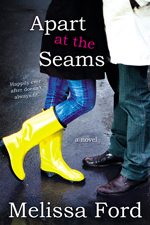
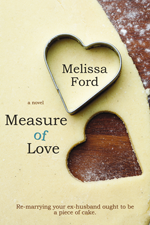
I’m asking because I have a scene in my book, Apart at the Seams, which is due in June and coming out in 2014 (the sideways sequel to Measure of Love, which will be out in April!), where the character recounts an amusing tale about oral sex. I asked Josh if it was too much. I didn’t want to slap a penis onto my book and turn it into something along the lines of There’s Something About Mary, but women DO talk about oral sex so it seemed natural to have this story fall in the book where it falls in the book.
So, since I seem to have no internal appropriateness barometer, how would you react to a tale of oral sex in the middle of a (non-erotica) chicklit book? Please be honest.
You can leave your comment as anonymous if you don’t wish to have your name attached for everyone else to see in the comment section.
March 6, 2013 25 Comments
How Do You Know If You’re Ready to Have Children?
A friend of mine told me that she’s so excited for motherhood because she can’t wait for life to slow down. I’m not sure how she imagines parenting, but the last word I’d use to describe it is slow. Are there long stretches of mind-numbing boredom with an infant? Sure, just as there are long stretches of mind-numbing boredom with meetings in the workplace. But overall, it’s a fairly fast-paced job with a loud, demanding boss who won’t necessarily tell you what he or she wants yet expects you to just know.
Bea sent me a post about how one cannot possibly know what parenting is like before having a child, therefore, any attempt to try to discern what parenting will be like in order to use that knowledge to make a decision about whether you’re ready to parent (or if you ever want to at all) is untenable. I’d argue that pretty much every aspect of life is unknowable before being immersed in it, but I guess few other choices have a no-going-back clause like parenting. You can get out of a marriage, you can switch schools, you can change careers, you can sell your car and buy a new one. But you can’t really decide three years into parenting that maybe it wasn’t for you without affecting a lot of people’s lives forever.
So how do you know?
I remember before we started trying that I was talking to a co-worker in the teacher’s lounge who had just had a second child. I asked her how she knew that she was ready to parent, and she told me that when she could imagine a world where she couldn’t go out to the bar any night on a whim for happy hour, she knew she was ready. So I went back to my classroom and tried to think of my life without the ability to go to a coffeehouse and read in the evening (I obviously led a tamer life), and that sounded awful. Which meant that I probably wasn’t ready for kids.
Except I did feel ready to parent.
So I asked my sister what she thought of the advice, and she told me that this woman’s thoughts on parenthood seemed to contain a lot of either/or, whereas the reality was that parenthood was a long experience that was constantly changing and that even in babyhood, there would be ways to get to the coffeehouse if that was what I wanted. Though I may not find that I want that down the line anyway. Parenthood does not mean boxing up your life and never doing what you love again. It just means juggling things around a bit to make sure you don’t lose yourself while parenting someone else.
So I wrote a note to my not-yet baby in the journal I bought. (I was so naive; I thought we’d get pregnant in the first try, so I prefilled the journal with lead-up thoughts so the baby would have more to read when they grew up. Bwaaaaaaaaaaaaaaah, the universe laughs.) I told the baby that I already loved it more than reading in coffeehouses. It’s true; even before they arrived, I loved the twins more than books and coffeehouses. Which doesn’t mean that I don’t sometimes miss the ability to go sit in a coffeehouse and read a book whenever I wish. I mean, I can, but like all lives — with or without kids — there are responsibilities that need to come first and a lot of them get in the way of relaxing. Or going to the coffeehouse looks different: I take the twins, and they read their books and have a hot chocolate while I read my book and have a coffee, and I get to have the experience I want without shirking anything in the process*.
So I wrote that note and got started trying to make said baby.
And years later, we had the twins. I got a lot of time to really think hard about whether this was what I wanted or not. And yes, I made the decision without truly knowing what parenting would be like for me: how I would do being responsible for another human being, what type of child I would get, and whether or not the two of us would mesh well together. The only thing I could know was whether I was ready for my life to change, and once I could cringe and say, “I think so,” we went ahead and tried to change it by adding parenthood into the mix. And in some ways, it is what I thought parenthood would be and in other ways, it is nothing as I expected.
I also don’t think that point ever ends. You can’t know what it is like to have a toddler while you have a baby. You can’t know what it’s like to have a kindergartener while you have a toddler. You can’t know what it’s like to have a teenager while you have a kindergartener. Every stage of life has been a surprise. Which shouldn’t be a surprise at all since that is the way everything has gone in my life sans kids too: I didn’t know what adulthood would be like as a teenager, and I’m guessing that I won’t know what it will feel like to be in my eighties until I get there.
It reminds me of a question I constantly ask: how will I know when the twins are ready? How will I know when they’re old enough for me to leave the room for a moment? How will I know when they’re old enough to let them go downstairs by themselves in the morning? How will I know when they’re old enough to leave alone at home for an hour? (We haven’t done that last one yet.) The fact is, we won’t know. In the past, I’ve guessed based on a gut decision. But until I reached that moment, I couldn’t predict the age or day it would happen. Just one day, it felt right to walk out of the room to get something, and one day it felt okay to send them downstairs and go back to sleep.
I guess you’re ready when you notice the readiness coupled with the thought that everything is a chance. When you can accept that chance as well as anyone can accept the outcomes of a chance, go for it.
How did you make the decision to start trying to build your family whether you have reached parenthood or not?
* Coffeehouses and books mean a lot to me. I started taking the kids with me when they were nine months old after RSV season. And we’ve never stopped. It’s easier now that they’re older, but if it means a lot to you, my sister was correct that you find ways to work it in.
March 5, 2013 25 Comments
The Point of Life
Updated at the bottom
A friend who shall not be named unless she decides to come out in the comment section was struggling with the point of life. I happened, in the very moment that the email arrived, to be on page 168 of The Fault in Our Stars. Which is to say that it felt like more than kismet that her email popped up at THE EXACT MOMENT I was reading about Augustus telling Hazel how he viewed the point of life. So I wrote her back:
According to John Green, the point of life is to give something great in exchange for your life. You do something amazing, and it’s payment for that life you were given. A fair trade.
Augustus takes his own thought a step further in the ensuing discussion to state that “everyone wants to lead an extraordinary life.” I wish I could back him up there because I think his first point was fabulous, but then he ran with it to where all of us run with it, and that — and that alone, perhaps — is our problem.
Extraordinariness.
I think we set the price of our life payment higher than necessary. I think that the universe expects us to pay perhaps a nickel in order to have it be a fair trade, and we counter that we want to pay $500. How insane is that? Can you imagine going into a store that is asking you to pay $2.89 for a loaf of bread and scrunching up your nose while you say, “you know, I’d really like to give you $10.11 for it.” No, we pay the $2.89 OR we try to negotiate a deal OR wait until something goes on sale. But nowhere else in life do we hear that we are expected to pay X but in turn ask if we can pay the much larger Y.
Until we get to living.
So the universe wants us to pay a nickel’s worth of goodness in order to compensate for this life we’re given. Which is difficult enough to do — to live a nickel’s worth of goodness. To affect the lives of a small handful of people. To touch the lives of your parents or your siblings (if you have any) or your friends. To couple up and become someone’s partner — which is very difficult work to get as well as maintain. Not everyone gets a partner to love and affect, and even those who do, they may not keep them. Or they may not positively affect them.
Raise a child or two, and again, for some of us, it’s not only difficult work to get but it’s also a constant uphill battle to maintain. Some of us may not know how we did as parents until we see our kids through to adulthood and know whether or not we gave the world someone great or if our parenting was a domino that crashed down a long string of figurative dominoes. Will we get to count our parenting as part of our nickel, or will it be another payment we owe the universe?
But let’s assume that parenting (if you get to do it, and if you even want to use that task as part of your payment to the universe since there are so many other ways to reach a nickel’s worth of goodness) works out well, and then throw in a few friends and a few other family members that you positively affect. Maybe a job that you do that changes the lives of a few dozen people around you or some volunteer work.
And all of that amounts to about a nickel’s worth of amazing goodness. It’s what we owe the universe. To leave it as well as we found it if not better, by not only balancing out the negativity in the universe but perhaps tipping it in favour of positivity. Just a very small amount. Not a widely-seen, known by all amount, but a miniscule amount of extra goodness. If we can do that, we’ve fulfilled what we owe in exchange for being given these lives.
The problem, of course, is that we think of the word amazing with a capital A. We want to be like Mother Theresa, Andy Warhol, and Magellan all rolled into one, and we want to be hyper-remembered after we’re gone, with small children doing book reports on our biography for eternity much in the same way that we speak of Helen Keller, Harriet Tubman, and Ronald Reagan. We don’t want to live. We want to LIVE. Big. And feel as if we not only dotted up the crumbs on the brownie platter at the end of this party called life, but that we also threw the festivities and made the party the type of event that gets talked about for eternity.
It wasn’t until I finished writing out this thought to my friend that I read page 169, which has Hazel countering Augustus’s thought by pointing out that she doesn’t have much time left and she hasn’t made the mark that he claims matters. “It’s really mean of you to say that the only lives that matter are the ones that are lived for something or die for something.” Again, I think Hazel too is hearing that she has to pay a nickel’s worth for her life — because I would argue that she has made her 5¢ mark on this world based on the way she has affected her parents and friends — and is stressing that she isn’t paying $500 for the honour of living.
If you are concerned that you haven’t sent a nickel’s worth of goodness into the universe, in a few days, Msfitzita will be holding her annual Thomas’s Random Act of Kindness day. It’s very simple. On March 9th, go do something good for another person and tell them that you’re doing it in honour of Thomas. There were, at last look, 250+ people already set to do this. I think helping someone who is gone affect others has to count for at least a penny of goodness. And then think about it, you’re 1/5th of the way to paying off your life balance.
I don’t know… do you think we overshoot what we owe the universe in exchange for our life? What is big “enough” when we talk about living a full, amazing life?
Update:
I finished the book. Oh my G-d. I have one of those cry headaches now from it. No one warned me how much I would cry, and it is, perhaps, because John Green has written a book that becomes other people’s An Imperial Affliction. You cry because you care; because he has made those characters so real that you feel you’re in the room with them.
I bought the book with the intention of passing it along to my sister after I read it. But when I was about halfway through, I decided to buy her a different copy because I didn’t want to part with mine. So please don’t ask to borrow my copy. Because I really don’t want it to leave the house. I also started marking it up towards the end. There was a lot to mark up.
Maybe the line I am sitting with the longest is “Grief does not change you, Hazel. It reveals you.” Discuss. You don’t even need to read the book to have thoughts on that.
I’d like to add that I quit a book to read this book. The other book was doing nothing for me; it neither annoyed me or made me think. It just was. This book changed my brain a bit.
March 4, 2013 24 Comments