

484th Friday Blog Roundup
I don’t know what inspired me to do so, but last week at shul, I leaned over during a prayer and started singing to the ChickieNob and Wolvog the naughty words we used to slip in as kids. They were the usual ones — the standards that all Jewish kids who have been to Jewish sleepaway camp know — such as “I swear I share my bras” for “asher asher bara.” (For that one, we got in a lot of trouble as teens because we’d snap each other’s bra straps when we sang that.)
The ChickieNob was delighted to discover such subversiveness existed within the context of shul. As we drove home, she made me sing the prayers over and over again so she could memorize where to put in these phrases. And in doing so, she actually learned the words to the prayers in order to masticate them into a new wad of meaning. I warned them that they may want to be discreet. Use them infrequently. Don’t end up in the principal’s office at Hebrew school as much as I did.
*******
So I heard about this new app made by Spritz which allows you to speed read. As of now, the app is only on Samsung devices? Anyway, I tried it out on the Spritz site. I felt very comfortable at 500 wpm (220 wpm is average for regular reading). I could do 600 wpm. I will definitely be downloading this app when it comes available on iOS devices.
But.
Even though I know I will definitely buy this app and use it, I’m not sure how/when I’ll use it. Will I consume books this way? Yes, but which books? Most likely books I have to read vs. want to read. I don’t think I’d use it for email, though I could see myself using it for magazine articles. It will change the way I do research, though I don’t see how I would use a speed reading app if I needed to take notes. By the time my brain processed that I wanted to remember a fact, I’d be three or four sentences away.
I guess I see it as the difference between eating to sustain myself and eating to enjoy the meal. There are times when I grab a granola bar just because if I don’t put something in my body, I’ll faint. And that’s fine sometimes. But other times, I want to sit down with a nice, home-cooked meal and focus on eating something to enjoying it.
If you can’t wait for this app to be available, there are ones online that seem to work just as well. Even though they’re really only great for blog posts and not for whole books, such as spreeder.
What do you think of speed reading apps?
*******
And now the blogs…
But first, second helpings of the posts that appeared in the open comment thread last week. In order to read the description before clicking over, please return to the open thread:
- “Fertility: A Spectrum” (Genuine Greavu)
- “Thoughts on Empathy” (A Fox in the Hen House)
- “The Club” (A Glimpse Inside)
- “The Golden Ticket” (Serenity Now)
- “The Tension Between Manifestation and Letting Go” (The Unexpected Trip)
Okay, now my choices this week.
Mama Said Knock You Out is back with a post about life after family building. It’s a little pop-in; a message to anyone who stumbles across the space, letting them know the epilogue. That whatever you’re feeling today, you will not feel forever. I love the ending: “For now, I hope to continue that float up. Not too quickly or too soon as I fear once I break the surface, it shall mean I have died. It’s not too bad here. It’s OK.”
Feeding My Inner Child… Hopefully has a post about infertility souvenirs, a different way of looking at lessons learned through the experience. She writes, “I was originally going to title this ‘The Gift of Infertility,’ but in many ways, infertility was not a present and I was definitely not pleased to receive it. Souvenir sounds so much better. It’s something I’ve chosen to take away from my journey, and something that I will keep forever.” She points out that her list is personal, but I think the post will resonate with a lot of people.
Lastly, Two Adults, One Child about the lifespan of an infertility/loss blog. She writes, “So, of course I have lost some readers along the way. I’m really NOT that interesting anymore — at least, from the standpoint of infertility. I will always be able to identify with the infertility community, but perhaps there are some in the infertility community who can no longer identify with me.” Thankfully, she’s not going away. But it is an interesting observation.
The roundup to the Roundup: Bad influence on the twins. What do you think of speed reading apps? And lots of great posts to read. So what did you find this week? Please use a permalink to the blog post (written between February 28th and March 7th) and not the blog’s main url. Not understanding why I’m asking you what you found this week? Read the original open thread post here.
March 7, 2014 10 Comments
Why I’m Rejecting National Day of Unplugging
On March 7 and 8, people across the world will participate in a day of unplugging. But I’m not going to join them. Sorry, rebooters.
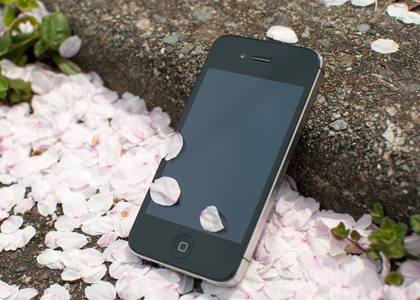
Image: Suri via Flickr
It’s a fine idea in theory. For 24 hours, get off your devices. Shut down the computer and go outside. Hang out with friends and family instead of looking at a screen. Read a book, join up with other people who are unplugging, pick up that guitar you’ve neglected for the last few months that has been collecting dust in the corner.
But here’s the thing: if a person truly has difficulty self-regulating their screen usage, a single day of unplugging isn’t going to erase months or years of bad habits. If a person has stopped interacting with the people around them in favour for catching up with their friends’ lives via Facebook, they need a lot more than 24 hours to reboot. Likewise if they rudely stare at a screen while people try to speak with them, or reject the face-to-face world altogether in favour of experiencing life via YouTube.
For the rest of us — those of us who maintain a fairly healthy balance with screen time, perhaps giving screens more time than we did in the past because the Internet brings us happiness but still meeting up with friends sans smartphones, playing with our kids, and cooking meals — the idea of unplugging because someone else has told us to unplug is to give in to someone else’s judgment on the way we spend our time.
Because that’s what this is at its heart: a judgment of what is “better” — online or offline. It places a value on how you spend your time, and the underlying message is that the worth of online time is less than offline time.
And beyond that, it creates a heirarchy to how people derive their happiness or health.
Not everyone feels fulfilled by stepping out into nature. There are plenty of us who better enjoy sitting inside with a good book. But we don’t have a National Day of Going Indoors. Perhaps it is because organizers of events believe that everyone spends enough time indoors, and they need to get us outdoors to fulfill an ulterior motive such as saving the forests. (“If we could just get them to see the beauty of this site, surely they would contribute to saving the land!”)
But really, I think it comes down to the fact that people like to judge other people. Telling us to unplug (not on an individual basis because you think your friend has a problem, but as a blanket statement for all people) is just one more time when a group of people are judging the behaviour of another group of people in order to feel superior.
In the judgment of your life, being outdoors trumps being indoors. Being active trumps relaxing. Doing something that furthers intelligence trumps something that merely fills you with happiness. Be productive, but don’t be too productive. Connect with friends, but not at the detriment to your work; and don’t work too much to the detriment of your relationships!
You can’t win, so you might as well not try.
I think the most grating words expelled by humans is “you’ll love this.” What the speaker usually means is that they love it, and they can’t fathom how someone else would not find what they love beyond fabulous. This is especially true when people tell me that I’ll love something, but they don’t know me at all. The reality is that if I wanted to live someone else’s life, I would. If I wanted to spend more time unplugged, I would. If I wanted to travel more, I would, or spend time in nature or hang out with my friends. If I’m not doing these things, chances are — especially at my age knowing full well the plethora of options that exist — I don’t want to do these things. They wouldn’t bring me happiness, even if they bring other people happiness.
So I think it’s great that other people take digital sabbaticals. I’m glad they learn a lot of stuff about themselves when they do that. I’m even glad that they feel that they’ve changed their lives. I wish them a lot of happiness on their endeavours. But I feel no need to partake myself.
So on March 7 and 8, I will be looking at a screen as much as I need or want to look at a screen. I’ll also hang out with my kids, read Michael Moss’s Salt Sugar Fat, and do a little yoga. After the kids go to bed, I’ll spend some meaningful time with my husband… cough. What I won’t do is feel a moment of guilt. Nor will I long to be surrounded by trees or looking at a mountain or smelling flowers. If I wanted those things, I wouldn’t wait until an assigned day to do them. I would get outside… now. But I’m not, and I’m okay with that.
And since no one else has to live my life, they should be okay with that too.
Are you unplugging this weekend?
cross-posted with BlogHer
March 6, 2014 12 Comments
What’s the Difference Between Reading Blogs or Books
So I read Emily Gould’s essay on what her novel cost her on the Daily Dot. (Unfortunately, they removed the post, but you can read it here.) I stuck with it until the end, even though I considered jumping ship when she started cataloging her cat’s health woes. She’s a talented writer and an engaging one, but I can’t say that I was emotionally invested in the cat. Still, I’m glad I made it to the end even though it’s a really really really long piece.
Which is noteworthy because we seem to live in an age where writing pieces are getting shorter and shorter. Magazine articles are getting shorter, blog posts are getting shorter, and some people don’t even use up all 140 characters on Twitter. Soon we’ll be reduced to just throwing up single letters. Or numbers. We’ll assign all of our most common thoughts a number and there will be a posted key that people can use in order to understand our brief, brief updates.
The length of Gould’s piece (and perhaps it’s because it also rambled) makes me think that maybe I find shorter pieces more enjoyable. Something longer than Twitter but shorter than 5000+ words. Here’s a tangential question: where do you fall on the happy reading length continuum? Do you prefer long novels that are broken up into two or three page scenes? The brevity of Twitter? Blog posts or magazine articles that go on for many pages but hold your interest due to the subject matter? Long chapters with no page breaks?
Anyway Emily Gould outlines the true cost of writing. Mostly she covers the financial cost of writing. If you’re writing full-time, you’re not earning money another way. If you’re spending hours online building your platform, then you’re not doing other work that comes with a clear-cut paycheck. But she talks about the other cost of spending a lot of time online:
It was miraculous, I wanted to shout into the wind, how much space opened up in your brain when you stopped filling it with a steady stream of other people’s thoughts!
Twitter and Tumblr and even email—anything that rewards constant vigilance and creates repetitive cycles of need based on intermittent reinforcement—were the bitterest foes of the sustained concentration that’s necessary to making worthwhile art!
In other words, reading this blog post or writing your own is keeping you from writing your Great American Novel. (Or, if you’re not in the US, your Great Wherever-You-Are Novel.) Yet we read other people’s work (such as Gould’s essay) in order to be challenged or inspired. We go online to engage with people because we’re human beings who long for connection. And we spend hours “building our platform” because if we don’t, we have no chance of selling that Great American Novel. Gone are the days when the vast majority of writers had no Internet presence and only a select few were online. It’s now the inverse. The vast majority of writers spend time online, and it’s the select few who still publish easily but have no Internet presence.
But it begs the question: why do we treat online time differently from how we treat paper time? Meaning, if space opens up in your brain when you stop reading other people’s thoughts, why are writers encouraged to read books? Why do MFA programs have required literature credits? Why don’t we encourage every writer out there to dump books in the same way that writers encourage other writers to go offline?
I don’t think that I’m more plugged in than I am distracted by books. I was the kid who carried a book around on the playground during elementary school. I always have a book tucked into my purse. I mean, I wouldn’t dream of even going to the grocery store without a book. (What if the car broke down and I needed to wait for AAA? Wouldn’t I want something to read?) I spend about an equal amount of time being distracted by online writing — mostly blog posts but also Twitter and Facebook — as I do offline writing such as magazines and books.
And I don’t consider that time wasted. I don’t consider book reading OR blog reading time wasted.
A case in point: I took the time to read Gould’s essay and it inspired me to write this post. It made me look at how much time I’m reading other people’s words vs. putting down my own. Let’s be frank; I certainly put enough words into the world. What is my word consumption obligation? Sort of like carbon offsets protect the world from our environmental impact, what should we take in order to balance the scales with our idea impact?
It’s hubris to think that OUR words are more important than someone else’s words. That if we read their words and don’t take time to write down our words, that it’s detrimental, even on a personal level. I think the world will still be as groovy if I only read and don’t write. And even when I’m attempting to write because that’s my job and I need to turn in writing, it doesn’t really hurt the process to read a little. If anything, those breaks from putting down my own words help them to come faster when I do sit down to write.
To consider answering emails or responding to a Tweet a waste of time is to consider human connection a waste of time. It’s nice when we have enough face-to-face connections to have our needs satiated, but I think online connections certainly count towards that daily ration of human contact.
I cringe when I read writers telling people to connect less. If anything, to be able to write, to observe humanity, to comment on the state of our humanness, we need to connect more.
I’m all for minimizing our personal distractions, but I worry when people talk about unplugging as a panacea. Because within the advice is judgment: that what we read online is of lesser worth. While we may enjoy paper publications that have gone through an editor more than personal blogs or vice versa (in the same way that some people prefer restaurant meals over those prepared by a home chef), I would hate to write off one as having more worth than the others. Sometimes words are just words, and the ideas they express are more important than the way they’re packaged. But that’s just me. I find a lot of diamond-in-the-rough blog posts, and I also find a lot of needed-a-better-editor novels.
And vice versa.
March 5, 2014 17 Comments
Winter Paralympic Printable Television Schedule
We weren’t emotionally done with the Olympics (yes, at least two of us in this house cried when the Sochi bear released that tear), but luckily, we get another go with the Paralympics starting this Friday. Sadly, they are not providing the best coverage of events on television (the Web is a different story), and a lot of the television time is in the middle of the night. Gee, thanks, since, you know, I’m often thinking that the kids and I need to spend more time watching television at 2 am.
We’ll be DVRing the events and watching them during primetime hours the next day. Hopefully you’ll be cheering our team along with me.
All times are ET, and unless noted, the station is NBCSN.
Day 1: March 7
- 11 am: Opening Ceremony
Day 2: March 8
- 1 am: Alpine Skiing
Day 3: March 9
- 1 am: Cross-Country Skiing
Day 4: March 10
- 2 am: Alpine Skiing (Super G)
Day 5: March 11
- 2 am: Biathlon
- 3 pm: Sled Hockey — US vs. Russia
Day 6: March 12
- 1:30 am: Wheelchair Curling — US vs. China
Day 7: March 13
- 5 am: Sled Hockey
- Noon: Sled Hockey
Day 8: March 14
- 3 am: Snowboarding
Day 9: March 15
- 3:30 am: Cross-Country Skiing
- 1 pm: Sled Hockey (NBC)
- 6:30 pm: Wheelchair Curling
Day 10: March 16
- 4:30 am: Alpine Skiing
- 3:30 pm: Closing Ceremony
March 4, 2014 1 Comment
I’m Done with Winter
I never thought I would say this, but I may be done with winter. Like full of winter. Consumed too much winter and now feeling an uncomfortable strain along my waistline.
We are on our tenth snow day. It may be more than that, actually. I wasn’t really keeping track in the beginning, when I was gleefully shrieking that we had off from school… again. You may have noticed that I am a huge fan of breaks. Not such a fan of waking up a certain time every day. So at first I was excited for each snow day. I made hot chocolate and we read books. We baked and watched movies. We crooned at the guinea pig. All was well.
But now, on our second snow day this week, I feel a little shaky. I haven’t had a full work week since Thanksgiving. Thanksgiving ended and I’ve either had a snow day or a sick child cutting into my work schedule. The same amount of work still needs to get done, but there’s no time to do it in.
I told the kids that we need to spend the day being productive because I can feel my mental stamina slipping away from disuse. I told them that we’re spending two hours working on their supplemental reading packet. They weren’t thrilled to hear that. I then followed it up by telling them they needed to have everything finished for the science fair before they had fun. The Wolvog pointed out that he can’t work on his science fair project since it has become a goat rodeo. And I told him goat rodeo or not, it needs to get done. So… wish us luck.
No, really, wish us luck. Like wish us luck that our brains don’t melt away from hours and hours of Candy Crush.
Maybe that’s just me and not the twins.
And while they do their work, I’m going to do my work. Really. And then I’m going to play the non-whore parts of Evita for the ChickieNob as we work on her musical theater education. And we may even work on cookies for our mishloach manot baskets. And I’m going to get out of my pyjamas today and shower. Please check in tomorrow to make sure I’m not curled up on the floor in a little ball, sobbing because I don’t understand how schedules work anymore.
Because it is highly possible that I will end up there, sniffling into a damp spot of carpet. This snow day may be the end of me.
Can you believe I’m saying that? Things must be dire.
March 4, 2014 18 Comments