

The Wolvog’s Party Etiquette Question
So I put up that last post to get ideas, but what happened was that your comments stunned the twins. They couldn’t believe how many kids didn’t have a birthday party at all. They’ve had one every year since they turned one. Their first one was a big one because we couldn’t do a baby naming (a Jewish ceremony) at birth due to their prematurity, so we held a big baby naming/introducing them to the community party as they turned one.
When they were very little, the other kids at the party were mostly our friend’s kids. As they aged, they found their own friends, and now it is more of the other way around: I have become friends with their friend’s parents. And the kids at the party are all mixed up: old friends/school friends/camp friends, etc.
Most of their friends have parties. There are a few kids that we don’t know about: they don’t reciprocate the invitation, but we don’t know if that is because they are having a party and not inviting us, or if they only have a family party (or no party at all). They twins usually invite them anyway despite the fact that the invitations are one-sided because they socialize with them in school or through another activity. But that’s just us and how we construct our guest list.
Oh — and the twins could have separate parties and they’ve been encouraged to have separate parties, but they want to hold their party together. We leave those types of decisions up to them. They may not care about having their own party because they each separately get one special day that is their day (ChickieNob Day or Wolvog Day) each year since they have to share their birthday. On that day, they get to pick the activity, the meals, and usually get a lot of sugar. We also have two birthday celebrations with family where it’s just dinner and cake. All in all, they’re well-celebrated.
So here’s the thing, we’re getting towards the end of the birthday party life span. As they get older, the parties will become more and more casual; a few friends out to dinner, etc. Slumber parties. Grabbing your four closest friends and going to a baseball game. It really feels like this is it: we maybe have two or three more years of this and then fade out into casual, intimate celebrations. I think I’ll miss the big parties as it is one more marker that they are growing up.
But still, I posed the question to them about which they would want the most: a party, a trip, or a present. They ranked it party, trip, present, with party being the most important to them. They love a good trip, and they said they may want to do that in the future. Take a small trip around their birthday and then just have dinner and cake with friends. We’re not a big present family: we usually give them things as they need/want things rather than saving it for a holiday or birthday. So present was a distant third priority.
But one of the biggest reasons they gave for wanting the party is that they don’t want to be left out of things socially, and having a party ensures they’ll be included in other people’s parties. The Wolvog admitted that he would be very jealous if he knew parties were going on and he wasn’t invited because kids knew he’d never reciprocate with his own party.
He asked me to ask you this question: do you accept party invitations if you don’t throw parties?
He asked this because I’ve always told them that if they go to someone’s party, they should invite them back to their party. If they don’t want that person at their party, they probably shouldn’t go to their party, even if their other friends are going. You go for the birthday kid, not your other friends or the activity. It’s not a perfect tit-for-tat system, but I would say that the vast majority of their guest list are people whose parties they also attended.
He wanted to know how that worked: did people feel awkward accepting invitations knowing they wouldn’t be extending one later? Did the kids who never had a party get invited to a bunch of parties each year, or were they mostly left out of the party scene? Was it common in your circle of friends to not have parties therefore it wasn’t really an issue?
So… uh… I guess my piggyback question is how people construct their guest lists.
March 13, 2014 33 Comments
Birthday Party Plan B
I am not a fan of kid birthday parties: going or throwing. I think that kids need them insofar as they allow that kid to bask in being the center of attention for a few hours once a year. Most people benefit emotionally from being the birthday girl or boy and feeling celebrated. But birthday parties bring stress, pure and simple, and I’m never sure if I really believe that the benefits outweigh the stress or if I just go along with the status quo instead of breaking free of the birthday party ball and chain.

Image: Will Clayton via Flickr
There are the ones your kid is not invited to, and the ones that your kid is invited to but their friends are not, and now the friends are jealous. There are the ones where the activity doesn’t really match your kid. (Uh… is this one unique to us? There are a bunch of activities that really stress them out.) There are the ones where you don’t really approve of the activity, and you have to navigate your morals and kid friendships. There are the ones your kid goes to and has a miserable time, and the ones your kid goes to and has an amazing time but you suspect this is more due to the activity than their closeness to the birthday child. You need to buy gifts for people you sometimes barely know and take a guess on their interests. And how much do you spend on said gift?
And then throwing them. I start worrying about this in winter. Their birthday is in summer.
We don’t really have space in our house to have a party. Unless it’s a veeeeeeeery small party. One of the drawbacks of being a non-television-loving family is that we don’t really have a space set up to watch a movie. We don’t have a big backyard. Or really much of any backyard. After once planning an outdoor birthday party and being stressed out for weeks about weather, we’ve said never again to an outdoor party. We don’t want to spend a lot of money on the party; I think parties have gotten a bit out of control with the cost and the expectations of activity. And I would like the effort expended on my end to be on the low-side right now due to other life stressors.
It’s a pretty steep set of requirements.
I’ve come up with a Plan B that fits most of my requirements: out of the house, indoors, somewhat affordable, BUT… it will take hours upon hours of my time to prepare the activity, run the activity, and clean-up from the activity. We’re talking hours. And hours.
So, I’m turning it over to you for ideas. No, you don’t need to have a kid to have an opinion on this. All of you were a kid, so you are all capable of weighing in. Tell me about great birthday parties from your past or ones you’ve thrown or ones you’ve attended. I’m really wracking my brain to come up with something brilliant that fits the parameters.
Parameters:
- Needs to be outside the house.
- Needs to be good for about 16 – 20 9-year-olds that will be a mix of boys and girls.
- Needs to be semi-inexpensive.
- Needs to be a reasonable amount of work instead of a Herculean amount of work.
Extra points for creativity.
My Plan B is decent*. It won’t be too expensive. It’s creative. It’s memorable. It’s just the amount of work involved that is keeping me from making it my Plan A. Please give me a better plan. Pretty please?
Actually, let’s crowd source a multitude of party ideas. In fact, why doesn’t everyone throw every age into the pot — from birth to death — and list best party ideas you’ve ever executed or experienced, and everyone can grab what they need.
* Yes, I will tell you my semi-okay Plan B idea in a few weeks once I surprise the twins with it… or not.
March 12, 2014 41 Comments
What We Put on the Internet: Infertility and Employment
The Daily Dot had an interesting post yesterday about getting Dooced for what you write online. In other words, losing your job over your Internet musings. Some of the examples were blog posts, others were Tweets or Facebook updates. The point is to be careful about what you put online. It’s not just complaining about another person or uploading pictures of yourself drunk on Facebook; the Daily Dot article even covers people who didn’t get a job because the writing they placed online wasn’t up to snuff for a position that relied heavily on a person’s writing style. His tweets were deemed “banal.”
Which brings us to the topic of infertility.
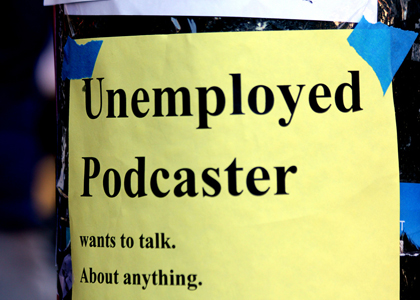 Image: Quinn Dombrowski via Flickr
We know from the EEOC that there are protections in place if your employer discovers that you are doing fertility treatments either because you give your employer that information or they discover that information inadvertently. Infertility is protected as a covered disability.
But what about when your employer discovers your blog, sees that you are ensconced in treatments and are therefore engaged in family building, does the math to see how much maternity leave will cost the company if you do get pregnant, and finds a reason to let you go in order to avoid paying for said leave?
Of course this is illegal, but how many people could build a case against their employer for being unfairly laid off? It’s not as if the employer is going to give skulking on someone’s blog and the subsequent number crunching as their reason for dismissing the worker. It’s fairly easy to fire an at-will employee; it’s much harder for a worker to build a case against an employer that they were wrongfully terminated because they wrote online that they were trying to build their family.
So where does that leave infertility bloggers?
It’s a sticky situation. You want to be able to talk about your situation and gather information and support. You can go the anonymous route, though I sometimes think that anonymous blogging gives the writer a false sense of security and therefore a lack of circumspection. If you’ve ever logged into your blog from work, if you’ve ever visited your blog at work, if you’ve put in any Google-able details about yourself in a post, if you accidentally left a comment once that utilizes your real name: you’ve created a trail to your anonymous site.
The Internet additionally is a place where hindsight is 20/20. You may begin your blog writing under your own name about something innocuous as your wedding plans, and years later, have that same site grow with you and morph into an infertility blog. Your name is already attached in search engines to those entries. The Wayback Machine ensures that people will be able to find your name linked to the site for years to come. Or the opposite could be true; you write about a certain topic not considering how it could bite you in the ass… until it bites you in the ass.
We’re writing today but we don’t know what could get us in trouble tomorrow.
So what is a person to do? The reality is that chances for wrongful termination are slim. Even if you write under your real name. The vast majority of employers will not terminate an employee just because they may have to pay maternity leave in the future. Part of being on the Internet is accepting that as much as the Internet brings us, it also takes away. It takes away our privacy, first and foremost. And you don’t even need to be on the Internet for that to happen when it comes to the posting proclivities of other people.
But the Daily Dot article is also a reminder to be circumspect. To think before you post because words and images live on forever on the Internet.
Do you worry that what you write online could get you fired?
March 11, 2014 15 Comments
Photoshopping
Christie Brinkley was on the cover of People magazine, and I pointed out the story to the twins: “Can you believe she’s 60?”
“She doesn’t look 60,” the Wolvog agreed despite NEVER being able to judge a person’s age regardless.
“How does a person not look their age?” the ChickieNob asked.
“You have a lot of work done,” I commented.
“You get a job?”
“Well no, it’s just something people say when someone else has had plastic surgery or other treatments to change their skin or hair or body. I actually don’t know if she’s done anything to enhance herself so I shouldn’t say that*. But a lot of women do have surgery and then other women compare their natural body to that surgically-enhanced body, but it isn’t a fair comparison.”
“She’s definitely been Photoshopped,” Josh commented. There was not one blemish on her perfectly smooth, perfectly highlighted legs.
The ChickieNob is taking a digital illustration class utilizing Photoshop so she stared at the picture. “How was it Photoshopped?”
“Sweetie, when you see pictures of people in magazines, they’ve been digitally altered. Even in movies, they sometimes digitally alter people’s image sometimes, frame by frame.”
We started showing them videos on YouTube, explaining how images are manipulated until the final result looks nothing like the original model.
Or this one; a little hair and make-up, and a whole lot of Photoshopping:
Later that day, I took the twins to the library to check out books, and while I was talking to the librarian, I noticed that the ChickieNob had wandered over to the magazine rack and was perusing all the covers. I walked over to look at the pictures with her.
“All these women have been Photoshopped,” she said, running her finger over Rihanna’s nose. “I don’t think her neck looks that long when she’s singing.”
“No, they probably lengthened it,” I agreed. “But take a look at the faces of the men.”
She touched the crow’s feet, lining their eyes, and the wrinkles in their foreheads and the stubble along their jaw line. “They left all the things that make them look old.”
“I’m sure they’ve been Photoshopped too. But their skin hasn’t been smoothed out and had all the blemishes removed. They’re still allowed to look a little like a human being.”
You could practically see the little gears in her head turning, and she returned to the topic a few more times since, wondering why women’s bodies are changed and why we can’t just look the way we look and how do women feel when they see themselves Photoshopped and can they ever be happy with how they look after they’re told quite clearly that certain features they possess need changing? And she wanted to know who came up with the idea of make-up or hair dye. And who decided that bigger eyes or longer necks were prettier?
And you could see the gears turning and turning and turning. I just hope they stop somewhere that allows her to laugh at the ridiculousness of others and love herself intensely.
* She has, it turns out, according to the article. Though nothing invasive… yet.
March 10, 2014 11 Comments
Can Women Have it All?
I have come to the conclusion that if we stopped talking about whether or not we can have it all, we’d save ourselves several hours a day. Those hours could be put towards useful endeavours. And then, instead of constantly slamming our hands against the glass ceiling like mimes, we could enjoy those lives we’ve worked hard to build.
The latest “can women have it all” discussion centers on Wendy Davis, the Democrat running for governor of Texas. You may remember Wendy Davis from her multi-hour filibuster over abortion restrictions. The New York Times asks if Wendy Davis can have it all. And lest you’re confused about whether they’re asking if she could be both a state senator AND governor, no, parenting comes up within the first few sentences.
The tone of the article wavers between neutral and negative, accusing her of “self-congratulation” when she points out her accomplishments. (“Seated behind the wheel of her black Tahoe hybrid S.U.V., Davis was wearing a fitted black dress and high heels and an omnipresent half-smile that could be interpreted as both drowsy and sly. She slowed whenever we came upon a structure or a street that bore her imprint, which seemed to happen every two or three minutes.”) Though I’m not really sure what the reporter, Robert Draper, wanted Davis to do? Not speak of her accomplishments? So he could accuse her of being uncooperative and hiding something?
Draper dissects her campaign strategy, claiming that the story she’s presenting is one of “Supermom”:
Instead, the campaign had chosen as its lead narrative a heroic struggle of a different sort: that of a teenage, trailer-dwelling single mother, who, while raising two daughters, bootstrapped her way into Harvard Law School and soon, possibly, the governorship. On many levels, the story was politically exquisite. It connected the candidate and her devotion to issues like education in a personal rather than an ideological manner. It also sidestepped the divisive issue of abortion while framing her as the kind of hard-working mother to whom suburban women (a critical voting bloc) could relate.
And this is where he gleefully takes offense, pointing out the myriad ways this story is untrue. Even though he equally admits that it is true. She was a single mother. She did work hard to get through Harvard Law, even though she had financial help in paying for her tuition. She did fight tooth and nail — as most politicians do when they’re starting their career — to become a state senator. She is a success story in the sense that she has existed from time to time in her life in difficult situations, and she is now poised to possibly become governor of an enormous state.
The reality is that Davis’s team needs to find an angle that appeals to voters. It’s that simple. That is the job of a campaign strategist, and in this case, her angle isn’t a terrible one even if Draper takes offense. And frankly, Draper — as far as I know — is a writer, not a campaign manager. It’s easy to play armchair strategist, never having to actually produce results. And this is something pointless that we do as general citizens every election: we critique campaigns vs. critiquing the candidates. Every citizen gets a chance to voice their opinion; but the only place our opinion counts is whether we think she (or any candidate) will do a good job in office.
So Mr. Draper, let the woman choose the angle she thinks will work for her. Vote her or don’t vote for her: that’s your job as a citizen. It isn’t to be her campaign manager.
But Draper’s article goes beyond Wendy Davis, and so much of his commentary is what women fight against on a daily basis. Aren’t women always fighting between the humble brag (I kinda sorta did this amazing thing on my own) and the demur objection (it’s really not such a big deal). We’re accused of being a stuck-up bitch if we own our accomplishments, and we’re accused of being a downright loser not up to task if we don’t own what we’ve done. No one does anything on their own; we always have people behind the scenes making the moments in our life possible. Yes, I write books, but I could never have the time to write books without Josh’s paycheck, the twins’ cooperation, my parent’s childcare help, the twins’ teachers, friends, family members, etc.
But where is line between ownership of our accomplishments and sharing those achievements with our personal support team?
Why aren’t men being held to task for not pointing out the hundreds of people who stand behind them who give them the space to do what they do? Find me the one article that complains that a man takes credit for all he has done. Truly, I’ll eat my words if you can find one. Because I’ve offered up this New York Times article to you as one in which a woman is taken to task for stating her accomplishments.
Show me the article that calls into question the capabilities of a father for putting his education front and center. Draper spends a lot of time reiterating that Davis lived in Massachusetts while her children remained in Texas with her husband. (Who he tells us many many many times was paying for her law school.) His word choice shows his judgment. I want someone to trot out an article that frets over the amount of time a father spends working instead of being at home with his children.
We’re a country that is obsessed with individualism. We want to be the best, the only. We respond to strength. And yet we come down on a woman who is strong. Who has ambition. We love the gumption story UNTIL we get to the apex. And then we want that woman to fall, and we want her to fall hard. We try to knock anyone off their pedestal the moment they rise above the masses, and that is especially true when it comes to women. Take a look at the adoration and backlash of every woman in Hollywood.
Is some of that backlash tied to our own frustration of perceiving the person receiving the accolades to have reached that accomplishment on their own whereas we need a small army just to get through our mundane lives? Draper isn’t wrong that we need to spend less time perpetuating the myth that anyone builds their life entirely on their own and that anyone can do so if they just pull themselves up by the bootstraps. But at the same time, what is the alternative: to demur and show weakness, which is disdained by both men and women in America? We can’t change this story when it’s the one people seemingly want to hear so they can play their role in tearing it apart.
It seems like every time a woman shows a hint of ambition, she’s shot down. And then women question why there aren’t more women in office. Would you want to run, knowing this is what will greet you?
Instead of dissecting Wendy Davis as a woman, let’s dissect her as a candidate. Can she do the job? Does she represent your interests if you live in Texas? If so, vote for her. If not, please don’t. But let’s not make this about her vagina. Let’s not hold her to standards we don’t hold our male candidates. Let’s not ask if she can have it all when as a society we’ve already answered that question with a resound “no.”
Wait, I’m sorry, it’s not that we can’t have it all. Other countries are much better at allowing all people — men and women — to balance home and work. If she lived somewhere else, she maybe could have it all. But the American narrative is to not allow women to have it all and to slap their wrists when they try to reach for it.
March 9, 2014 8 Comments