

Friday Blog Roundup
Thank you for all the anniversary well wishes this week. We will be partying all weekend–drinking mojitos, eating Vietnamese (oh…hon…you didn’t know? We’re going to Nam Viet this weekend…), and blowing the rest of D.C. away with our stylish moves on the dance floor. Or we’ll be curled up in bed for the entire weekend catching up on two years worth of missed sleep. Either/or. Perhaps we’ll just have mojitos in bed.
I thought I’d focus on adoption entries this week in honour of National Adoption Awareness Month. So, come, join me on the side bar as we peruse some kick-ass blogs.
There were a flurry of families coming together this week:
Barely Sane at Infertility Licks! is currently with the birthmother and her maybe baby. She got the call this week and high-tailed it from her home in Canada to Ohio. In a few days, she may be going home with her daughter. She held her and fed her on Wednesday. It’s an amazing world. When you read an entry like this, you realize the connections that adoption creates where moments earlier, there was just an open space. I wish you perfect peace and that all pieces settle into place.
Also, Art-Sweet at Artificially Sweetened received her referral call on Tuesday for her “Guatebaby.” The woman from the agency immediately emailed her photographs of her son (and scroll down the blog to take in all of his deliciousness). I had my first goosebumps when I read about how she called her partner to tell her and she said, “I want you to come home and see pictures of your son.” I had my second round of goosebumps when she closed off the story with “She came home, and pronounced him beautiful, over and over again. I fell in love with her even more, watching her fall in love with him. We called GAL and accepted the referral.” They still have more paperwork and waiting ahead, but they’ll hopefully be bringing home their son next spring!
Starfish at Hell and High Water has an amazing post about coming out of infertility and no longer defining herself as infertile. She describes the change like this: “Once we finally stopped treatment, I stopped being defined by my infertility. I went back to being a wife, a daughter, a sister, a boss, a friend. Not at first of course, it took time to remember how to be happy and hopeful again. I could liken it to a hibernation of sorts…I came out of the dark cave disoriented and squinting from the bright sun, and needed to slowly get used to the real world again. It’s no small thing. People who haven’t been through it don’t get it, and maybe I didn’t realize myself how bad I was until now, when I can see how changed I am. I’ve wasted so much time being miserable that it is such a relief to again find joy in the smallest things.” This peace spills over into her adoption process, keeping her at peace as she sees the big picture while she waits for her call. For anyone who has ever questioned whether they want to continue on the road of treatments or leave it for another path, visit this blog and speak to the wise and kind Starfish (that last part sounded like it’s from a fable–the wise and kind Starfish…).
Evil Mommy (who is really quite kind and not evil in the least–so she can stop thinking that even on her bad days) has a post this week about “Adoption Day” and whether people celebrate it with their child. The comments are equally as interesting. One person says: “I was adopted, and I would have been mortified at having my “adoption day” publicized. Just another way of being different. No, thanks.” But another counters that with her own take on her own adoption: “We celebrate it every year. I was adopted and I would have loved to celebrate it when I was a kid. We just never thought of it.”
Go pick another blog or two off the blogroll and read about different adoption journeys this weekend. While I sip mojitos.
November 17, 2006 Comments Off on Friday Blog Roundup
Adopt a Child or a Road–You Pick
There are many things out there to adopt. A quick google search of “adopt a” reveals programs to adopt a pet, minefield, platoon, manatee, classroom, greyhound, chick, and…somewhat more mysterious in how you go about the adoption process…a demon. And this is just on the first page.
It isn’t until the last entry on page 2 that you actually get to adopting a child. You first need to read about adopting a native elder, highway, and even a “useless blob.” Sure makes the children of this world feel special.
The brilliant and lovely Jane at Plain Jane Mom has a fantastic post about this issue on her blog. How does one explain to their child the intense love created through adoption when one can also adopt “a filthy highway or a zoo animal?”
Adoption has replaced the idea of sponsorship in our language. Usually, when one “adopts” a road or minefield, they are agreeing to either throw money at the situation or spend a few hours a week cleaning up a mess. And while I love pets as much as the next person, there is something profoundly strange about using the same word to describe the process of bringing home a dog from a shelter vs. a human from an orphanage. Perhaps it is this twist in linguistics that makes people believe that you can always “just adopt.”
Jane’s post about the misuse of the word “adoption” goes hand-in-hand with the move towards positive adoption language and the idea that the words we use reveal our thoughts on the subject at hand. Phrases such as real mother, own child, or abandon say more about the thoughts of the speaker than they do about the situation. Are people who are cavalierly tossing around the word adoption simply not aware of the larger implications this has for adoptive parents and adopted children? Are people who ask “is she your own child?” not aware of how this makes the child and the parent feel?
So this is what it comes down to in the end: can anyone truly be verbally sensitive to every group or person out there? Do we only become sensitive on the subjects that affect us emotionally? In the comments section, other readers pointed out their own linguistic pet peeves including the term “starving” (thanks, Melanie). How does speaking in hyperbole about your hunger affect those suffering from true starvation?
It’s a question I ask because I try to be sensitive but often wonder if by default, I (like everyone else) fall flat. And you know I always like a good reason to beat myself up. I’m realistic that no one is perfect, but are even people who attempt to be sensitive and thoughtful from point one really no more successful than people who give no thought to their words? Jane’s post opened my eyes and made me see those adopt-a-highway signs in an entirely new light–one which I hadn’t considered when I read her post even though adoption is in the forefront of my mind. Is it humanly possible to reduce the amount of time you offend? Can one person’s affront be another person’s kindness–and how do you speak neutrally without going insane?
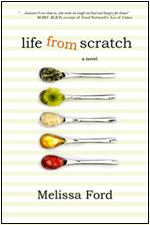
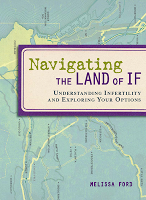
It’s a fair question because part of my book is about what not to say. It’s more difficult to discuss what will be helpful for everyone. But there has been some general consensus as to what is hurtful and unhelpful. And if it’s truly not possible to speak sensitively in the broadest sense of the word, then why should I ever be upset with someone when they say something that hurts me? I’m basing this book on the idea that people want to learn. They want to get along with other people and they don’t want to offend. So, obviously, I would like the answer to this question to be, “yes, Melissa, we can become sensitive if people give us the right guidance.”
Does it just come down this: there is obviously a difference between those who use words without knowing and those who use words after being elucidated in terms of the offensiveness factor. If this is true, if I used the word adopt in terms of a highway yesterday, is it understandable? But is it only now offensive if I keep using this word every time I write to Jane knowing how she feels about the subject? And then where do we draw the line–are there things that are offensive before the educating begins? Or do we forgive all words that come before a person has been told otherwise?
Being a human is difficult. Being a communicating human is even harder.
Hardest still is wrapping your mind around the line between giving people a break and feeling offended.
November 16, 2006 Comments Off on Adopt a Child or a Road–You Pick
Colbert's Duderus
Colbert’s Word segment last night was a ridiculous take on the first uterine transplant.
November 15, 2006 2 Comments
Irony–Alanis Morrisette Style
About eight minutes after posting my write up about my luteal phase defect for Operation Heads Up, I get my period (otherwise known as my TC). On the 21st day of my cycle. Which marks another lovely 7 day luteal phase (since I ovulated around day 14). I mean…come on. 7 days? That’s all I get, corpus luteum? You suck.
The only silver lining (not for having such a messed up cycle but for getting my period today rather than later in the week) is that it’s my five-year anniversary this weekend. Which is…as you all know…the wood anniversary. So I’m looking forward to a little wood. Like…a mahagony desk or a…wooden crate. Or other things associated with wood. Achemmmmm.
(clears throat. Looks down at the ground. Hopes her mother isn’t reading this entry).
November 14, 2006 Comments Off on Irony–Alanis Morrisette Style
Time, Time, Time Without the Hazy Shade of Winter
My friend, Mary-Katherine, has one of those stories that add to the completely annoying adoption myth. You know the one–if you “just” adopt, you’ll get pregnant in the drop of a hat. I love it when people reduce adoption to a means toward fertility.
She did get pregnant while she was in the process of adopting. But that is because she was still having sex without birth control. Because who in their right mind wastes money on birth control when you have already determined that you can’t get pregnant after multiple attempts at IVF? And the reality is that every once in a while, even women who produce eggs of poor-quality, let a perfect egg rip from their ovaries. And if you’re literally having sex around ovulation every single month, your body will take advantage of this single perfect egg and you’ll catch the brass ring. It’s as simple as statistics. It’s as simple as a blind pig finding an acorn, or however that saying goes. It can sometimes happen if you give yourself enough tries. You may be waiting 10 years, but it can happen.
The pregnancy was bittersweet because in gaining this new child, she was losing the child she was meant to adopt (the adoption was postponed and they will adopt in the future). It reminded me of a student I had whose mother gave birth to twins, losing one the day before what should have been a double bris. The girl wrote an essay about burying one baby and then coming back to the house for shiva and the bris of the other twin. It was the happiest and saddest day for that family.
This child came after a long road of infertility, one that Mary-Kath rode as if she were stuck on a Disney ride rather than taking a stroll with her own two legs. You know that Disney ride that I’m talking about–the one that you know rationally you could get off of if you had a panic attack (think Haunted Mansion rather than Space Mountain), but feel at the same time as if you’re committed to seeing the ride to its end. Even though you know you can get off, you’re not exactly sure how one goes about stopping the ride and walking off without feeling a plethora of emotions. So you just keep sitting in that black buggy, watching the ghosts shake the doors.
Mary-Kath calls it infertility with blinders–that mindset you can enter where you are just making decisions because it’s easier to keep going than to take the reins and slow down the ride. Like me, she never took a break. Cycle after cycle, she would get to the end and start over with the only thought being, “maybe this time it will work.” Every time the RE dangled a new possibility in front of her, she grabbed it. Because why not try everything–even if it doesn’t point towards a solution to your problem? If you throw enough things at infertility, something is bound to work.
She was accepted into the shared-risk program for IVF because she seemed like a sure thing. She was only in her twenties and she looked fine, hormone-wise. But attempt after attempt ended in failure without explanation. She tried PGD (even though they hadn’t had documented proof that PGD would help them with their problem)–and they called a PGD specialist who came out from the west coast twice a year to work with their “hard to impregnate” cases. Even though she was in the shared risk program, she spent a fortune.
It wasn’t until they were looking at the literature and considering donor egg that she looked at her husband and said, “what are we doing?” While she wanted the experience of pregnancy, she wasn’t tied to the idea that the child be biological. And since she had already determined that treatments were an uphill battle rather than a sure thing (it wasn’t a problem, per se, with her eggs–it was an unidentified problem), it made more sense financially to go with adoption that had a real child at its end rather than donor egg, which may or may not work.
And of course, as the myth goes, she was deep in the adoption process and looking forward to her future child. And she discovered she was pregnant.
It’s not that she regrets the fact that she tried treatments–she just wasn’t happy with the way she did them. She made her decisions with blinders on–never seeing the bigger picture (would she be happier on a different path to parenthood? Would she rather try another straightforward IVF cycle rather than paying for PGD?). She contrasted that with her friend who paused between every cycle. Her friend would sit with the results and contemplate them. And she would go to her priest (she was Catholic) and discuss her feelings and discuss the decisions she had to make. Between every failed cycle, there was a pause. She used the time to reflect and gather her thoughts and move forward. She didn’t come to parenthood any easier than Mary-Kath. But she came to it less stressed-out, frazzled, emotionally spent.
Treatments are hard. It’s emotionally hard and it’s physically hard. And it’s financially as hard as hell. And when I say “emotionally hard” I mean that it’s hard on so many different levels: the loss of your vision of conception, the failed cycles, the waiting, the talking yourself into injections. And it makes sense to take those pauses and recharge and discuss and make decisions with your head rather than your heart.
I just don’t know how to do it.
I definitely felt the tick of time–even if I was in my twenties when I began. If I wasn’t getting pregnant in my twenties, why should I believe that my fertility would get better in my thirties? I rationalized that my chances would be even lower the more I aged. Plus there was the fact that we wanted more than one child. So I started doing the math. If I had my first at 30, then we’d need to start treatments immediately so I could have my second around 32. And then we’d have to begin immediately again so I could have my third by 35. And I wasn’t prepared to breathe or slow down until all three babies had popped out of my womb.
I never sat out a cycle unless my RE made me sit out a cycle or I was anovulatory for a month. And when we were sitting on the sidelines, I wasn’t discussing decisions or regrouping. I was taking time for myself or recharging. I was half-standing, half-sitting, posed to race into the game at the first signal.
I’m not very good with sitting still in general.
It’s such an interesting idea–the benefit of the pause. I’m not sure if this is a Catholic thing or just Mary-Kath’s friend’s thing. Is there anyone else out there who self-enforces a pause? And how do you use the time? How do you make yourself recharge and regroup? Or–if you don’t pause like Mary-Kath and myself, what do you think of this idea and do you think you could ever put it into effect?
When Mary-Kath was telling me this story, the only thing I could think of was the beginning of that Simon and Garfunkel song, “Hazy Shade of Winter”: Time, time, time / see what’s become of me / while I looked around / for my possibilities. And later: Hang on to your hopes, my friend / That’s an easy thing to say / but if your hopes should pass away / Simply pretend / That you can build them again.
It’s a song cautioning about waiting. About not seizing the day, or the cycle. But what about when seizing the cycle leads you to make decisions wildly rather than sensibly? Especially when those decisions concern your health and your wallet? We have such a now, now, now mentality. It’s drilled into us at an early age. Don’t stand on the sidelines; get into the game. But is this the best way to approach treatments? I really don’t know.
November 14, 2006 Comments Off on Time, Time, Time Without the Hazy Shade of Winter