

Category — Uncategorized
Three Times Carolyn Hax Made Me Think
Actually, she makes me think a lot more often than that, but there have been three posts that I’ve bookmarked recently. AND I am writing this early and scheduling it to post because, in case you didn’t catch this with the Roundup, I am NOT thinking today. No thinking. Not even one second of it. I am eating chips in my pyjamas and watching television. My brain is off.
So these were all columns I noted back when my brain was on.
The first was a situation where the person was making a lot of assumptions because a sibling didn’t respond to their text message. They were asking permission to not share future news with this sibling because they obviously didn’t care or didn’t approve. Obviously?
Anyway, Carolyn wrote:
I think it’s absolutely astonishing that you’re poised to punish a till-now “close” sibling because you “can’t help feeling they must feel” they “have . . . reason for feeling” that “it seems” “I’m feeling” they “seemed to pointedly” feel. Or seem. Or point. A lot of seem and feel, signifying nothing. Before you start a cold war, at least make even a cursory effort to find out whether the other side is actually on the other side.
How many times do you read meaning and make decisions based on… nothing? On not having information? I do. That column made me check myself and stop. And I loved this additional line: “Choose not to take things personally, and watch most problems go away.”
The second was a dad who wanted to give his daughter unsolicited advice on a situation that he knew nothing about. I know––always a great idea. Carolyn told him this brilliant statement:
Humility is our best friend. It urges us to say to ourselves in these situations: “I know what I witnessed, but do I know what it meant?”
Again, how many times do you jump to thinking you understand something but when you take a step back and ask yourself what it means, you can’t answer the question? For me — all the time.
The third was a woman who feels guilty when she sets firm boundaries. Carolyn’s thought is obvious, but it still feels like something to print out and put somewhere that I’ll see it on a regular basis:
You’ll need to reinforce your own conviction that you’re entitled to choose how you use your time — and others aren’t. This is the bedrock on which all good boundaries rest: the certainty that it isn’t selfish to have them.
That’s what I have. So what good advice have you read recently?
November 10, 2019 6 Comments
Reading Your Way Back
Another underlined passage from Diary of a Bookseller. On page 37, he explains how reading got him through a difficult experience:
The landscapes of Jonathan Meades, William Boyd, José Saramago, John Buchan, Alastair Reid, John Kennedy Toole and others protected me from my own thoughts, which were pushed into the background, where they could silently process without bothering me. I created a physical wall on my desk, made from the books, and as I read them the wall slowly came down until it was gone.
I can tell you what I read once the twins came how from the hospital. In those first few weeks, there was The Time Traveler’s Wife and Oryx and Crake. But those years when we were trying for the twins? It’s a black hole of reading.
I know there were books during that time. I mean, there are always books. But I don’t remember what I read. I can visually scan my bookshelves and note books I read before we started trying and books I read after I brought the twins home. But the years in between are a complete blank when it comes to the page.
I love that image of creating a wall of books between yourself and the world as you process an experience. And reading your way back toward interactions with other people. I wish I had kept a reading journal at that time, writing down the books I’ve read like I do now. But I just have to trust that there were stories that got me through it. I just don’t remember what they are.
What did you read/what are you reading as you process infertility or loss?
November 6, 2019 7 Comments
Reality Fiction
When does non-fiction move into the realm of fiction? How many facts need to change in order for something to become fictionalized? If I were to write a book about a blog writer (oh… wait… I did write a book about a blog writer) who is raising teenage twins and covers the Obama White House (because my life used to be a lot more interesting, bookwise), but I change a few facts around––I make the character an only child instead of having siblings or I give her a different husband––is it fiction?
The New York Times had an article about “reality fiction,” which is popular in Norway. It begins with an author who mined her life for material learning that her sister was publishing a book about what it’s like when your sibling publishes a book about your family.
Try to wrap your brain around it.
An explanation from the article:
The Hjorths’ dueling novels are one of the stranger turns in a controversy about a genre of writing called “virkelighetslitteratur,” or “reality fiction,” that has been roiling the Norwegian literature world recently. Some have accused high-profile Norwegian fiction writers, including Hjorth and the country’s most famous writer, Karl Ove Knausgaard, of violating the privacy of others by publishing intimate details under the guise of fiction.
So the first point is why the reader needs to know that the facts are based in reality. What is the advantage to letting people know that you have first-hand experience with the situation vs. just an astute understanding of human nature? And secondly, what is the point of presenting it as fiction rather than as memoir?
I’m intrigued by this and wonder which novels that I’ve read have a deeper tie to reality than I’ve thought.
November 5, 2019 2 Comments
Wearing My Trousers Rolled
My friend ended up interviewing one of my old students for a job. At first, I was thinking, “Oh, that’s nice. This is probably her first job after college.” But my friend informed me that no, she’s actually in her thirties and has three kids. THREE KIDS. And she had them in her late twenties.
Clearly, I’m not great with tracking time.
The news came on the heels of Googling for tutorials on photoshopping wrinkles from a photo. I had a picture taken that I liked except for a crease between my eyes — a crease that is always there because I am old and have wrinkles.
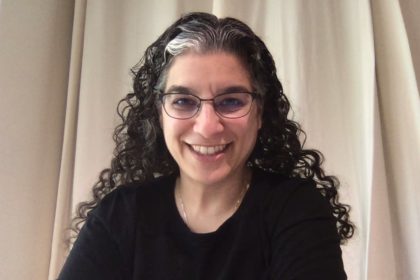
But I attempted to photoshop it out and ended up with a final image that looked as if someone had drawn on my face in Microsoft Paint. At least the Microsoft Paint distracted from the white streak through my hair.
At some point, as I was toggling between the tutorial and the photo, I asked myself how I reached this point. Am I that vain, or is that the tools are there so why not use them? Would older generations have done this if it was as easy as clicking a button on a computer? I mean, clearly not that easy since my end result was hideous, but easy for someone more skilled in Photoshop.
I deleted my attempt and decided to live with the crease. I mean, unless I become more skilled at this photoshopping thing. And then all bets are off.
November 3, 2019 9 Comments
Worry Charting
The article drew me in with the title: “Most Things You Worry About Will Never Actually Happen.” Which is… true. Though I entered the article with the belief that my worries are still valuable. They help me to be cautious, and that, in and of itself, is not a bad thing.
But the article references a recent study. The researchers had people record all of their worries for one month:
The study participants also recorded the outcomes of their worries. The researchers found that 91% of people’s worries did not come true. For several of the people in the study, exactly none of the things they worried about actually happened.
Oh.
It would probably be eye-opening to do this: to write down everything I’m worried about throughout the day, and then chart it, discovering which worries came true, which worries didn’t (but I intervened so they wouldn’t come true), and which worries simply didn’t come true and they were out of my control.
Of course, this only works for short-term fears. We have no clue if our long-term fears will come true or not until far down the road. But I think I want to try this for the month of November. See what comes of it by the end of the month.
October 30, 2019 7 Comments