

Posts from — July 2009
The 61st Circle Time: The Show and Tell Weekly Thread
 Show and Tell is wasted on elementary schoolers. Join several dozen bloggers weekly to show off an item, tell a story, and get the attention of the class. In other words, this is Show and Tell 2.0. Everyone is welcome to join, even if you have never posted before and just found out about Show and Tell for the first time today. So yank out a photo of the worst bridesmaid’s dress you ever wore and tell us the story; show off the homemade soup you cooked last night; or tell us all about the scarf you made for your first knitting project. Details on how to participate are located at the bottom of this post.
Let’s begin.

A soapbox-y Show and Tell?
Last Friday, Lindsay came over with produce from the organic market and we made cubes and cubes of homemade baby food. I said it was to help her and because I am the one with the neater freezer, but it was really for me. There, I admitted it. I loved making baby food for the twins and it was nice to have a reason to take down the 30 ice cube trays. Making baby food was a really important parenting step for me because it took back all the feelings I had on my inability to breastfeed that came on the heels of my inability to create a baby without assistance and then my inability to carry to term.
Baby food making bears a striking resemblance to breast feeding–it is a pain-in-the-hands if not a pain-in-the-nipple. It takes up a lot of time, requires the same amount of clean-up as using a pump, and is considered “healthier” (quotation marks because healthier is a relative term). It was less expensive, tailored to the twins, and required a huge commitment. The place where it differed was that baby food making didn’t require my body to produce certain hormones in certain levels. Oh, and that Josh could participate too. You know, that whole lack of prolactin thing sort of screws him too in the breastfeeding department.
As we cooked, Lindsay told me the story about someone whose handle was Lactivist who started harassing her online about not breastfeeding, not knowing Lindsay’s story at all except that she was using formula. It’s interesting because I think that there are two main types of activism–one that is meant to forward information and understanding and the other which is used to berate.
I’m all for lactivists who want to take back the boob–make it also a body part that is used for feeding rather than a sexual object. Ensure that women can nurse in public, that women who wish to breastfeed have the support they need, and that funding goes towards breast milk research. What I’m not for are lactivists who tell others what they should or shouldn’t do. The fact remains that there are many reasons why it would be better to not breastfeed or impossible to breastfeed, and that a person refraining from breastfeeding isn’t a statement on another person’s choice to breastfeed.
Breastfeeding, like so many aspects of life, is not one-size-fits-all. It can be the best option or it could be the second best option when weighed against other information. And no one should be disregarding their mental and physical health nor the mental and physical health of their child in the quest to fulfill a vision of nutritional perfection. I am pro-breastfeeding when breastfeeding is possible and desired. And I will be your biggest cheerleader if you want to try it. And I am incredibly impressed when people work through obstacles because they want to work through obstacles (not because they feel guilty if they don’t) and find their breastfeeding groove. But I’m also pro-baby food making if you can’t or don’t want to breastfeed. Or pro-finding-whatever-works-for-you.
Stepping down from the soapbox because I was upset to hear what was said to her in the name of immunological health.

What are you showing today?
Click here or scroll down to the bottom of this post if this is your first time joining along (Important: link to the permalink for the post, not the main url for your blog and use your blog’s name, not your name. Links not going to a Show and Tell post will be deleted). The list is open from now until late Friday night and a new one is posted every week.
| 1. Kate (Bee In The Bonnet) 2. Weebles Wobblog 3. Not A Fertile Myrtle 4. Building Heavenly Bridges 5. Bear and Comedian 6. Delenn 7. Baby Making Journey 8. An Unwanted Path 9. Dragondreamer’s Lair< br />10. Are You Kidding Me? |
11. Hobbit- ish Thoughts & Ramblings 12. MLOKnitting 13. Run… Fat Girl… Run 14. Our Family Beginnings 15. sassy 16. Conception Deception 17. The Happy Hours 18. Jen 19. Once A Mother 20. Caitsmom |
21. Journey through the infertility jungle 22. Cyster A.C. T. 23. Beautiful Mess 24. Pundelina Kafoops 25. In Due Time 26. Baby- Wanted- Apply- Within 27. A. M. S. |
- If you would like to join circle time and show something to the class, simply post each Wednesday night (or any time between Wednesday morning and Friday night), hopefully including a picture if possible, and telling us about your item. It can be anything–a photo from a trip, a picture of the dress you bought this week, a random image from an old yearbook showing a person you miss. It doesn’t need to contain a picture if you can’t get a picture–you can simply tell a story about a single item. The list opens every Wednesday night and closes on Friday night.
- You must mention Show and Tell and include a link back to this post in your post so people can find the rest of the class. This spreads new readership around through the list. This is now required.
- Label your post “Show and Tell” each week and then come back here and add the permalink for the post via the Mr. Linky feature (not your blog’s main url–use the permalink for your specific Show and Tell post).
- Oh, and then the point is that you click through all of your classmates and see what they are showing this week. And everyone loves a good “ooooh” and “aaaah” and to be queen (or king) of the playground for five minutes so leave them a comment if you can.
- Did you post a link and now it’s missing?: I reserve the right to delete any links that are not leading to a Show and Tell post or are the blogging equivalent of a spitball.
- If you want it…
I’ve now placed a Show and Tell archive on the sidebar that will be updated each week in case you miss it. And click here for the icon code if you wish to have it for your blog. It links to the archives.
July 15, 2009 31 Comments
Barren Advice: Forty
 This is the 40th installment of Barren Advice. You can ask questions that are fertility or non-fertility related.
Barren Advice is posted each Tuesday-ish. If you have your own question for Barren Advice, click here to learn how to submit. Please weigh in with your own thoughts in the comment section and indicate which question you’re addressing if there are multiple questions in the post.
Dear Mel:
I am desperate for some advice! My husband and I are infertile due to an emergency partial hysterectomy to save my life during a bad labor and delivery of our daughter Vivienne, who subsequently was diagnosed with brain cancer and passed away at nine months old. We are beginning the process of looking into expanding our family with either a traditional or gestational surrogate mother.
In light of different things I’ve read, for example that surrogacy agencies are not licensed or monitored in any way, and the recent fraud and theft of IP’s funds at SurroGenesis, USA, I am looking for: (1) Recommendations of good agencies. We live in Pennsylvania but due to the unfavorable legal status of surrogacy in the state, will likely use an out-of-state surrogate, and/or (2) Some pointers on how to evaluate agencies and what questions to ask, and/or (3) Any advice or suggestions on compassionate community fund-raising to help us supplement our savings and what we take in loans, to finance the surrogacy process. I’ve been researching these items online, and haven’t found any or many great answers! Thank you so very much!!
—Mary
The question sort of has two major parts: doing it right and how to get help. The doing it right part is easier to manage, insofar as bad reputations usually remain attached to agencies that fail to provide good customer service. What constitutes good customer service when it comes to a surrogacy agency or lawyer? Well, unfortunately, the happy ending of a healthy child is not necessarily the deciding factor. They cannot control child birth any more than any of us can control child birth. But some agencies do a better job of protecting your heart on the items that are within their control.
I went to Kym from I’m a Smart One, an infertility blogger AND successful surrogate, who used her own experience needing assistance conceiving to help other people build their families. She tackled this question thoroughly and passes along this advice on choosing a surrogate.
The website is often the first window into the quality of an agency. Anyone can throw up a website and call themselves an “agency,” and many people often do. However, established, well-maintained agencies will have a depth of information that helps give credence to their effectiveness as an agency. The more information provided, the better. Things to look out for on agency websites:
*About Us/Who We Are — This page should give some details about who the agency is run by and how did the agency come to be. Was it established by former intended parents and/or surrogates or by an attorney well-versed in surrogacy? Quality agencies will also have support personnel who are either an integral part of the staff or are independent, adjunct professionals. Such support staff includes: surrogate and intended parent coordinators, licensed social workers, counselors, and/or psychologists, attorneys, bookkeepers, and receptionists. The About Us pages should do exactly that – help potential clients to know about them and provide background information on educational levels, their roles within the agency, and contact information. Be wary of agencies who give little to no information about themselves.
*Financial Information — Surrogacy websites should offer explicit information as to the type of financial investment intended parents can expect to make by working with them. Outlined should be specific dollar amounts, to where the associated fees are going, when portions of the money is due, and whether or not any paid funds are reimbursed if you choose to part ways prior to achieving a pregnancy with a surrogate. All agencies require that majority of the funds for the surrogacy journey are placed into escrow. Escrow funds should be held by a cooperating third party and *not* by the agency itself.
Examine the agency’s fees and what services they include. Some agencies offer varied fees depending on what level of involvement you want them to have in your surrogacy journey. For example, a couple may prefer to use an agency for matching services only and then independently manage all other aspects of their journey (arranging medical appointments, etc). Other IPs may want full-service involvement, from the initial matching straight through to the delivery. The more involved the agency, the greater the fees paid will be. Still, fees range greatly from agency to agency. When comparing agency costs, IPs should pay close attention to the breakdown of the fees, paying close attention to the amount being paid directly to the agency itself (as opposed to the surrogate, psychological and medical fees, etc). On websites, this is usually referred to as the “Agency” or “Professional” fee. Agencies vary greatly among well-established, reputable agencies. Some of the more well-known agencies may charge upwards of $25,000, while smaller, but no less reputable agencies charge around $10K-15K for their services.
*Explanations of the Surrogacy Process (from both the IP and Surrogate perspectives) — While they generally follow the same chronology, specifics in the process can vary slightly from agency to agency. Important things to note are whether or not an agency’s surrogates are pre-screened. Most agencies have surrogates who have already been accepted into their programs and will also find surrogates by posting classified ads (online) on behalf of the intended parents. Surrogates who are found after intended parents have contracted with the agency will still have to be screened medically. This section of the website should explain how the matching process is handled. Will both IPs and surrogates receive each others’ profiles, or will the IPs receive the surrogate’s profile to review and decide whether to proceed to the next step. Will the agency facilitate a three-way phone conference? At what point is personal information exchanged between the surrogate and intended parents? How will the agency continue to support both the IPs and the surrogate once pregnancy has been achieved?
*News/Media Coverage/Testimonials/Affiliations — What do other people have to say about this agency? Quality agencies will have reputations that speak for themselves, but also have other people want to speak for and associate with them.
When seeking information about surrogacy agencies, don’t underestimate the power of word of mouth. Do thorough information searches online to learn of others’ experiences with these agencies. A great place to start are online surrogacy message boards. Surrogate Mothers Online has an extensive system of searchable forums where you can easily access pages of agency client’s experiences. Information can also be found on All About Surrogacy. AAS requires registering to be able to search the forums while SMO does not.
Once IPs have examined websites and have narrowed down two or three agencies to contact, questions they should definitely ask (if not already answered on the website) are:
1. Knowing that the ultimate financial investment has many variables, how close is the estimate presented to what most intended parents actually end up paying?
2. Has the agency ever been sued by any surrogates or intended parents and if so, for what and what was the outcome?
3. If a surrogate does not already have an insurance policy which which will cover the pregnancy (as some have exclusions against surrogacy), how will the agency help acquire a policy and what are the approximate costs?
4. How long have they been in business?
Above all, one mistake that some intended parents make is falling under the misunderstanding that by working with an agency, it completely frees them from becoming fully educated about the surrogacy process prior to embarking on a journey. Agencies are there to help guide both intended parents and surrogates through the process, but both IPs and surrogates have many things to consider before seeking a match, whether with the help of an agency or independently.
To help ensure a smoother start to their surrogacy journey (whether independently or with an agency), IPs have many other things to consider. How much (or how little) will you feel comfortable asking for/paying in compensation and fees? How much contact do you want to have with the surrogate before, during, and after the birth of the child/ren? How do you feel about selective reduction, and in which circumstances would you (or would you not) reduce or terminate? There are no right or wrong answers to these questions, but to have a good match, it is imperative that you know where you stand on these issues, and on which you have room for flexibility or none at all.
The key to finding a good match is finding someone who shares the same mindset on as many issues as possible. Matching with someone who has polar opposite views on some of the heavier issues could potentially be a recipe for disaster. Thankfully, agencies are there to help facilitate matches so that the intended parents’ focus of a journey can remain where it should – on having a baby through the supportive partnership with their surrogate.
Remember – good agencies may be the experts with what they do, but don’t forget that they are working for you. Once contracted with an agency, be sure that your (and your surrogate’s) needs are being met in a timely manner and do not hesitate to press if you feel that you are not getting the service for which you’ve paid. Agencies should be warm, welcoming, and accommodating, there to guide and support.
Okay, so that incredibly thorough answer (thank you, Kym!) should get you started on separating the wheat from the chaff. But what about the other part of your question–raising funds to make surrogacy possible.
People seem to fall into two categories with the soliciting for donations, especially asking for money outside of family and close friends. With your family and friends, you are personalizing the request. They know you and you probably know their financial situation. It is completely reasonable to turn to a parent or sibling and ask for help. Sometimes we ask for a person’s time or a person’s expertise. Other times, we ask for money. And while it is not the easiest conversation to have, many people have found that by laying out the facts (we need help in order to build our family) and explaining how the money will be used and if/when it would be paid back if it were a loan rather than a gift, that they can gather help in financing their family building efforts. The worst thing that happens is that the person turns you down and as long as you can accept that their lack of money does not translate into a lack of love for you or for your future child, you have nothing to lose by asking.
So those aforementioned two categories come up when soliciting donations from a community. Most people are indifferent or unaffected. If they have money, if they get something out of it themselves (for instance, a raffle), or if they have an emotional connection to the situation/person, they are unoffended by being asked for a donation. They either act or they allow their eye to pass over the virtual donation plate on the person’s sidebar. A smaller group finds the request for donations off-putting, explaining that everyone has personal needs–most of which require money–and choose to not read blogs that ask such requests (and therefore, you lose the emotional support). It’s a hard decision to make whether or not to solicit within a community.
A better place to start is with people who know you or are connected via a local network such as a social group or religious institution. Friends of Journey to Parenthood have been holding a series of fundraisers to cover missing income after Ben was diagnosed with cancer and Kari became pregnant with quadruplets. The most creative was the “flocking,” but they’ve also had a softball tournement and a dance. The combined fundraisers have raised thousands of dollars, with everyone giving a small bit to bring the couple a lot of help.
I asked Angie Best-Boss her thoughts, as the author of the book Budgeting for Infertility. If you don’t know this book, you should. It costs $12 and a few hours to read it, but it will save you hundreds if not thousands. Truly, there isn’t a more helpful source for navigating the funding of treatments, third party reproduction, or adoption. Especially the advice on dealing with insurance claims…
She said:
Funding surrogacy is tricky. As you know, most of the creative loopholes you might find for either adoption or IVF aren’t available for surrogacy. But, that doesn’t mean you are out of luck, either.
Out of the country surrogacy options are less expensive, but have their own issues. One of the best ways to save money on surrogacy is to work with an experienced surrogacy attorney. He or she may be able to facilitate the entire process without having to use an agency. Surrogacy agencies can be wonderful, but they can also be very expensive.
In terms of raising money, here are a few ideas to get you started. For most of these, you need somebody in the community to help. For example, you might need a church or other group with a non-profit status to do some of these fundraisers (though contributors won’t get a tax write-off) or someone with a large space.
* Crop till you drop. Find a local scrapbook consultant and host a $20 crop for 4-5 hours one night. The consultant can demonstrate techniques and you can collect cash.
* One of my favorite ideas is a Texas Hold ‘Em poker night.
* Current has great cards, wrapping paper and gift items and their fundraising programs offers 50% back.
* Host a big garage sale and ask for donations from family and friends.
* Make and sell things over at etsy.com
* If you or someone you know is an artist, start a Café Press store to s
ell imprinted mugs, shirts, bags, etc with a great piece of art.
It’s a good starting place and certainly read the other blogs in the surrogacy categories on the blogroll, from both the IP and surrogate point-of-views because often, tucked inside a post where you least expect it, are the nuggets of advice that help you the most on your journey.
No really, the beauty of a blog advice column is that you get to weigh in with your two cents too. Let the questioner know if you support the advice, add to the response, or dispute it completely.
Leave a comment in the reaction box below–only keep in mind that conflicting advice is embraced and rudeness is not. Want to ask your own question? Click here to see what you need to send in order to be included in a future Tuesday’s installment of Barren Advice.
July 15, 2009 4 Comments
Head Shot Help
Updated at the bottom:
Without behaving like my old middle school students and responding that every picture is ugly and I should dye the grey in my hair already (I’m not going to) and stop squinting (I’m trying), if you had to pick one of the pictures below to use as a head shot, which one would you choose? With the exception of the sleeve issue in Choice 5 (what the hell was happening with my shirt?), I couldn’t figure out which one said: hey, I’m Mel. I think I am tripped up by seeing myself with make-up*.
Please only vote for one…

Choice Two:

Choice Three:

Choice Four:

Choice Five:

*I can play with the contrast/lighting in the top three.
Update:
I just wanted to give people a sense of the fixed sleeve. I did this in two minutes so it’s a bit sloppy, but here’s the gist of the new picture. I realized that I can’t crop it because I need the picture to remain a certain size.
 The amusing side note of this story is that the reason the top three pictures are taken from that angle is that Josh was running out the door to work, but I had a television appearance early this morning so I had on this full face of make-up when I walked in as he was walking out. I asked him if he’d take the picture because I needed it this week and I hate wearing make-up (I washed it off the moment he left). He was wearing a suit, so he was trying to take the picture without kneeling down and getting dirty. And I didn’t want to stand. So it left us in weird angle land. Though with the best smile on those shots.
July 14, 2009 118 Comments
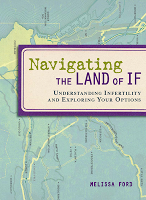
Navigating the Land of If Reading at Politics and Prose
You know those dreams where you show up to school with no pants? I showed up to my first book reading with no notes.
The night before the reading, I typed up a page of things I wanted to talk about in terms of the book and blog. I printed it off, folded the paper, and tucked it into the book, proud of myself for being so freakin’ prepared.
The next afternoon, I am waiting in the back office with the store owner, Carla Cohen, prior to the reading and we’re chatting. She asks if I’m prepared because we’re about to walk out to the podium. I pull out my book and notes and unfold the paper to find myself looking at a blank page. The printer must have spat out two pieces of paper–a blank sheet and my notes. And I grabbed the blank one.
So, I winged it. And this is a video of me winging it that Josh made of my first book reading (we had to break it into two videos, each about 20 minutes) if you want to feel like you were there too. I especially love the strange face I’m making in the freeze-frame for the first one. Other dates and locations are currently being set, and I will announce those once they’re in stone.
Part One:
Reading & Discussion of “Navigating the Land of IF” by Melissa Ford from StirrupQueens on Vimeo.
Part Two:
Reading & Discussion of “Navigating the Land of IF” by Melissa Ford Part II from StirrupQueens on Vimeo.
Also, some pictures from the day. Thank you so much to all of the DCers who came out for my very first reading and I hope to meet so many of you at future readings too.


July 13, 2009 30 Comments
What to Expect at a Mammogram
A sigh of relief–the mammogram came back clear.
Two weeks ago, I found a lump in my right breast after 20+ years of problem-free self-breast exams. For two weeks, I walked around, my fingers rubbing the lump, trying not to Google anything about breast cancer. Do you know what it felt like? You know how when you’re home alone and you hear a noise, you pause from movement, holding your breath, waiting to hear it again so you can identify it as a normal house creak or a warning that a serial killer is about to break in through your kitchen window? You want to breath and move, but you’re worried that if you move, the sound will come again at that very moment and it will be lost amongst the other noises such as the rustle of the blanket or the intake of breath.
That’s how I felt for two weeks.
I really didn’t want to talk about it because talking about it made my hand return to my breast and I had already spent enough time walking around the house alone, my fingers palpitating it. I had driven around Washington, D.C. with my hand inside my shirt (oh please don’t look in my car–I swear I’m not a perv, just a nervous woman with a lump in her breast). The night before the mammogram, I had lifted my t-shirt to mark my breast again with a Sharpie and at that moment, my telephone rang showing my neighbour’s name on the caller ID. I dropped my shirt and stared in horror at the window, certain that he was calling to gently inform me that the whole neighbourhood is horrified by the amount of time I spend copping a feel these days.
Except that he was calling because he wanted me to take care of some house stuff while he was away.
I am writing out these details in case they are helpful to someone else who is in the same position of waiting for a mammogram. Please add your own advice or experience at the bottom of the post, especially if I leave out anything because every mammogram is different. It’s sort of a non-IF Operation Heads Up.
The first thing to know is that there are two types of mammograms: diagnostic or screening. Most people have a screening mammogram which means that a series of images are taken, they are read by someone later on, and you receive a report in the mail. Diagnostic mammograms need to be scheduled at special times and the difference is that additional images will be taken of the site of the lump and a doctor will read it immediately so they can follow up with additional tests while you are in the office. My mammogram included a follow up ultrasound.
On the day of the mammogram, do not wear deodorant, lotions, or powders near your chest. The reason is that these things smudge the plates and not only transfer to the machine, but also can blur the image. The place I went had spray deodorant in the bathroom, though I threw my deodorant in my purse the night before so that (1) I could use it afterwards and (2) I didn’t forget and accidentally put it on in the morning.
The other thing to know is to not wear a dress. Wear pants or a skirt because you will only be undressing from the waist up and you will be sitting–most likely–in the cover-up top they provide in a group waiting room.
Also, when I signed in, my office offered to send me a copy of my report if I filled out a sheet stating where I wanted it sent. If your office doesn’t automatically do this, make sure you ask for a copy of the report to be sent to you at this point and then remind the technician or doctor during the appointment too. I have to imagine all offices would be willing to send you a copy so you have it for your own medical files, but my office was particularly proactive, offering it before being asked.
My mother came with me, sending an email a day or two beforehand informing me that she would be doing this. She knows me well enough to know that I was internally flipping the fuck out even though I said I was fine going alone. She came with me when they called me back from the main waiting room to the smaller waiting room. The man who came with his wife was asked to remain in the main waiting room. In other words, the space was ladies only. They brought us to a smaller waiting room and asked us to change into the cover-up, leaving our bras and tops in a locker. And then we waited to be called back.
The mammogram is done standing up. You put on a lead apron around your waist. You stand before this huge machine that has a part that looks like a glass shelf. The technician places your breast on the shelf (relax your body as much as possible and don’t try to help her) after adjusting the height of the shelf and then a top plate of glass comes down, compressing the breast like a…boob sandwich with glass bread. A thick boob sandwich with a lot of filling because while I thought the machine would smoosh them down so hard that they would look like Wile E. Coyote’s hands after the Roadrunner runs them over with a car. You know what I’m talking about? When he has to peel them from the pavement? So…no…the mammogram doesn’t compress your boobs like that. It’s…well…
My mammogram sort of felt like a teenage boy who doesn’t know quite what to do with your breasts. He’s just so freakin’ excited to finally be able to tell his friends that he has touched a pair of mammary glands that he is both shitting himself and pushing your boobs at the same time.
You probably won’t be surprised to hear this, but the mammogram, like most tests involving the body, is described on a widely sliding scale of pain from mild discomfort to holy shit and the thing to keep in mind is that the pain factor varies greatly from breast type to breast type (do you have dense tissue or a lot of fatty tissue), life experience (nothing has ever been as painful for me as my HSG–it will forever be my “10” on a scale of 1–10), skill of the technician, tensing of the surrounding muscle, and whether or not you took a painkiller beforehand.
I did opt to take two Alleve an hour before the exam therefore, take it with a grain of salt when I tell you that it was only mildly uncomfortable. I proactively took a painkiller so who knows what it would have felt like if I hadn’t come prepared. I also concentrated on relaxing my shoulders and back. So, some people will probably say that it was very painful and some will say that it was nothing at all because each person will experience it differently.
She set up the machine and compressed the breast and then ran over to take the image. She then pushed a button from where she was standing and the machine released the breast before she walked over. So all in all, the breast was compressed for under 30 seconds each time. It took a minute or two to set up each picture and get the breast where it should be. So the actual discomfort time was quick.
She took two image (one of each breast), pressing down from the top. Then, she turned the machine and took two additional images (one of each breast) pressing in from the sides. Again, it was just mildly uncomfortable (think panting teenage boy). Then she had to take additional images of the lump area because I was having a diagnostic mammogram, even though it was also serving as my baseline, age 35 mammogram.
She gave me a small sticker with a metal dot on it and asked me to place it over the lump. Then she switched the top plate on the mammogram to a smaller plate and took one more image of that small area. That was the only compression that actually hurt. And on a pain scale, I’d place i
t around a 4. Not something I’d like to endure for hours, but not terrible for the thirty seconds the breast is compressed. She removed the sticker and I returned to the waiting room.
A short time later, I was brought back for an ultrasound of the breast. It is exactly like any other ultrasound (well, except the transvaginal ones)–goo on the breast and then the paddle moves around while the technican examines the screen. A doctor then came in to give the all-clear. She could feel the lump, but said that it didn’t feel worrisome to her and the mammogram and ultrasound both came back with the tissue looking normal with no additional growths or cysts in that area. She told me to keep an eye on it and to alert my doctor if anything changed. As long as there were no changes to the lump, I could wait to have my next regularly scheduled mammogram.
I asked her if I could get a copy of my films (this was in addition to the report that will be sent to me in a few weeks) and then waited in the main waiting room for an additional half hour to walk out of the office with them. It’s worth waiting in the office and walking out with the films so that you have them for your file.
Again, my PSA–I know that I stopped focusing on self-breast exams and pap smears during treatments, assuming that since an RE was up in my ladybits that problems would be found automatically. But this just isn’t the case: you still need to do your yearly pap smear and monthly breast exams. Leave a note for yourself on your calendar, hang one of those water-proof reminders in your shower, but do it. And if you feel anything suspicious, be proactive and ask a doctor instead of worrying that it’s all in your head. PSA over.
So that was my first mammogram experience. Add your own notes in the comment section on your mammogram experience. This post will be linked to from the left sidebar under Operation Heads Up for anyone who wants to use it in the future.
July 12, 2009 53 Comments