

Hoarding Books
The LA Times had an article about Generation Alpha a few weeks ago. I sent it to the twins because I was cackling over the dek: “They are already being called ‘feral,’ ‘illiterate,’ and ‘doomed’.”
I also laughed at the fact that the article spoke about Boomers, Millennials, Gen Z, and Gen Alpha. Um… hello? What about Gen X?
But after laughing about the article with my little Gen Zs, I turned to Josh and said, “If Gen Alpha doesn’t read, we need to start hoarding books because they’re going to shut down the publishing industry like Gen Z is killing off dating apps.
“Start hoarding?” Josh asked. Yes, we own a lot of books. Maybe more books than I could finish in this lifetime. But they’re not new books. They’re not just published books. (Except for the ones that are currently just published, but they will be old by the time Gen Alpha grows up and kills books.)
I feel like it’s my job to keep the publishing world marching forward.
April 17, 2024 3 Comments
An Infertility/Loss Essay
This very moving essay about stillbirth and infertility and gardening begins: “A childless friend of mine recalled a time at the grocery store when she locked eyes with a baby in a shopping cart. She said a sharp pain rose up inside her—that it felt like slamming her finger in a car door.”
With so many things in life, you can avoid X by not doing Y, but with those infertility and loss feelings, you cannot stop encountering reminders because those reminders are woven into every aspect of society.
It’s like the separate waiting room discussion from weeks ago.
It’s a gorgeous essay, and you should read it in full because I think a lot of it will resonate.
April 16, 2024 3 Comments
#Microblog Monday 485: Accepted Names
 Not sure what #MicroblogMondays is? Read the inaugural post which explains the idea and how you can participate too.
*******
Why was I thrilled to find my name on the accepted names list in Iceland? It’s not as if I am from Iceland, I’m already named, and I’m not naming myself — or anyone else — in Iceland.
But I still checked to see if my name appeared on the approved list. And was super happy to find it.
Is your name on there?
*******
Are you also doing #MicroblogMondays? Add your link below. The list will be open until Tuesday morning. Link to the post itself, not your blog URL. (Don’t know what that means? Please read the three rules on this post to understand the difference between a permalink to a post and a blog’s main URL.) Only personal blogs can be added to the list. I will remove any posts connected to businesses or sponsored posts.
April 15, 2024 6 Comments
Best Books of March
As I say every month, I’m shamelessly stealing this idea from Jessica Lahey. She has a recurring monthly date where she reviews all the books she reads that month. Book reviews are important for authors, and I want to get better at doing this.
So. I’m going to review them here and also online, but I’m going to do it a little differently. I’m only going to review the stuff I really liked. I don’t see a reason to spend my time writing about something I didn’t love; it’s just using up more of my energy. So only positive reviews.
These are the books I liked (or mostly liked) from March.
A Death in Diamonds (S.J. Bennett): Just when I thought this series had hit peak awesomeness, Bennett does it again by writing a great mystery with great characters that sounds like it was written 60+ years ago. This one is set early in Queen Elizabeth II’s reign, and it’s an impressive feat to create dialogue that sounds as if it could have happened in 1957. While you should read the first three books in this series in order, you could technically read this one first (or at any time) and not be confused about any of the characters/events.
Green Dot (Madeleine Gray): It is very difficult to create a single character who is very much of their age that appeals to multiple age groups, but the ChickieNob and I both enjoyed Green Dot. Does the main character make terrible decision after terrible decision? Yes. But she owns it and learns from it, and you end up loving her for it.
Listen For the Lie (Amy Tintera): There’s a line in the book about how it’s better to be interesting than likable, and that sums up this book. Every character is terrible. And you can’t really cheer anyone on. But it’s interesting and a quick read. It makes for a good beach read.
First Lie Wins (Ashley Elston): Two books about lying, back to back. And both are quick, easy reads. But this one was the stronger novel with a deeper plot. The surprises keep coming and coming and coming. I was blown away and guessed very little of it. I loved this book and would read future ones by her.
The Golden Compass (Phillip Pullman): The twins didn’t want to read His Dark Materials, so this was my first re-read after first encountering the books 20ish years ago. Being back with Lyra was like re-entering Wonderland or finding your way back into Narnia. There’s a reason these books are classic fantasy literature. Moving on to the next book in the series.
I Promise It Won’t Always Hurt Like This (Clare Mackintosh): I waited for this book to be published for a long time since it was first announced, and it was worth the wait. This is the most brilliant book I will read this year. I knew I loved Mackintosh’s writing, and she has taken her loss — two, actually, the loss of her son at five weeks and the loss of her father — and given readers a map to a new place. I don’t say this facetiously; I think every person should read this book. I think you should read it before you need it so you know the resource is there when you are mourning. Because everyone will mourn at some point. You WILL get lost mourning, but it is easier to accept being lost when you know you have a map in your bag than when you don’t see how you will move forward. This book is such a gift, and I am grateful she wrote it and shared her story.
What did you read last month?
April 14, 2024 3 Comments
982nd Friday Blog Roundup
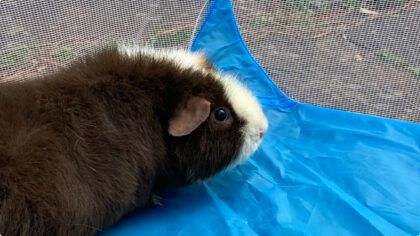
Beorn didn’t like anything about the eclipse. He didn’t even get that excited when I bought him blueberries and told him they were eclipse berries (because they look like the moon in front of the sun), and he usually loves blueberries. I brought his playpen outside so he could enjoy the event, but he decided that he wanted to go back inside after about five minutes, and I didn’t let him see the sun because he was not going to keep those glasses on his little piggie face.
It’s hard to be a little guinea pig during a once-in-a-lifetime event.
Josh and I gave the eclipse two thumbs up. 5 stars. We only had 87% coverage, but it was still very cool.
*******
Stop procrastinating. Go make your backups. Don’t have regrets.
Seriously. Stop what you’re doing for a moment. It will take you fifteen minutes, tops. But you will have peace of mind for days and days. It’s the gift to yourself that keeps on giving.
As always, add any new thoughts to the Friday Backup post and peruse new comments to find out about methods, plug-ins, and devices that help you quickly back up your data and accounts.
*******
And now the blogs…
But first, second, helpings of the posts that appeared in the open comment thread last week. To read the description before clicking over, please return to the open thread:
- “Separate Waiting Rooms” (Stirrup Queens) – thank you, Jess!
- “Knowing I Won’t Have Kids” (Infertile Phoenix)
Okay, now my choices this week.
Finding a Different Path writes about her total eclipse of the clouds. She explains: “It was really cool, but it was also an exercise in practicing being appreciative in the face of disappointments (which so many of us are REALLY good at, unfortunately).” I think that is a very profound lesson from the eclipse, especially because the event comes with a lot of anticipation AND many things (e.g., weather) outside a person’s control. And it still sounds like a cool experience in the totality zone, clouds and all.
Lastly, Infertile Phoenix writes about what it means to now have the knowledge that she will not have children. I especially love these lines: “Knowing I am not going to have children is easier than trying to get pregnant. Living my life knowing that I won’t have kids is easier than coping with the initial years after the realization.” It’s a wonderful post about life after knowing.
The roundup to the Roundup: Beorn’s not-so-loving-the-eclipse Eclipse. Your weekly backup nudge. And lots of great posts to read. So what did you find this week? Please use a permalink to the blog post (written between April 5 – 12) and not the blog’s main URL. Not understanding why I’m asking you what you found this week. Read the original open thread post here.
April 12, 2024 2 Comments