

Earthquake
Let’s start by saying we are all fine.
The Wolvog and I were in a port-a-potty when the earthquake happened. I had my back to him, facing the wall, to give him privacy. It felt as if someone was jiggling the door handle awfully hard, as if they had a urinary tract infection and had! to! get! in! the! bathroom.
“This bathroom is very wobbly,” the Wolvog commented nervously.
“That is not an excuse for not aiming,” I called over my shoulder to him, always the mother of the year. “We’re in here,” I told the person outside.
The port-a-potty stopped rocking.
When we got out of the bathroom, the only people nearby were this elderly couple who wouldn’t have had the strength to rock the port-a-potty in that manner, so I chalked it up to a rock-and-dash, and the person had moved on down the road to a different potty.
Then we rejoined our group and learned about the earthquake. Then we gaily laughed for accusing the world of having a urinary tract infection. And I told the Wolvog that even an earthquake was not an excuse not to aim well.
August 23, 2011 34 Comments
The Space Between
The space between the twins’ beds is called the “We.” They named it that when they were around two. They would drop things in the space — binkies, stuffed animals, lovies — and ask us to fetch it. “In the We!” they’d inform us, as we stretched our arms into painful angles to grab the binkies/stuffed animals/lovies. There was “I” and there was “he” or “she,” and between their two beds was a space called “We.”
The twins are splitting into two rooms.
They have shared a room since the first day of their life. First they shared a room at the hospital, and then they moved to a single crib in our house. Later on, they moved to two cribs, side-by-side. Finally, it became two toddler beds that ran the length of their wall.
Every time we broached the topic of separating, they would beg us to let them stay together, and there was always a reason that we let it go; some other current stressor or looming situation that would make us shrug our shoulders and let life go on as is.
I knew all summer that they needed new beds, and we told them that by the end of August, we’d need to split into two rooms. There were a lot of tears when we talked about it, but they knew it was coming. When I told them that it was time to go bed shopping, they came willingly.
While the activity was bouncing on beds and testing out pillows, they were all smiles. But when the time came for me to sign the delivery slip with the saleswoman, they started crying, the reality of the situation hitting them hard. I took the Wolvog into the corner of the store and sat on a random bed, stroking his head and telling him that we could fall apart at home, but we needed to hold it together in the store. I sent them down to another store with my mother and niece, and I signed the credit card receipt in relief, happy to have the task accomplished.
Afterwards, I chose an armchair in a random part of the store and called Josh, my hand over my face, like I was trying to hold my grief against my skin, keep it from spilling out into the ether. I wanted us to be past this moment. I don’t want this moment to come at all.
By the end of the week, we will step into two separate rooms. I have taken down the nursery decorations and packed them. I have gutted the drawers, throwing out baby items. We have bought new sheets, blankets, curtains. They are slowly making their rooms their own. If we try to talk about it with them, they cry. If we don’t talk about it but rather look at the reality out of the corner of our eyes, they’re fine. They will get through the transition; we will get through the transition. There will come a day when being in two rooms feels more right than wrong.
“If I had been a singleton, this wouldn’t be so scary,” the ChickieNob told me. “I think singletons must like being alone. But I’m not a singleton; I’m a twin.”
Well, no, singletons don’t really love being alone. Some do, some don’t; just as some twins love being with their sibling and some would rather be apart. But I think what she is trying to ask of us is to not treat them as we would singletons. To recognize that there is a different relationship there.
Just as she can’t imagine life as a singleton, I think only those who are multiples know what life is like as a twin. The decisions that affect them should be made by them, since the adults in their life make decisions from a singleton point-of-view. So I really struggled with taking this choice away from them simply due to logistics. It happens all the time — that life gets in the way of letting them lead their own life. But just because it happens all the time doesn’t mean this situation hurts any less.
It feels like one more end to babyhood; a letting go. A moving forward, which also means by default moving apart. It’s a step away from Josh and myself as well. The ChickieNob is taking over the room that has always been held for our not-yet child. There is a brother or sister-who-isn’t who was supposed to take that space. If that comes to be, we’ll shuffle things around. Until then, it feels silly to hold the room for someone who isn’t here when we have such little space.
Josh and I need to mourn. And the twins need to mourn. I’m really grateful to the people who saw we needed the support and stepped in with kind words or distractions for the twins or help in getting the rooms ready. I’m less grateful to the people who shrug their shoulders and say, “what’s the big deal?”
I guess the big deal is that it’s a big deal to us. And with that as an answer, it sort of doesn’t matter if the other person doesn’t see it as such; which is true for so many places in life. It’s a big deal to our family and that is all the listener needs to know. And if they don’t understand why, I’m not certain I can explain it. The truth is that the twins and I spend more time not talking about it but simply rocking back and forth in the glider, my hand stroking their back or their hair. Sometimes it’s less about words and more about acknowledgment.
Isn’t that true for so many areas of life? Don’t we just need someone to stroke our head for a moment and acknowledge that we’re struggling, even if they can do nothing to remove the problem?
As I tucked them in on Thursday night, I slipped my hand into the space between their two beds; only a few centimeters of width. “What do you call this space?” I asked, knowing the answer even though it has been many years since they’ve dropped something in it and asked us to fetch it.
“The We,” the Wolvog called out.
For each of them: there is an “I” and there is a “he” or “she.” And there is also a space between them which is owned by neither of them but invisibly attached to both of them. And even slipping into two separate rooms can’t take that away.
August 22, 2011 43 Comments
Reframing Success
Consistently, whenever I get around ovulation, I have an enormous dip in self-esteem. I feel like I’m literally the opposite of all of those studies that have found that women believe they are more desirable around ovulation, an evolutionary trick to make humans have sex when they’ll be successful. Instead of revealing clothing, I am more likely to wear sweatpants and bemoan all the ways I’m just not good enough. I know, it’s attractive. Girls in mustard-coloured sweatpants with low self-esteem get the boys hot.
I’m assuming it’s a learned behaviour because it seems to have started in the last few years. Get enough hints from your body that you suck at family building and you will get the message that you suck at family building.
I was having one of these low self-esteem sessions last cycle when Josh said something profound when I cried that I didn’t feel successful in many facets of life:
“You are not a success in the comparative sense, but you are a success in the objective sense.”
I’ve been mulling this over, rationally aware at this point in life that it never stops. You can be the most popular girl in school and still perceive that someone is more popular. You can arguably be one of the most successful writers — your characters beloved by millions of people — and still lament that you haven’t won a Nobel Prize in Literature. Someone else’s stomach is always flatter, hair is always shinier, boobs are always perkier. Other people don’t seem to have your money problems: they can afford a single family home and vacations, and they don’t have a job dissimilar to your own.
I have always compared myself to others and used that as the barometer of my success. I wasn’t as smart as my sister in school nor as pretty, therefore I labeled myself pedestrian and homely. Looking back, if I consider myself objectively, was I really that mediocre? Probably not. I was in AP classes, had been told I had great hair on numerous occasions, even won awards from time to time. Objectively, I was smart and pretty. Comparatively, I was not.
Writers will always have the JK Rowlings of the world to make themselves feel like shit about their own writing success. Infertile women will always have the Michelle Duggars of the world to make themselves feel like shit about their family building success. Bloggers will always have the Heather Armstrongs of the world to make themselves feel like shit about their blogging success. It doesn’t matter if you have a published book or a child or have gathered three great friends due to your blog, your achievements only look like a success to the person on the outside who is using your life as a comparison to their own success levels. In your own eyes, you can never measure up.
Unless you stop comparing. Unless you can look at yourself objectively.
What do you think of Josh’s statement?
August 21, 2011 38 Comments
353rd Friday Blog Roundup
I had one of those when-it-rains-it-pours weeks, though it was all good stuff. First, we were at the beach and I picked up hermit crabs with my hands. Which may sound like nothing to you, but is ENORMOUS for me. I do not usually pick up things such as hermit crabs, so I was very proud of myself for squelching my fears and picking them up.
Don’t judge.
Then I found out that Babble named Stirrup Queens one of their top 50 pregnancy blogs; which may seem amusing since I write about how I can’t get pregnant, but I do like that the site has expanded the definition of pregnancy to include us. I also really loved the write up paragraph on my blog, even though it made me blush. This blog was also given the award as being the “most informative.” Thank you, Babble.
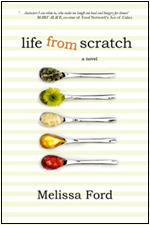
Lastly, Real Simple listed my book, Life from Scratch, as one of their reader-picked 21 great summer reads books. It was fairly trippy to see the cover of my book on the Real Simple site. I don’t know who Cindy B is, but I’d like her to know this: thank you for taking the time to suggest my book. It was two minutes of time for you, and perhaps right after you did it, you clicked away and didn’t think about it again. But it was two days of smiling for me, and your actions will stick with me indefinitely.
Beyond Cindy B, I want to thank everyone who has supported me with the book. (This is the part where I get all weepy.) Obviously, an enormous thank you to everyone who has read it. Thank you to everyone who has sent an email to someone telling them about the book, or lent their copy so a friend could read it too. Thank you to everyone who has written about it on Facebook or liked my author page (I will be posting things from the sequel there soon). Thank you everyone who has ever Tweeted about the book. Again, it’s 140-characters for you, but it means the world to me. Thank you to everyone who has taken the time to write an Amazon review. I’m not sure how they help, but I’ve been told that they’re important. I know it takes time to write a review, so I’m grateful to everyone who has done this. Thank you to everyone for the one million ways you’ve supported me with this book, some of which I’ll never know about.
That’s the most important point: thank you. Those two words don’t feel like enough. I wish I could infuse them with everything I think in my head so you could understand how much your actions mean to me.
*******
And now the blogs…
But first, second helpings of the posts that appeared in the open comment thread last week as well as the week before. In order to read the description before clicking over, please return to the open thread:
- “Saying Goodbye to an Alias” (Creating Motherhood)
- “A Tale of Two Tubies” (Mommy Odyssey)
- “In Which I Get Annoyingly Philosophical” (By the Brooke)
- “For Better or Worse” (By the Brooke)
Okay, now my choices this week.
Flotsam has a moving post called “Let it Out” which catches up readers on the last month of her life. She writes beautifully about the fragility of life and marriage, but beyond that, she writes about needing your blogging space and being unsure you can use it.
Reproductive Jeans has a post about what she’d really like to put as her Facebook status. It’s one of those posts that need very little explanation — just pointing the arrow so you head over to read it yourself (and let her know what you’d like to put in your own Facebook status bar but never would).
No Kidding in NZ has a post thinking about life in the future; namely, when she is a little old lady. I love this point, “And so I realise that so much of our loneliness – or rather, so much of our happiness – is dependent on our attitudes. My mother doesn’t expect (or want) her daughters to be there every day, or to telephone every day. And so she doesn’t sit there pining for us, she goes out and gets on with enjoying her life.” It’s an interesting read; especially since life has no guarantees and the best laid plans have a way of crashing down.
Lastly, My Infertility Story has a post about wondering if she made the best choices by treating her infertility. She asks, “Here we are, 2.5 years later and I’m wondering if we had just let it go and let things happen naturally if we would have a baby right now! I know it’s irrational and unhealthy, but I’m still always finding ways to blame myself. Did I rush things?” There is no way to know what the road not taken holds, except to try it.
The roundup to the Roundup: A rundown of my week followed by a million thank yous in regards to my book. Beyond that, lots of great blog posts to read. So what did you find this week? Please use a permalink to the blog post (written between August 12th and August 19th) and not the blog’s main url. Not understanding why I’m asking you what you found this week? Read the original open thread post here.
August 19, 2011 8 Comments
Twin Reduction
The problem with doing a sponsored post is that it’s on someone else’s time line. So that REI post — which I wrote with a happy heart — is sort of thrust between two pieces of heavy, bready posts like some slapped on peanut butter. And I apologize for jerking you from one serious post into a giveaway and back into a serious post. Though perhaps your crankiness with me is that I’m taking you away from a happy giveaway post and writing yet another heavy post at all.
A warning that this post will be difficult to read if you have lost a multiple. It may be difficult to read if you have used selective reduction. And it totally ruins the end of Harry Potter. So three heads up that you may want to skip this post if you fall in any of those categories.
You’ve been warned.
The New York Times recently had an article on reducing twins down to a singleton pregnancy. Like all NYT articles concerning anything related to infertility, adoption, surrogacy, donor gametes, ART, it clearly showed its bias through word choice. When I read a NYT article about infertility, I use my special decoder ring (don’t you think that Cracker Jacks should make a special NYT infertility article decoder ring that comes in specially marked boxes?) that usually eliminates their agenda so I can look at the information objectively.
And I found that I couldn’t approach this article objectively.
On one hand, I am unequivocally pro-choice. The decision to terminate any pregnancy should rest with the woman. I’d take into account the feelings of the not-yet-father and the medical staff, but other than that, I believe the decision needs to rest with the woman; not the government. I am also widely accepting of reasons for termination. I trust that few enter into termination lightly. It’s a hard decision to make, and I believe that if someone tells me that it was the right decision for them, then it was the right decision for them.
On the other hand, I couldn’t read the article without feeling vaguely nauseated, especially as I listened with half-an-ear to my own twins chattering on in the room across the hall. They had been together the entire day — from sun-up to sun-down — and yet they still need to spend an hour or two talking at night before bed. I thought about all these children who could have had that experience going through life alone. About all the parents who very much wanted their twin pregnancies and lost one of the children either prior to birth or soon after. And perhaps that plays into the reason why I couldn’t look at the article with the same detached stance I bring to all other NYT articles: because I’m just too damn close to the subject matter.
And also worlds away. I was never scared of a twin pregnancy, never scared to raise twins.
I think that people romanticize twins, both rightfully and wrongly so. The reality of twinhood or twin parenting is somewhere between the magical relationship you imagine between the two children and the mundane rationalization that people use to point out that twins are just two siblings.
It isn’t the same as any two siblings, at least not from my vantage point. And their relationship also isn’t this amalgamation of every strange sideshow act smashed into two people. They don’t have telepathy unless you count the fact that they know each other so well that they often can guess the other person’s wishes or desires. They don’t have a secret language unless you count the nicknames and shorthand and made-up words that often arise in any close relationship. They don’t move in tandem or have the exact same feelings about the same things. They are two very distinct people who happen to have been born at the exact same time and have spent their entire life together — from the instant of their conception to this very moment in time. They can comfort each other like no other. They can push each other’s buttons like no other. And they have a mutual sense of entitlement over each other, recognizing their individuality while also paying tribute to the fact that they are a pair. Their relationship is like no other that I’ve ever observed or experienced; except within other sets of multiples.
The work associated with twins is also enlarged and reduced by various people, and the truth falls somewhere in the middle. It is neither an unfathomable amount of work nor is it as easy as what I’ve observed with my friends who had singletons. It just… is. You get through the day and you get through another and you figure out how to do things in duplicate. Until you’ve found your groove with each change, it’s challenging. But once you find your groove, you figure out how to navigate two children who have the exact same needs at the exact same time. You figure out shortcuts and tricks. Most people worry that they won’t be up to the task of raising twins, and yet all those people who thought they couldn’t do it in theory do it in practice once the twins arrive.
We went to see Harry Potter over the weekend. I had been putting it off both because I didn’t want the series to end and because I had found the end of book seven to be excruciating. There was just a lot of death. Even though George and Fred were not my favourite characters, it made me feel physically ill to read about Fred’s death. It’s a scenario that I can’t mentally go to without making my stomach clench and my heart race. The film thankfully raced over that part.
Just as Voldemort marked Harry Potter as The Chosen One based on how he understood the prophecy, I think the twin relationship is somewhat marked by how society treats twins. We tell them they’re special, we make a fuss over them, and therefore, we create these island relationships. They are reacting somewhat to what they absorb from those around them.
We’ve had many talks about this with the Wolvog and ChickieNob, and we’ve told them that people have a lot of strange ideas about twins, but that is their problem, not ours. We need to be polite, we need to be respectful, but we don’t need to answer questions such as “who is the good one and who is the bad one?” or “who do you like more — your friends or your twin?” (Feel free to chime in with the bizarrely intrusive questions that your multiples are asked.) They’ve definitely noticed the attention they garner, and their personalities have been shaped by that accordingly. How can it not?
Ashleigh Burrows had a great quote in her panel at BlogHer where she pointed out that questions asked usually reveal more about the asker than about the listener. And I can’t tell you how many times the first question the person asks in regards to the twins and elementary school is if I’ve separated them. Which to me speaks volumes about the asker — perhaps they feel stifled by a relationship or they can’t wrap their minds around the duality of being an individual who is part of a pair — but regardless, it just goes so far as to point out how we mark twins.
The first question is not how they’re doing with kindergarten or how they’ve adjusted to a long day away from home or how they’re doing with the workload — all questions we’d ask about any individual entering elementary school. It’s whether or not they are together or apart. That is what others deem the most important information; the thing to learn first. How can the twins not absorb that when they hear the question asked; take from it commentary on their relationship? And in internalizing it, also change their relationship with one another? I find that it brings my children closer together; almost an us-against-the-world mentality as it would for anyone if those around them acted strangely about their relationship with another person. United fronts often come out of a perceived attack.
It is difficult to say how much of their relationship comes from the fact that they were in the same womb at the same time and how much of their relationship comes from living life with the other person. If it’s the time outside of the womb that is special, then reducing a pregnancy from a twin to a singleton shouldn’t impact the living child. If it’s the time inside of the womb that is special, then wouldn’t all multiple pregnancies that experience a twin loss result in shattered beings? (I’ve seen vanishing twin rates as high as one in eight pregnancies. That would be a lot of shattered human beings.) The truth, like all other things related to twinhood, is probably somewhere in the middle.
I cannot imagine the ChickieNob without the Wolvog, and vice versa. I cannot imagine them not spending an hour before bed quietly talking (or, as it is sometimes, loudly talking). They separate when they want to separate and they come back together when they want to come back together, often creating figure eights out of their day as they move between their individual wants, the requests of others, and their genuine desire to be together. I’m sure those figure eights will grow larger as they age, with the desire or need to spend more time apart. I hope that they never lose that special relationship, that they’re still best friends when they’re in their eighties, complaining over the phone about their respective children or technology today (in my day, we only had iPhones! And we liked it. We had to get our Internet connection from wireless transmission!).
I hope they never lose one another.
My special NYT infertility article decoder ring failed me, not giving me enough space to look at the situation objectively. Because I both sympathized with the women in the article, wanted to support them on their choices. And I also was frustrated that they based their decision on the mythos of twin parenting: that it is double the work or double the money. When the truth — as you’ve probably guessed — lies somewhere closer to the middle. And I would have loved to hear that they spent a lot of time with twin parents before making their decision; observing a day-in-the-life. But I don’t get that sense. I get the sense that the decision was based on what people believe about twins, which often lies fairly far from the actual truth.
What were your thoughts on the NYT article on twin reduction?
Thank you to Baby Smiling in Back Seat for sending this to the Prompt-ly list.
August 17, 2011 47 Comments