

Minecraft Saved My Life
I know that’s a pretty bold statement to make. Could a video game obsessively played by small children across the world literally save my life? Well, yes. I would not be writing this post today if not for Minecraft and the difficulties we had in downloading the software. So thanks, Minecraft, for making the sign up process take a long time. Because… you know… you saved my life.
Let’s back up though before the explosion happened.
We called a family meeting to discuss two items of business: the fact that the kids seem more enamoured with the idea of obtaining things than they do with using said things, and violence in video games. I submitted, as evidence, for the first item of business an unopened video game they asked us to get them a few months ago. As in, we got them the video game and they never opened it. What a huge waste. There are also the numerous toys that get played with once or twice, the Legos that are never taken apart (and therefore, never reused), and clothing that sinks to the bottom of the drawer practically never worn.
My shtetlness rages against such waste, and my general feeling is that if my kids are not going to use something, it should be passed along to another child who will use said item. So many toys have left our house on the wings of that thought.
But the reason the Wolvog called this family meeting (anyone can call a family meeting) was to discuss a discrepancy in our video game violence policy and he wanted us to close the loophole. I just decided to tack on the wastefulness issue because the reason he wanted to close the loophole was that he wanted to be able to play the survival mode of Minecraft with his friends, and we were only getting him the game if he remained in creative play.
So the question became, should we get the game at all.
The first issue was handled and put to rest quickly. The Wolvog promised that he would be using said game, and would put up his own money as collateral. This is a popular solution in our house to a host of issues from practicing guitar to purchasing items that we promise to use and then don’t. In the case of guitar, the Wolvog gives me $5 at the beginning of the week. As he practices, he gets a $1 back with interest as if his money was in the bank. The interest is determined by the quality of the practice session and whether I was entertained by the music. At the end of the week, he has made a few cents and has his original money back. If he doesn’t practice, he loses whatever is left in the “bank” (eg. my tight little fist) at the end of the week when we get to his lesson.
The same goes for purchases — sometimes we ask them to contribute money towards a purchase and sometimes we ask them to put in cash as collateral. If they use said item as promised, we slowly give them back their investment that we held as collateral. If they don’t use said item, we don’t remind them. We simply keep that money held in escrow.
So we determined the amount of money that the Wolvog would be contributing toward the purchase of Minecraft, negotiated that it would be money held in collateral vs. contributed to the purchase, and moved on to the next order to business: violence in video games.
We are an anti-violence family. No guns — not even water guns. No role playing games with violence. No violent-looking Legos. And this extends to video games and movies.
Except.
The Wolvog pointed out that the ChickieNob plays Plunderland, a fairly bloody iPad game where jolly cartoon pirates blow the heads off of unsuspecting boatmen. With cartoon blood splashing into the water. I purchased said game because I am a big fan of cartoon pirates. The same rules hadn’t been applying to the ChickieNob because of a gender-bias. I was treating violence as problematic in boys and teaching assertiveness in girls.
Merida in Brave with her bow-and-arrow = good. Eowyn with her sword = good. Hermione using her wand as a weapon = good. I feed my daughter a steady diet of girls doing courageous things, always fighting on the side of good. If she wants to bash open a few boatmen with a cannon, more power to her. Maybe it will make her an assertive, self-assured, kick-ass lady.
But I certainly don’t seek out the same type of role models for the Wolvog. I assume that seeing fighting will turn him into one of those violent playground assholes that kick dirt in your face and call it a game. I was banning him from the survival mode of Minecraft because it meant fighting zombies and creepers with a sword or bow-and-arrow. And this wasn’t fair, nor did it make a ton of sense since he also pointed out that he was allowed to see Lord of the Rings, which had violent fight scenes with orcs, and Harry Potter, where he battled Lord Voldemort in various forms. The Wolvog asked for consistency.
So we reconsidered our stance and decided that we would have a ban on realistic and gratuitous violence. Meaning, if it existed in a fantasy world and the violence didn’t look realistic at all, it was okay. If the violence came in a video game like Real Theft Auto or in a snuff film, it was still banned. We watched a video showing Minecraft violence (it sort of looks like Legos fighting Legos), decided it looked sufficiently unrealistic. The final rule put in place is that if we saw any violent behaviour off-game or if he was unable to step away from the game without whining when we told him it was time to stop playing, the game would be taken away immediately, with no room to get it back. Ever. Because we’re hardcore like that.
He agreed, gave us a large stack of quarters as collateral, and the transaction began.
And by began, I mean that we went through a very long setup process to get the game on the computer. First we had to get an account, then we had to download the game, then we had to troubleshoot because the game wasn’t downloading, then we had to set up his user account.
And somewhere in the middle of this 45-minute-long set up, I walked out of the kitchen where I was making dinner to observe the process, and as I was out of the room, there was a huge explosion. A set of glass bowls had somehow fallen out of the cabinet, shattering as they fell and sending glass into multiple rooms. The impact was strong enough to slice through the dish draining board on the counter. If I had been in the kitchen at the time, I probably would have been dead or at the very least, very lacerated. But I wasn’t in the kitchen because Minecraft takes a shitload of time to set up on the computer. It takes such a considerable amount of time that it draws you out of the room to repeat ad infinitum, “really, it isn’t done yet?”
So, thank you, Minecraft, for your remarkably time consuming setup. Because it saved my life.
*******
For those who think that Minecraft is not educational, I give you this tale from our first day of world construction. The first thing the Wolvog wanted was to spawn himself an ocelot. He’s a big fan of wild cats, and Minecraft is a lonely world without a feline companion. So he spawned himself an ocelot that stuck around for all of five minutes and then ran away. Lesson one: build tight cages for all the things you love so they can never escape you. Neveeeeeeeeeeeer.
So he built a cage for his new ocelot — Ocelot 2.o — and then spawned a dozen chickens too. Unfortunately, all 12 chickens are now dead because the ocelot instantly ate them. Lesson two: build separate cages for the things you love so they can never collude against you to get away OR eat each other.
So now he is hard at work on constructing a structure that keeps his ocelot away from his chickens. It’s all about control, baby.
April 15, 2013 20 Comments
Release Your Babies
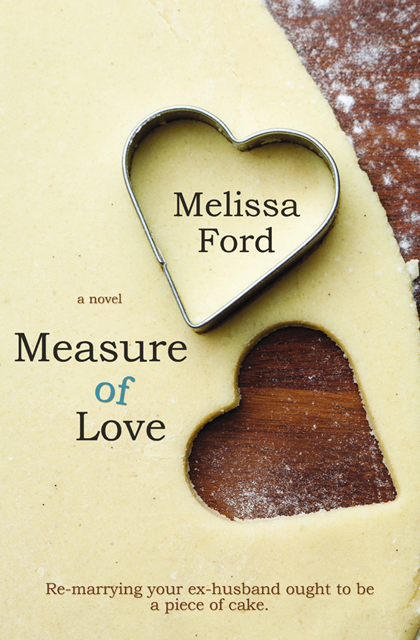
It’s the end of the first week after the release of Measure of Love. The publisher is doing a slow rollout, which means that it’s up or out in some places and not in others, though it will be everywhere within the next few weeks.
Things are different this time. They’re not doing a promotion, so no big Kindle giveaway of this book. Sorry. On the other hand, Amazon (at least) seems to be sending out emails to everyone who got Life from Scratch — over 125,000 people — to tell them of the new book’s existence. Which is obviously 125,000 kinds of awesome, a small benefit to it being a second book as opposed to a first book.
I get a lot of practice on sending things out there. I write a lot of emails; poof — they’re out of my hands and I don’t know how they’ll be received. I write a lot of blog posts; poof — they go up on Stirrup Queens and I have no idea if you’ll read them and like them, or if you’ll tell me that I’m bat-shit-insane and completely wrong.
But even with all of that practice, it is still hard to release a book. To send it out there and know it is being read. Will the story hold up? Will it entertain? Will it make you think… a little bit? Not too much? My favourite books tend to make me think a little bit, and enjoy myself a lot. Those are the sort of books I aim to write. So did I succeed? Or did the book fall flat? There’s just no way to know until the book is out of your hands and in front of a reader’s eyes.
And that is frankly scary, even if I am happy to have it done. Even if it’s what I want.
*******
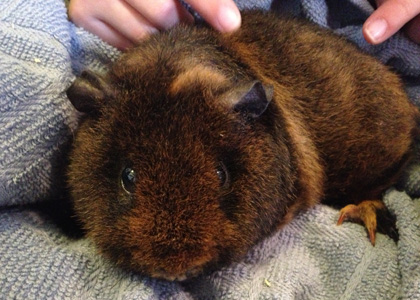
It is also the end of Truman’s first week with our family. We’ve started to allow him to run free in the kitchen. We take him out when the kids come home from school, and then he stays out until dinner time. It is a little bit scary for him; big open space, lots of strange noises, unsure of where to go. Sometimes the kids sit on the floor with their legs outstretched, feet touching, and Truman runs between them, back and forth, wheeking happily and pausing to eat carrot tops.
The third time I placed him down, he ran underneath a cabinet and crouched in the darkness, out of reach. I knew this was a possibility, but I didn’t close off the space because the cabinets can be moved. A pain in the ass but feasible. I allowed him to sit underneath for a few minutes, and then slid the cabinets away from the wall, squeezing through a narrow opening and scooping him off the floor.
After this happened, I started stressing about putting him down. I didn’t want to constantly move the cabinets but didn’t know how to shut off access. I’m sure being out is somewhat scary and exciting for him — the wide, open spaces! the treats he may find! — but it is also scary and exciting for me. He’s so little; I never want him to get hurt. But I can’t let him just languish in a cage, and I like him beside me at all times. During the day, we’re together as I write, and then in the afternoon, we’re together as I cook.
We came up with the plan to build a wall out of old Duplo blocks (what else do you do with those things once your children graduate to Legos?) to close off the cabinetry. It will give me the peace of mind that I won’t find him unreachable underneath furniture while giving him the rest of the kitchen to explore.
It’s hard to do it, but you have to release your babies.
April 14, 2013 8 Comments
439th Friday Blog Roundup
Well, obviously mainstream media touched a nerve with me this week.
Denver Laura’s question about what would be written in her obit got me thinking what would be written in mine. What would make the highlights reel? If Yvonne Brill will forever be known for her beef stroganoff, which recipe of mine will people talk about after I’m gone? Will it be my balsamic vinaigrette, which people seem to enjoy? My challah, which I wrote down on the inside of one of our cabinets? Or my chocolate chip cookie recipe which I perfected a few years back?
I think the chocolate chip cookie recipe.
But maybe put that in the second or third paragraph vs. the lede.
*******
I am currently living in fear of the Brood II cicadas which are set to emerge this May. (Warning: there is a picture if you click that link.) They are different from the Brood X cicadas that won’t be here until 2021, but they’re still a big brood. The only thing giving me any comfort whatsoever is that our town may not see many:
Not everyone will hear it. Cicada sightings will be spotty throughout the Mid-Atlantic. In this area, D.C. residents might not see or hear any, but residents in Southern Maryland and Virginia could witness more than their share, entomologists said.
Based on sightings of this group’s parents in 1996, residents of the following municipalities should be on the lookout: Richmond, Williamsburg, York, Fairfax, Falls Church and Baltimore, and Loudoun, Prince William, Anne Arundel, Prince George’s, Queen Anne’s, St. Mary’s, Wicomico and Baltimore counties, among others.
Which is a small comfort. I don’t want to see any.
Friends keep teasing me, but I have no idea why they’re laughing when they know full well that I have no qualms calling them until they come over to remove a cicada regardless of the hour or what they’re in the middle of doing.
*******
And now the blogs…
But first, second helpings of the posts that appeared in the open comment thread last week. In order to read the description before clicking over, please return to the open thread:
- “Gifts” (Serenity Now)
- “Practice Makes Perfect” (Through the Ardennes)
- “5 Years” (Viva la Vida!)
- “Travel Plans?” (Certainly Not Cool Enough to Blog)
- “The Break Becomes an Ache?” (By the Brooke)
- “Easter Blues and Bubbles” (The Road Less Travelled)
- “Giving Up vs. Letting Go” (The Road Less Travelled)
- “Open Letter to Infertility” (The Kooky Chronicles)
- “Tiny Pants: They’re Like Lunch” (Glum Bunny)
- “Luxury of Time” (Anabegins)
- “What It Feels Like to be Infertile” (Life of a Digital Girl)
Okay, now my choices this week.
Queen of the Slipstream has a post four weeks into parenthood. It is about the role adoptive parents serve as one of the three relationship bridges in adoption. She writes: “I have wrestled with my emotions over how I feel about my position as Baby J’s mom, R’s position as Baby J’s first mom/birthmom and what my role is in bridging all of the complex relationships that are unfolding together.” I love her discussion of how the relationship defies description: that it works even if she can’t explain why. Great post.
Baptism by Fire has a post about pinboards and infertility and childlessness, focusing on the 369 pins on her boards. She admits, “I have other boards, such as horses, ice cream, cadbury eggs and Star Wars, yet I keep returning to infertility boards to see what pins had been posted, either for me to pin on my board or to click on ‘like’.” It is a powerful, powerful post about the role the Internet has played in both healing her and separating her from the outside world.
Lastly, Inconceivable has a post about waiting for her beta after getting a call about her progesterone levels. After patiently waiting through the first week in the two week wait, she thought she would be able to get to that final blood test without drowning in the anticipation. But good news about her progesterone levels has infused her with hope. I love the conversation between the angel and devil on her shoulder, and hope that she gets a positive next week at the end of the wait.
The roundup to the Roundup: Newspapers are making me cranky. Freaked out about cicadas. And lots of great posts to read. So what did you find this week? Please use a permalink to the blog post (written between April 5th and April 12th) and not the blog’s main url. Not understanding why I’m asking you what you found this week? Read the original open thread post here.
April 12, 2013 11 Comments
Dr. Robert G. Edwards, You Deserved Better
I woke up this morning wondering if I was being overly sensitive in my reaction to the coverage of Dr. Robert G. Edwards’s death. I am obviously biased being an infertile woman. Of course what I celebrate others may find anathema. So I thought about other people who pioneered controversial-at-the-time-but-now-pretty-common medical procedures and decided to look up their obituaries. Just to give you a sense of the commonality of each of these procedures, there have been about 5 million babies born via IVF. There are about 5000 heart transplants performed each year.
Dr. Norman Shumway immediately popped to mind. Pioneered heart transplants. Anyone who has benefited directly or indirectly from one would feel only gratitude that the procedure exists. But there are obvious ethical issues that come hand-in-hand with transplants, least of which are religious practices that ban the transfer of organs from one body to another. So I looked up Dr. Shumway’s obit in the New York Times.
The title: “Norman E. Shumway, 83, Who Made the Heart Transplant a Standard Operation, Dies”
Let’s compare that to Dr. Robert G. Edwards’s title: “Changing Rules of Conception With the First ‘Test Tube Baby’”
Well, surely there will be some judgmental terms in the first paragraph of Dr. Shumway’s obit, right?
Dr. Norman E. Shumway, the Stanford cardiac surgeon who in 1968 performed the United States’ first successful human heart transplant and later made the operation a standard procedure after virtually all other surgeons had abandoned it, died yesterday at his home in Palo Alto, Calif. He was 83.
Respectful. An awe-inspiring obit for an awe-inspiring man, who made life possible for so many people.
The same went for Dr. Christiaan Barnard, who trained with Dr. Shumway and actually performed the first successful heart transplant.
His title: “Christiaan Barnard, 78, Surgeon For First Heart Transplant, Dies”
I’m sure you’re seeing the difference in these titles. For Dr. Barnard, they are reporting about a man’s greatest accomplishment as well as his death. Based on Dr. Edwards’s title, you may not even know the man is gone.
And this paragraph in Dr. Barnard’s obit lovingly champions his contribution to the medical world:
In the view of some experts, perhaps Dr. Barnard’s most important medical contribution was his courage to proceed with a human heart transplant at a time when other surgeons who had performed the operation only on animals continued to hesitate to be the first to transplant a heart in a human.
All three men did controversial work, but only Dr. Edwards’s obit focuses on the controversy instead of the accomplishment. The fact that his work actually helps people is sort of beside the point in his article. The New York Times doesn’t work to convince the reader that despite the procedure’s rocky beginnings, it has become a lifesaver to infertile men and women. Yet it does for Dr. Shumway and Christiaan Barnard. And it likely will — not trying to kill you off early, Dr. Bailey — when it one day writes Dr. Leonard Bailey’s obit. He pioneered infant heart transplants and was the doctor who placed a baboon heart in Baby Fae. He deserves accolades for his work in his obituary along with a recounting of history. But Dr. Edwards does too.
Is it just hearts? Well, no. Ernest McCulloch who pioneered stem cell research — another still-controversial practice — received a nice title from the New York Times: “Ernest McCulloch, Crucial Figure in Stem Cell Research, Dies at 84.” And his opening paragraph talks about the hope we have due to his accomplishments:
Dr. Ernest A. McCulloch, a father of the stem cell research that scientists say holds promise for the treatment of many ailments, died on Jan. 20 in Toronto. He was 84.
Which brings us back to the New York Times coverage of anything related even remotely to infertility, and yes, I am picking on the New York Times simply because their obits were the first that popped up when I Googled each of these doctors’ deaths, but feel free to replace the New York Times with most mainstream media. So many, after all, get it wrong.
Between posting about it yesterday and this morning, the New York Times has removed all uses of the term implant from their article. They did so silently, without an apology or a mea culpa for their part in disseminating wrong information*. It’s too little too late, and no one can pretend they didn’t know better seeing that Stephanie Saul said in her email to me back in 2009 that it was a conscious choice on the part of the New York Times to use the term “implant.” What I want to see from newspapers today is an article admitting how they shaped the public’s view of infertility. That by using words laden with judgment, by telling people it was controversial, they made it controversial.
When they can accept the part they played in how the Aunt Janes of this world think about IVF, I can say they’re fixing things. Until then, I’m not impressed. And Dr. Robert G. Edwards deserved better than what they gave him.
The Grey Lady, you are one biased woman.
* I looked up New York Times corrections. This change was not listed today or yesterday. Very cowardly, New York Times. Admit your mistakes. Though I have no doubt that you’ll now quickly tack a correction on that page as if it were there all along. Which it wasn’t.
April 11, 2013 16 Comments
My Ire Over the Coverage of Dr. Robert G. Edwards’s Death Continues
It is all Magpie’s fault. She posted Dr. Robert G. Edwards’s obit from the New York Times on Facebook. As a practice, I tend to avoid all infertility coverage in the New York Times (as well as all other coverage of all other topics due to their piss-poor coverage of infertility topics). And they didn’t let me down in discussing the physiologist.
Did you know that his hard work “has enabled infertile couples to bring millions of children into the world and women to have babies even after menopause.”
Seriously? That’s where you’re going to start with this?
He also apparently had SUPER POWERS with embryos that you didn’t know about because he was capable of “implanting it in a woman’s uterus to produce a baby.”
I once wrote Stephanie Saul of the New York Times to point out her misuse of the term implant when discussing IVF. She wrote back: “I hear you, but knowing this beforehand we made the conscious decision to use the word implant. The average reader doesn’t understand what a ‘transfer’ is.”
After I pieced back together my head after it exploded, I wrote her back:
But all due respect–how does it help the reader to hear the wrong terminology? This isn’t a matter of simplifying the process or not using jargon. There are plenty of verbs (“he placed too many embryos in the uterus”) that can be used if you’re worried that the reader will not understand the idea of “transfer.”
But the term implant doesn’t convey the limitations of the procedure. I think the general public has a very skewed vision of the success rates of IVF–I know I did before I actually had to enter treatments. Implant implies that much more of the process is under the control of the doctor rather than left to chance. And I think that plays into the notion of doctors “playing G-d” as well as the belief that people enter IVF simply because it’s more of a “done deal” than intercourse.
Words matter, mainstream media. How you choose to record someone’s life in an obit matters, as you probably should have noticed with your obit of Yvonne Brill last week. How you choose to present a scientific development in a newspaper matters. And you really really really really failed here. Four reallys for the four times you used implant incorrectly in a single obit.
April 10, 2013 16 Comments