

The Tangled Webs Social Media Weaves
A few years ago, I got a friend request on Facebook from a blogger. When I looked at our mutual friends, I saw my cousin’s name pop up on her list. I wrote the blogger to ask how they knew each other, and she wrote me back that she had just written Tam to ask how we knew each other. And the world became a little smaller.
I’m sure there have been strange overlaps prior to this point. Connections that we didn’t know existed between two people and a mutual third. But Facebook spelled it out: it’s a small world. Honestly, the smallness of it isn’t always comfortable.
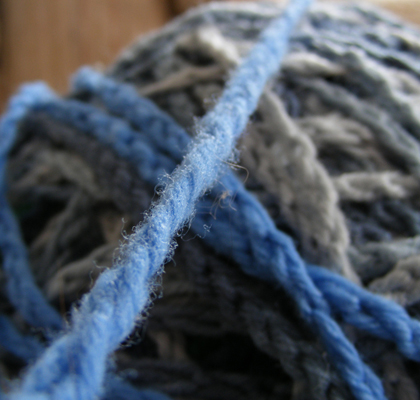
Image: Michael Mol via Flickr
*******
Yesterday, I was editing a post on BlogHer, a cautionary tale on using images on your blog. (Uh, if you haven’t read what happened to this blogger, you really should. Because I see illegally used images on your blogs all the time when I’m reading. Please be careful. And kind.) I squinted at the name of the artist whose image had been stolen: Marian Osher. She was my childhood art teacher.
I used to take art classes in her basement, carrying my supplies in an orange Nike box.
I think of her studio every time I see a kneaded eraser.
I followed the writer’s link to Marian’s website, and contacted her via email to send her a much belated thank you note for those childhood art classes. It had been over 30 years since I first walked down her basement steps. Isn’t that crazy? To suddenly see her name pop up in a BlogHer article?
*******
One time, I was standing at a BlogHer party (yes, I went into Sparklecorn for a whole 10 minutes!) when a woman came up to me and said, “you look so familiar.” We started playing Jewish geography, and it turned out that we had gone to sleepaway camp together. Our cabins had been next to one another. I once kicked her soccer ball down the hill on purpose.
Ooops.
We reconnected and have been friends since. (Hi, Jodi!)
*******
A man started following me on Twitter a few months ago. He came over from a tech post that I wrote for an online magazine, and he effusively tweeted how much he loved it. I recognized him immediately: he was the husband of a woman I haven’t seen or spoken to in over 10 years because she is pure evil. Like totally distilled, absolutely pure evil. He clearly had no clue who I was or that I had ever crossed paths with his evil wife. Did I mention that she’s evil?
On the other hand, many years ago, a woman started following me on Twitter, and she turned out to be a long-lost high school friend who hadn’t recognize me at first. I only knew who she was because she had an unusual name. We ended up meeting for tapas and catching up.
So it works both ways.
*******
What is the point of all of this? Nothing except to marvel at the way connections unravel from a yarn web. We all have stories like this from social media. What is yours?
cross-posted on BlogHer
February 13, 2014 17 Comments
The Importance of Knowing the Story
Don’t read this post if you haven’t finished the Hunger Games series or if you plan on ever reading it. Spoilers abound…
So I finished Mockingjay. It didn’t pick up for me until Boggs. (I’m trying to be discreet in case people haven’t clicked away yet and are reading this first line. I really don’t want to spoil the books for anyone.) The first 3/4ths of the book were a little dreary; too dreary. And while some of the twists were good, they didn’t lasso my attention. I devoured Catching Fire, but I meandered slowly through Mockingjay.
Until that end.
I thought there were bits of sloppy storytelling up until that point; places where I wanted Collins to — apologies for using this cliche — show instead of tell. Especially when Katniss literally was the girl on fire; I thought it was a cheap exit out of the problem of confronting Snow. But that lack of confrontation led to the greater moment with Coin. And I LOVED that. I loved that she shot Coin. That she had one arrow and she took out the greater evil. Because while Snow was evil, he at least was upfront in his evilness. Coin was evil disguised as good, and that, to me, is a worse kind of evil. I have a special dislike for people like that.
But what I loved at the end, and what was really a running theme through all three books, is this idea of other people holding the truth. That there are facts that you want, but other people have them, and sometimes they will give it to you and sometimes they won’t. And sometimes they can and sometimes they can’t. Snow manipulates and inverts Peeta’s thoughts. Whole districts are wiped out and with them, the collective memories. And in the very end, it comes down to Katniss not knowing who killed Prim. And Gale — unable or unwilling — to tell her whether or not he was involved.
But I mostly connected to this idea of the memory book that Katniss, Peeta, and Haymitch create at the very end; to remember all the people they knew on this earth. To collect those stories and put them down on paper so others could have them in the future. They are consistently the only three characters who willingly give others the truth, so it’s fitting that in the end, they are the three who will keep providing that for generations in the future.
I’ve been a little manic working on my family tree. There are these names out there, and they’re unreachable. And on one hand, what does it matter? How will my world change if I know the name of a great-aunt who was killed in Auschwitz? But I have this handwritten note from an aunt who died years ago, telling me that this couple had a little girl who was lost in the camps. And how can I not be consumed trying to count her so she isn’t forgotten years from now? It feels like every few generations, tides of people slip off the earth, out of records and out of memories. And while that may be fine for other families, I don’t want that to happen in mine. So I’ve been a little consumed. A lot consumed. I think about these missing names from the family tree when I’m supposed to be sleeping.
So it was fitting to read that end of Mockingjay when I’m in my own space of trying to ferret out the facts. Sometimes, they’re not knowable, as is perhaps the case of Prim’s end. But many times they are, such as the case of remembering those that existed.
February 12, 2014 5 Comments
Real Life Strategy Guide: Manage Your Time
I’ve been fairly effusive about the game Hay Day. (You probably haven’t noticed. I’ve only mentioned it about 14 times in the last 6 weeks.) The reason is that it’s a bit like running a business without any of the risk. I get to feel like the most successful farmer of all time without needing to invest any real money. It’s a game of strategy: what should I buy and what should I make in order to make the most money? I am really fucking good at it.
If only “virtual farmer” was a coveted resume skill.
So I cracked up reading Oliver Emberton’s tongue-in-cheek strategy guide to real life, treating our daily existence like a virtual game a la Hay Day. Except that buried underneath the humour is a really important idea that catapults people in both virtual games and actual life goals, and that is the point that success is deeply tied to an ability to manage your time wisely. That time — not money, not popsicles (which sell for $352 for only 3 hours of work!), not talent or skill or education or who you know — is the most important resource to manage.
You might not realise, but real life is a game of strategy. There are some fun mini-games – like dancing, driving, running, and sex – but the key to winning is simply managing your resources.
Most importantly, successful players put their time into the right things. Later in the game money comes into play, but your top priority should always be mastering where your time goes.
It rings true that the ability to level up is using your time well. That you level up in life faster not by forcing yourself into productivity, but in also leaving yourself time to dream and relax and have fun. That using your time well doesn’t mean not wasting one minute. It means finding that balance between work and play. Between depleting and recharging. Between the yeses and noes.
In Outliers, Malcolm Gladwell outlines his 10,000 rule, which is that in order to be successful, you need to dedicate 10,000 hours of what amounts to practice time to hit the top of your game. He’s talking about lasting success. Sure, there are flukes, where someone has been doing something for 30 hours and suddenly finds themselves with heaps of attention. But the problem is that sort of success is not lasting success, and it can’t be recreated or sustained. It’s the difference between having a viral post and having constant blog traffic. I’m sure most of us would opt for the latter since it’s sustainable. But according to Gladwell, the only way you get there is to plod along, hour after hour.
And the way you log those 10,000 hours is to say no. A lot.
I am not the best no-sayer in the world. I tend to say yes and kick myself a lot. It is really hard to say no, mostly because I know how it feels to be on the receiving end of a no (or even worse, a lack of answer) and it feels like crap. So I don’t want to make anyone else feel like crap. But the problem with saying yes is that I’m dedicating myself towards someone else’s goals and not my own. And that’s fine on a small basis, it’s necessary if we want to live in communities. But I find myself getting into states where I’m not getting my own work done because I’m too busy doing someone else’s (or something that is beneficial to someone else, but not to me). It’s one thing when it’s for the twins or Josh. It’s another when it’s for a company that is looking for free publicity.
I’ve decided to start looking at life as I do virtual games. Looking at the time I’ve collected, the resources I have, the work that still needs to get done, and my energy levels. And saying yes or no accordingly. Even though I’m really terrible at saying no. I wish they would teach that in school: how to say no and not feel a gnawing sense of guilt that eats up your time anyway.
Are you good at saying no? How do you do it without feeling guilty?
February 11, 2014 17 Comments
Hermione is to Ron as Neville is to Voldemort
This post contains spoilers for the Harry Potter series. So… uh… don’t read if you’re that last person on earth who hasn’t read the series.
The Road Less Travelled has a post up about JK Rowling’s statement last week that she wished she had written the series so that Hermione ended up with Harry. That the ending she gave was wish fulfillment vs. the credible choice that Hermione would have made if this were real life. But I think if Rowling’s going to undo that, she’s also going to have to rewrite Neville’s contribution to ridding the world of Voldemort.
Because nebbishy boys who love plants usually aren’t the ones who bring about the end of an evil dictator. I mean, if we’re going with credible choices.
But we’re not going with credible choices because while we need some suspension of disbelief when it comes to fiction, we don’t want reality. Reality is boring. Reality rarely inspires us. Reality would be Harry and his mates eating potato chips and watching television like regular teenagers. But nary a crisp touches their lips at Hogwarts.
We read fiction for enjoyment purposes, we also read it to better understand our world. And sometimes, in order to understand that we have the power to rewrite our own history or the way the world has pigeonholed us due to circumstances, we need to see characters that break free of their personal trajectory and make decisions that we hope we would make if we were in a similar situation. We hope that we’d move forward and learn from our mistakes and get braver; not that we’d stay our usual, apathetic, meek selves. We hope that we’d choose the person who is good for us, vs. the person who has more money or fame.
And really, the less believable action comes from Neville vs. Ron and Hermione hooking up. We’re to believe that a boy who had his self-esteem destroyed by his grandmother was able to ignore his inner monologue about his lack of worth to become the person who destroys the seventh horcrux? THAT rarely happens. Smart girls end up with nice boys every day of the week. But shy, bumbling boys rarely tap into pools of self-empowerment and take on the leadership role in the leader’s absence. Except when they do. And I believe that Neville does because I want to believe that Neville can reach that place. Because if he can, I can. And if I can, then you can. And we need stories like that to remind ourselves that we don’t always need to remain in statis. We can charge ahead, out of our comfort zone, and maybe change the world in the process.
We don’t really want credible.
So I’m ignoring Rowling’s comment about Ron and Hermione, even though I have no interest in the love story aspect of the book whatsoever. Unless she has a reason for why credibility in that relationship is more important than credibility in all the other actions in the book. Because that is an interesting question: why does she care so much about making marriages believable when no character behaves in the way that a typical person their age would act? Young teenagers aren’t exactly known for being self-motivated and selfless; and here you have a critical mass of them all together in one space, ready to sacrifice their lives in order to rid the world of evil? That, my friend, is a tad more unbelievable than two people shacking up. And frankly, I’m glad to read something a little unbelievable. It makes me hopeful for the world.
Am I the only one who truly didn’t care one way or the other about which character ended up marrying which character? I mean, as long as Voldemort sucked it?
February 10, 2014 14 Comments
Watching the Olympics
We are not boycotting the Olympics. I know a lot of people are for various reasons, and I fully support that move if it feels right to you. Despite Russia’s war on LGBT rights, we are watching the Olympics. Not watching them on NBC affects NBC and the athletes more than it affects Russia itself. Russia, in the case of my viewing, is unreachable in terms of a boycott. So we sat through the opening ceremony last night, cheering on the US team and the Israeli team. And the Wolvog and ChickieNob decided they would cheer along any team with a low number of participants in order to help them feel welcome. So we were cheering on Jamaica and Andorra from our bed.
It is an odd Olympics because it feels so fraught. Beyond the anti-LGBT laws, there is this looming threat of violence that makes me keep skittishly picking up my phone to check for a CNN alert. There was such a strange tension watching the opening ceremony; feeling like we were all holding our breath while those women walked ahead of the athletes in their strange cage-like outfits, holding the name of the country.
On average, a person will get maybe 20 Winter Olympics in their lifetime, and that’s only if they reach old age. They won’t remember the first one or two. They may not be fully cognizant of the last one or two. They’ll miss a year here or there due to travel or work or children being born. So maybe they get 15 chances to consciously watch this. And then we’re off this earth. And the next generation gets their 15 chances.
Sochi is one where the twins and I overlap. Where they are seeing one of their 15, and I’m seeing one of my 15. So it felt heavy last night, holding onto this moment in history together, knowing how painful this particular space is for so many people, knowing how loved this particular space is for so many people. And feeling caught in between it all, caged, because we feel as if we can’t miss it and look away.
We’ll be watching again from 8 pm to 11 pm tonight. (The whole schedule is here if you need a printable version.) Maybe you’ll be watching the same events too. Because that is the flip side of the divisive nature of these particular Olympics; there is also the idea of us coming together, watching the very same thing, cheering on the very same people at the very same time. Peace in whichever route you take.
February 8, 2014 8 Comments