

Read the TV Guide, You Don’t Need a TV
Let’s just say that the Lost Boys resonated a lot with me. Not because we had a vampire problem (or a vampire solution, as I looked at Santa Clara during my Kiefer Sutherland crush) but because, like Sam Emerson’s Grandpa, we didn’t really watch a lot of television. I guess I watched more than Grandpa since he didn’t have a television. But still…
What we did have was the piano sheet music for all the popular television shows. (Play the television theme songs, you don’t need to hear the actual theme song, Grandpa might add.) After I pounded my way through Mozart and Chopin, I could kick back and play a little “Love Boat” or “Dukes of Hazzard” or “Greatest American Hero.”
I may not have watched a lot of these shows, but I could sing every single theme song as if I watched these shows.
Yesterday’s post on Jezebel made me nostalgic for my television theme song sheet music. People don’t make great theme songs anymore. The only opening worth watching at the moment is the one for the Americans. But it’s an instrumental, and Josh doesn’t like it when I sing over the opening in a breath-y voice, “we are KGeeeeeeB spies, we are the KGB!”
I feel like Friends is the last show I watched that came with a catchy song that you hummed during the week, waiting for the next episode to air. I still sing a bunch of them: Silver Spoons;
Love, Sidney (Oooh, with Tony Randall! I just loved Tony Randall!)
And best instrumental, Twin Peaks (Didn’t the song creep you out?)
What television theme songs do you still sing?
P.S. My favourite forever and ever will be Speed Racer. It’s my ringtone for all doctor’s offices.
May 22, 2014 17 Comments
Macklemore, Permanent Outrage, and Forgiveness
By now you’ve probably seen the picture of Macklemore, performing “Thrift Shop” in a stereotypical rendering of a Jewish man.
.@macklemore, first you trick people into thinking you’re a rapper, now you trick them into thinking you’re Jewish? pic.twitter.com/3rtaE4GHje
— Seth Rogen (@Sethrogen) May 18, 2014
Macklemore insists that it’s an honest mistake. Like whoa, I just wanted to be in disguise and dress up to sing my song about thrift shops, and I just so happened to pull together this random black beard and hooked nose. But like… I could be any random man with a black beard and hooked nose. Like Abraham Lincoln. Or Ringo Starr. Why did y’all have to go there?
I sort of got the feeling he was calling all of us anti-Semitic in his apology for thinking that his costume was anti-Semitic.
I acknowledge how the costume could, within a context of stereotyping, be ascribed to a Jewish caricature. I am here to say that it was absolutely not my intention, and unfortunately at the time I did not foresee the costume to be viewed in such regard. I’m saddened that this story, or any of my choices, would lead to any form of negativity.
But here’s the thing: you can’t grab at the most basic visual caricature of someone Jewish — save for the fact that he didn’t include the payis, but hey, Shylock is rarely played with payis — and then say, “oops, I totally didn’t think that anyone would see my costume in that light.” When Josh and I were talking about it, he brought up a point made on NPR.
But that would be like frolicking through a fruit patch, tripping face-first into a dirt pit, and then emerging, dazed and face blackened, clutching a watermelon. Your story might in fact be legit, but so many things would have to go wrong in a particular order that you would kind of have to understand if no one believed you.
So do I believe that the costume meant nothing? No.
I would be more impressed if Macklemore, in the interest of transparency, said, “I made a grave error in judgment. I was going for a hyperbolic laugh a la South Park and ended up falling short in my performance. In the end, it made me just look like an insensitive, anti-Semitic beast, and I think I’ve learned my lesson by this point about trying to be a comedian. I seem to be a failure at using stereotypes to make a statement or opening up an important conversation using humour, so I’ll stick to making music.”
Something like that.
But it all goes back to our lack of forgiveness these days. Twitter has created a sense of permanent outrage, as if society is like the person in Munch’s Scream, standing with our mouth agape in horror at the actions of others. People make mistakes. Sometimes they make big public ones. And they should be held accountable for their mistakes. But what’s happening is something much larger and louder and angrier than accountability.
With our outrage, we’re creating a generation of careful artists; artists who are so scared to have their work recorded and replayed that they’ll stop pushing boundaries for fear of destroying their career with a false move. It wasn’t that news of big public “mistakes” didn’t spread prior to this point (Sinéad O’Connor and the Dixie Chicks immediately pop to mind), but our outrage isn’t a special ember that we all gather around to self-righteously warm ourselves with anymore. It’s like the California fires; out of control.
It’s not just careful artists. If we keep going in this direction, people are going to be afraid to speak up, to try things, to take chances, to fail in the process. We need to learn how to dial it back, to respond firmly but without bile. Who the hell is going to run for office in the future if we keep dissecting our candidates during the election and trashing our policymakers after the election? Who will be the conversation openers, asking the hard questions?
We internalize a lot when we observe the fallout from other people’s mistakes.
Macklemore made a big mistake with his costume, but I’m glad he’s out there, trying to push the envelope. Yes, even when pushing the envelope opens up a big message of hate. Because it has started a conversation about antisemitism that we now need to continue to discuss in a measured, intelligent fashion so we can actually effect change.
So I accept Macklemore’s insincere apology which sounds akin to the times a parent tells their child to say “sorry” (“Macklemore, you need to apologize to the Jews,” Macklemore agent/manager/producer says). I’ll go back to not listening to his music because it’s not my cup of tea vs. not listening to his music because we’re supposed to remain permanently outraged at every lapse in judgment or malicious statement. I just don’t have that kind of anger stored in me.
May 21, 2014 16 Comments
Charlotte and Her Friend, Notability
It has been a little over a week with Charlotte. That’s what I call the Little Red Notebook. Chickie named her. Charlotte is always with us, so the notebook sort of needed a name.
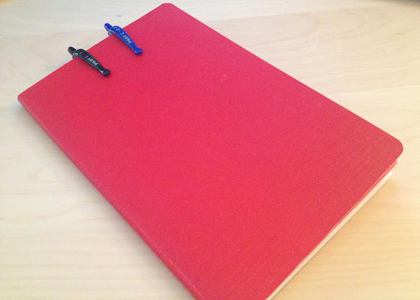
Charlotte makes my brain feel light. It floats around above my head instead of pressing down heavily on my skull. I used to spend so much energy remembering: remembering what I had to do and where I had to go and funny things the twins said and blog posts I wanted to write and this idea for the novel that would solve a plotline problem. All of it churned around in my brain, like a blender left on all the time.
By Thursday morning, three days after starting Charlotte, Josh commented that I had fallen asleep before him. This never happens. It takes me hours to fall asleep. This is partly because I am a terrible sleeper. But the other side of it is that I get into bed and my brain keeps going and going and going. I loop through everything I’m trying to remember, and then I loop through again for good measure, and then I pause to worry for a bit before I do another jog through the tall grasses of what needs to get done.
Before Charlotte, I never stopped spinning mental plates. I wasn’t scared that if I stopped their rotation, they would shatter to the floor. I was worried they would disappear. Mental plates, spinning one moment and blank stems the next.
Since getting Charlotte, my mind feels light. Not exactly happy because… after all… I am still me. I’m just me with a notebook. But I’m not working so hard to remember everything. Instead I have peace of mind that it is written down, not going anywhere until I cross out the words. I put down everything in that notebook. All the bits and pieces that make up a life.
I write down everything; even the most obvious things. Clean Truman’s cage. I can smell Truman’s cage. I can see Truman’s cage. Still, I write down “clean Truman’s cage.” After I clean his cage, I checked it off the list, and I feel at peace. Order has been restored to the rodent world.
I’m retaining more things, thoughts that would have drifted away into the ether. There’s a “why not” element to writing things down. Why not? Why not record that thought? It’s just centimeters on a piece of paper.
I’m getting more done because I have to keep looking at my list. I backed up my computer. It’s been months since I’ve done a proper backup. I have eight post topics lying in wait, whenever I feel inspired to write them out. Games I want to buy and a phone call I want to make and everything I’ve worried about in the last week. It’s all in one place. In my hand.
*******
The notebook managed the sea of post-it notes, but it did little to make a dent in the rest of the loose sheets of paper floating around my house. Packing lists, recipes, written instructions.
I have Notability as a note-taking app, but I decided to use it as a way to go paper-free-ish. If you’re not familiar with Notability (I downloaded it when it was the free app of the week, but it’s totally worth the $2.99 if you do actual work on your iPad), it’s a note-taking app that allows you to type or hand-write your notes. But moreover, you can also record the lecture at the same time, and when you play back the recording, it will highlight your notes when it comes to the part of the speech. For instance, let’s say you’re recording the State of the Union. Obama says something brilliant that you want to include later in the article you’re writing. You just write on the screen something like, “include this!” and when you play back the speech, the words “include this!” will light up when you get to that part of the speech. Or you can write something completely unrelated such as “tell the story about my visit to the doctor” when he’s talking about healthcare, and you’ll have your notes and the sound notes in the same place. Does that make sense?
But that’s not how I’m using Notability to go more-paper-free. (I feel I need to qualify it since I’m not going to actually go paper-free.) I mean, yes, I am still using it to take notes (or the twins use it to do their homework. It makes great scrap “paper”), but instead I am using it for those recipes or packing lists. One of the reasons I like paper recipes is that I write notes all over them as I cook, tweaking the ingredients or cooking steps. You can do that on Notability. You just create a PDF of all your recipes, upload it to Notability, and you can write all over the PDF. You can change ink colours so your first time making the recipe, the notes are red. And the next time, the notes are orange. That way, you always know which were your most recent notes.
I made a master packing list that I duplicate and then make specific for each trip. I can keep adding to it as I remember things I want to bring. And then, when it comes time to pack, I have this typed list on the screen, and I choose the hand-writing function and cross out each item as it goes in the suitcase. I can jot quick notes on the side of the page. I can even add images to the document if want to leave the list for someone else and have them see all the things I want them to pack specifically. And then I can erase all my markings so the same list is clear and ready to go when I’m ready to repack those items on the other end of the trip.
It feels as if a little flip has been switched.
May 20, 2014 10 Comments
Which Came First: Blog Reading or Blog Writing?
It’s the blogging chicken-and-the-egg situation: did reading blogs make you want to be blogger, or did you start your blog and then find other blogs to read in order to build connections with other bloggers?
I’m asking because I suspect the way you enter blogging shapes your blogging experience. Are you the egg, hatching the chicken, or are you the chicken laying the egg? While it doesn’t really matter which version of poultry naissance you believe comes first unless… perhaps… you are deeply ensconced in the farming world, I think that your satisfaction level with blogging is directly tied to how you entered the blogosphere.

Image: Woodleywonderworks via Flickr
Read Blogs Before Starting Your Own
Sometimes people read blogs for a while before starting their own. Maybe their friend starts a blog and they read it to be polite, and one things leads to another until their rss reader is filled with their favourite sites. Maybe they’ve even started commenting or becoming friends with bloggers via Facebook or Twitter. Then one day, they wake up feeling the itch to write, and they think, “why not? Other people blog. Why don’t I start one too?”
Advantages: You know the drill. You know what you like about blogs and what you don’t like about blogs, and you come into the blogosphere already connected to people who will probably want to read your words in return. You get the importance of sharing your posts via social media, and you have people to ask when you can’t figure out how to do something in your blogging software. People who read first tend to have a smoother entry to the blogosphere.
Drawbacks: You come in with expectations because you’ve been around the block and know what’s out there in the blogosphere. Any good Buddhist will tell you that the root of a lot of our problems is in our expectations. If you expect the readers to come, the comments to pour in, free products on your doorstep, then you’ll likely be disappointed in blogging. The cure? Release your expectations and go back to that original reason you started your blog in the first place. Return to that “why not” attitude that provided the wonderful hubris to set your words and thoughts out there. Blog with the energy of someone who is sending her voice into the world just for the sake of getting the writing off her heart.
Start Writing a Blog and Then Find Others to Read
Listen, it’s impossible to start a blog whole cloth without ever having seen or heard of a blog. But there are a lot of people who start writing their blog because someone suggests the activity, and after they’ve already set up their Blogger or WordPress account, they seek out blogs to read in order to make some connections with like-minded people.
Advantages: It’s easy to enter the blogsophere with a lot of energy and excitement because you are tabula rasa, a clean slate. You don’t care in the sense that you’re doing it your way because you don’t know any other way. You’re not weighed down by the “shoulds” and you do what makes you happy because you have no comparison for your blog. Until your blog enters the equivalent of preschool, you have no clue whether you have a great blog or a mediocre one. You’re just writing for writing’s sake.
Drawbacks: Entering the blogosphere like this is akin to touching the elephant; you can’t get a sense of what you’re touching or how large it is because you’re learning what the blogosphere is day-by-day as you move through it. And that can be a very frustrating, especially when the noise clears and you start figuring things out and blogging starts to look like a clique that you’re not a part of; one that has a cool kids table and seemingly no room for yet another blogger. It can be discouraging to discover that it’s not enough to just write your blog if you want people to find you. You have to plug your blog on social media sites, or read and comment on other people’s blogs so they discover that your blog exists. A lot of the effort you put out won’t be rewarded. The cure? Remember that confident, energetic person who dove into blogging head first? Find her again because she’s buried somewhere inside of you, waiting to pop back out and say who cares to all the things outside her control. That’s the person who writes because they love writing. And if they get the rest of the stuff that sometimes comes from blogging, that would be the icing on the cake. But hey, they still have the cake itself.
The Egg Carton
There is also a third kind of bird: the person who goes to the blogging conference to find out what blogging is all about and starts their blog when they get home. I’ve met plenty of people at BlogHer each year who tell me that they’re going to start reading and writing a blog when they get home from the conference. And those people are sort of the egg cartons of the blogosphere, holding the eggs (or the chicken? This analogy is getting a little messy). They have an interesting cushion in that they took in a lot of information about what blogging is and how it’s done before they’ve ever really read or written a blog. It’s sort of like learning everything there is to know about food before you’ve eaten or cooked.
This is obviously an unusual route, up there with people who only observe and never participate in social media (yes, there are people who silently read Twitter without ever leaving a tweet), or those who write their blog without ever reading anyone else’s site. And I kind of like that there are egg cartons out there, charting a very different path. They prove that there is no right or wrong way to blog.
Which way did you enter the blogoshere? Did you read a lot first, write primarily first, or are you that elusive egg carton who started your blog after learning about blogging at a conference?
May 19, 2014 28 Comments
Recovery
Last week, Shutterfly messed up big time. They sent out a note to customers congratulating them on having a baby. For those without children, this was understandably confusing at best and extremely hurtful at worst. Imagine… well… you don’t have to imagine… finding out your IVF cycle was a bust and then receiving this thoughtless email in the same day.
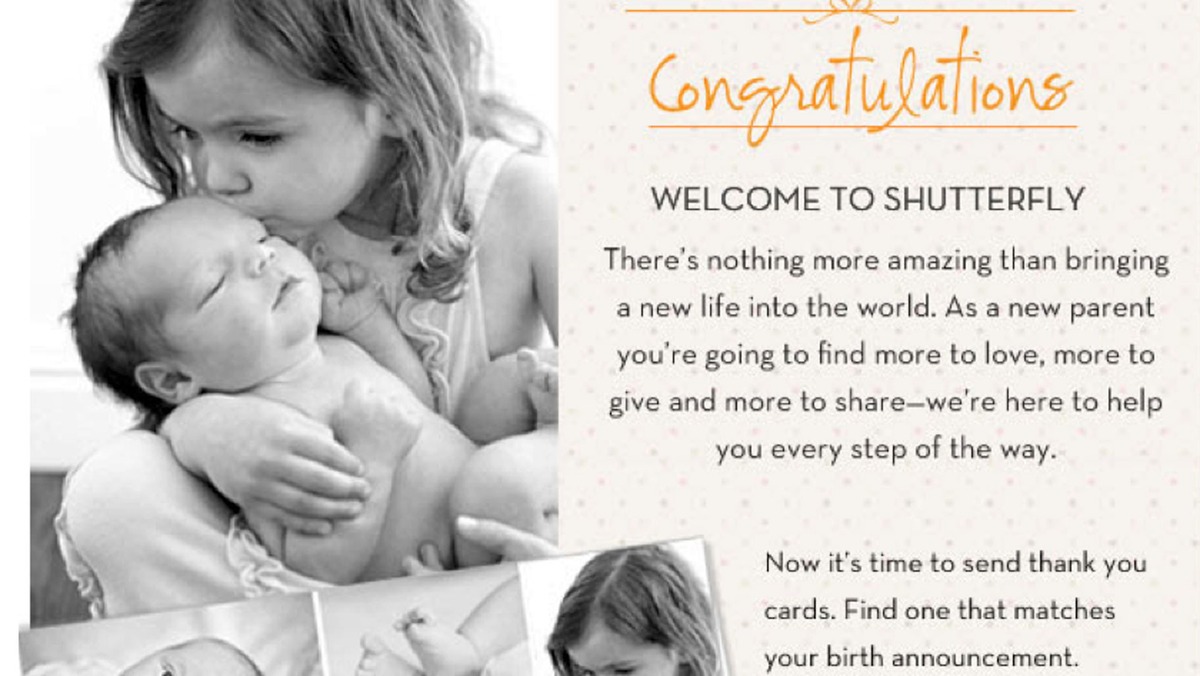
Marketing disconnects like this one happens on a daily basis. I receive coupons for baby products and cans of Enfamil on a semi-regular basis. I receive PR pitches from people who want me to hawk their pregnancy or infant products. (“You write about babies, right?” Uh… not exactly.) There are a lot of people out there who don’t know us at all who are trying to sell something. So they cast a wide net, hoping to snag the right people in the process. But like dolphins caught by tuna nets (or whatever analogy works… I don’t really know much about fishing), we’re sucked into the pitch as well. It hurts as we thrash about.
Shutterfly since apologized, though their apology points to the fact that the nets are going to get thrown over and over again.
We mistakenly sent an email that was intended only for new parents who recently made baby-related purchases at Shutterfly. We’re truly sorry if you received this email in error. We realize this is a very sensitive issue and we did not mean to upset you in any way.
But here’s the thing, if they know this is “a very sensitive issue,” then sending out an email even to people who just made “a baby-related purchase” has the potential to hurt feelings. There are a lot of reasons why someone purchases a baby product, and not all of them mean that they just gave birth to a baby. Marketing that is little more than groping around in the dark has the potential to hurt.
I would feel better if the company owned that and said, “listen, we need to make a living. We’re going to send out emails to try to get you to buy stuff. We’re really sorry if you mistakenly get scooped up in the wrong marketing campaign. Believe me, we know it sucks. We’re also human beings, so it happens to us as well as other companies try to market to us. So… I’m sorry. But this is what needs to be done. Because there is a lot of noise out there and a lot of competition. And we’ve found that we sell 30% more products if we do these email campaigns but only lose 5% of the old customers who get cranky with us because we hurt their feelings. And we have to go where the money is. So… sorry?”
I really like transparency. If Shutterfly would say something like that, I’d nod my head and say, “godspeed, Shutterfly. Keep the emails rolling.”
*******
There’s another piece to this story. Marketing happens, every single second of the day. We have interactions with companies, every single second of the day. Companies are run by human beings, and human beings botch things. We are insensitive and thoughtless and always in a hurry, looking for shortcuts. Businesses can sometimes treat the customer horribly, especially when you have a worker who has no vested interest in the company.
Back when Mr. Olson owned his little store on the prairie, if he acted like a good capitalist and hired a worker to mind the store so he could visit Nelly in the one-room schoolhouse, that worker treated that store as if it were his own. Because his reputation was on the line. And he knew Mr. Olson. And he was going to have to keep living in that community. And unless he opened his own store, there weren’t a lot of opportunities for the worker to make a living. So workers cared because they had to care AND because they were only one degree away from the center of the business.
But nowadays? Do you honestly think the person who sent that email knows the founder of Shutterfly? According to Wikipedia,
The company was founded in 1999 and is currently led by Jeffrey Housenbold, who joined the company in 2005.
So the founder is not Housenbold, who came on 6 years after the company was founded by someone who isn’t even important enough to be named in the article. Talk about being far away from the center of the company. If the worker on the prairie was one degree from the owner, many workers today — especially if they work for big companies — may not even know the name of the person who started the business. They have no reason beyond their need for a paycheck and human good will to do a good job. They may need to face their boss, but they will never have to stare the owner of the company in the face and interact with her on a daily basis. And that’s the problem with a big company. Capitalism worked on the prairie. It even works well in small businesses. But enormous chain stores or international businesses? You get what you get.
This is the trade off for enormous growth. The trade off for convenience and low-cost. The trade off for capitalism in general.
Like most things in life, economics isn’t a pu-pu platter. We can’t say we like this but we don’t like that. We just have to take the whole package. If we want big companies that have their product all over the world, we also need to accept that those companies are not going to know their customers. Our only recourse is to hold companies accountable for making things better when someone within the company messes up, but yes, we will need to keep dealing with direct marketing as long as there are big businesses needing to grope about for customers.
*******
We’re also part of the story. It is disheartening to see how quickly people run to Twitter and publicly trash a company before trying to deal with the company on a quiet, personal level. People weren’t just expressing disappointment in Shutterfly (understandable and if Shutterfly is going to send things into people’s inboxes, they better be prepared for people to talk back). Within the amusing snark were people asking others to stop patronizing Shutterfly. They were calling for a boycott. Over one email. A thoughtless email, but still, one email.
“@TODAYshow: Kid you not! Shutterfly tells hundreds of customers they had a baby http://t.co/cm2Sr734Rr” I suggest boycott of @Shutterfly
— Hilary (@HilaryNY) May 15, 2014
How to lose users in one, quick click: http://t.co/GOnBIZVzi6 #shutterfly #oops
— Chelsie Wyse (@chelsiewyse) May 15, 2014
One click? Or in the case of other examples: one bonehead thing uttered by a CEO, one missing suitcase, one pizza delivered that wasn’t up to snuff. That’s a lot of pressure to put on a company. If we treated our friends like that, lashing out at them due to one thoughtless or sub-par interaction, we would have no friends. And while companies are not people, they are comprised of people. They deserve to be held to standards. They deserve to hear constructive criticism. But they also deserve to make mistakes and have room for recovery. Especially when irreparable damage hasn’t been inflicted on the public or individuals.
I’m not excusing Shutterfly, but I’m owning that as someone participating in the economy of the western world, we created this mess. We depersonalized our business interactions, and as a result, we are treated impersonally. The people at Shutterfly don’t actually know you, so they need to guess things about you by data mining and purchasing lists. Sometimes they guess right. A lot of times, they guess wrong.
I remedy this as best I can by purchasing my books from an independent bookstore, purchasing my produce straight from the same family farm year after year, and every chance I get, choosing the small business over the impersonal big business. It’s not that local vendors and restauranteurs don’t make grave errors in their marketing. But at least they need to keep facing me after they’ve done so. Their kids need to keep playing baseball with my kids. We need to keep passing each other in town. And it holds employees to a different standard, being only one degree removed from the center.
I disagree with anyone who stated that people who got upset with Shutterfly’s email are just way too sensitive. What a weak argument. Your feelings are going to be hurt from impersonal interactions. The salve is to get back into your community and return to making things personal. To shopping at small vendors like Etsy. To going to the farmer’s market or joining a CSA. And yes, visiting that local stationary store in town (if you still have one) and using their services.
May 18, 2014 14 Comments