

Summer House with Swimming Pool
I’m not sure this has ever happened to me.
There have been times when an author has left a story open-ended, and the reader is allowed to argue (during a book club, let’s say) the ending. More often, there is a clearly defined ending, and people are left only to argue whether or not they think the ending fit with the story. But this is the first time when there has been a clear ending to a book; an ending that everyone else seems to get… and I closed the book having no clue what happened.
I mean, literally, no clue.
So in asking about this book, I will need to talk about the ending of this book. Stop reading if you plan on reading Herman Koch’s Summer House with Swimming Pool.
I mean it, stop.
I’m even putting a little space here between the fact that there will be spoilers and the spoilers themselves so you can click off the screen.
Click away.
Good. Everyone else still here has either read the book or simply doesn’t care that the ENTIRE END OF THE BOOK WILL BE RUINED.
I warned you.
So the story ends with Ralph dead due to Marc’s actions. We’re told Marc performs the botched biopsy in order to kill Ralph because he suspects him as the rapist. Ralph confesses to Marc on his deathbed the stuff about the repairman and how Julia faked the rape. Then we have the bizarre Stanley and the fact that Marc would fly his daughter out there for the photos. And then we have the fact that Marc is looking at his little girl as a woman, and all of his talk about child molesters.
So.
Was Ralph telling the truth about the repairman or did he make up that story because he was the rapist? Or because Alex was the rapist?
Or is this straightforward: the repairman was the rapist?
Or is Stanley the rapist and Ralph knew so he gave Marc that red herring?
Or is Marc the rapist, and the whole book has been a red herring? Because his behaviour, especially not pursing the rapist in the moment, felt odd to me.
I closed the book completely unclear on what the author wanted me to think, which is — perhaps — a problem with the story. This book didn’t feel open-ended. It feels as if one of those options above is the one the author wants us to believe by the last page. The problem is that I’m not sure which one.
Did I like the book? Yes… I think? Enough that I got another one of his books out of the library before I finished this one. But… disturbed me too? What did everyone else think of it?
July 5, 2014 17 Comments
501st Friday Blog Roundup
I am not a fan of applying sunscreen. I’m a fan of sunscreen protecting our skin, but the application process sucks. If I could hire someone to follow us around and rub in our sunscreen, I probably would. I don’t like touching sunscreen, and you’re supposed to rub in even the spray sunscreens. But the bigger issue is that my hands are so large and the twins’ faces are so tiny. It’s hard to rub that sunscreen in when your thumb is the size of their entire cheek.
I use it because the alternative is so much worse than the annoyance of having white goop on my hands that won’t wash off. I use it even though our skin is such that we’ve never gotten a sunburn. I use it, but I don’t like it. So I’m going to complain about it.
I am such a fan of long sleeves, long pants, and no sunscreen. I am also unfortunately a fan of the beach. They don’t always go hand-in-hand.
*******
Happy 4th of July if you live in America!
Or if you’re American but don’t live in America.
Or if you’re visiting America today.
I love watching fireworks, though I’m not a fan of big crowds or being too close to fireworks. But we’ve found this hill where we can sit and watch them go off without needing to be around more than a handful of people. It’s cozy. It’s pretty. And the sound doesn’t line up with the fireworks making it feel like a bad lip-sync. I love it.
*******
DON’T SKIP THIS SECTION, SLACKER!
Time for your weekly nag:
This is just your friendly nudge to do your weekly backup. I know, I know, who has the time to create backups on a weekly basis? No one. But you still need to do it and forgo ten minutes of something else, once a week. Right now, before you do anything else, use this post to roll through a quick backup of your email, documents, images, blog, social media accounts, and mobile devices. Reading the Roundup on the go and don’t have the ability to do your backup right now? Email yourself a copy of the Roundup so that the email will serve as a visual reminder to get this task done. Ten minutes of your time once a week may save you a major loss of time and data down the road. Don’t have regrets. So, on your marks, get set, back up!
As always, add any new thoughts to the Friday Backup post and peruse new comments in order to find out about methods, plug-ins, and devices that help you quickly back up your data and accounts.
*******
And now the blogs…
But first, second helpings of the posts that appeared in the open comment thread last week. In order to read the description before clicking over, please return to the open thread:
- “Guest Post: Jason’s Take” (The Long and Winding Road… to Parenthood)
- “Coming Out of the (Broom) Closet” (The Empty Cookie)
- “Slowly” (The Polka-Dot Umbrella)
- “How to Respond?” (Constant in the Darkness)
- “Decade” (Searching for Our Silver Lining)
- “Body Image” (Searching for Our Silver Lining)
Okay, now my choices this week.
Persnickety Chickadee asks whether the family building journey will be worth it in the end. She asks: “Am I over idealising the idea of children? Or at this point child?” It’s an impossible question to answer because everyone will process it differently. The reality of children for the most part fits my pre-thoughts on children. For other people, the reality of children doesn’t fit their pre-thoughts on children. And others claim to know how the reality of children is without experiencing children based on things they’ve observed or read. And others came in with no expectations and therefore have no point of reference for what they thought before they had children. And all of this adds up to the point that no one can help you decide or know what is best for you. Which means anything people tell you about whether you’ll be happy or sad having children (or happy or sad having more children) is simply assvice that usually speaks more to their mindset than yours. As I said in her comment section: “it really is a ‘your mileage may vary’ situation. What is true for one person isn’t true for another. I don’t see children as a hassle, but that is ME. Other people see children as hampering their personal needs/wants. And both are completely valid viewpoints.”
Constant in the Darkness has started the adoption process again, and it feels different this time around. There are a lot of people’s feelings to consider beyond the usual three that come whenever you add to your family and already have one child. She writes, “So once again, we’re wide open to what life is ready to throw at us. It’s kind of scary. It’s kind of exciting. I’m trying not to think about it too much, really.” Great post about how it is different the second time around.
A Woman of My Age has a post about watching her child ride a bicycle for the first time. It’s a post about needing breathing space AND not wanting your child to grow up too quickly at the same time. I think it will resonate with a lot of people.
Lastly, Muddy Boots and Diamonds has a post about Climb Out of the Darkness, an awareness campaign for perinatal mood disorders. I love the symbolism of an upward climb paired with coming forward to talk about something difficult. A beautiful post.
The roundup to the Roundup: I’m not a fan of sunscreen application. Happy 4th of July! Your weekly backup nudge. And lots of great posts to read. So what did you find this week? Please use a permalink to the blog post (written between June 27th and July 4th) and not the blog’s main url. Not understanding why I’m asking you what you found this week? Read the original open thread post here.
July 4, 2014 19 Comments
Opt-ions Seven
Seven posts seems like a good place to wrap all of this up: a nice, neat number that often is used to signify completion. Seven deadly sins. Seven virtues. Seven seas. And seven posts… well… really ten posts… about the same book. They were:
- Do We Have the Right to be Forgotten (Part One)
- Do We Have the Right to be Forgotten (Part Two)
- Do We Have the Right to be Forgotten (Part Three)
- Opt-ions One
- Opt-ions Two
- Opt-ions Three
- Opt-ions Four
- Opt-ions Five
- Opt-ions Six
And now, Opt-ions Seven.

Image: Ali T via Flickr
The book we’ve been discussing is The Circle by Dave Eggers. Which a bunch of you guessed the moment I brought up whether we have the right to be forgotten, and many more of you already know because you emailed me to ask which book. (Do you also peek at the last page of a book? I do too.) It’s a good book; a little clunky at times and a little heavy-handed with the analogies, but enjoyable and it fulfills my mark of a good book: it changes my mood or makes me think. And this book did both.
I would guess based on this book as well as his lack of social media accounts that I’m probably more comfortable online than Dave Eggers. And I’m probably less comfortable than many of you because I read and weigh every terms of service plus I adjust my usage of a site accordingly.
The place I am most myself is on my blog; this is where you will find my deepest thoughts. This is why when people say “blogging is dead,” I look at the people to my left and right and say, “nope.” There are still plenty of us who want ownership of our words and images. Who don’t want to place them on someone else’s real estate. This is my home on the Web, and all those social media accounts are places I visit. Which isn’t to say that I’m not myself on Facebook or Twitter or other sites. I’m just a very guarded version of myself.
And a lot of that has to do with control.
I’m under no illusion that I have complete control of my words and images as they go up on this site. The moment this post goes up online, I release my control over its trajectory. But maybe I still feel as if I have some control over the blog post because I’ve opted in to what I’m sharing. In the same way that I have control over my car whereas I don’t have control over my ride on a plane, even if, at the same time, my car ride could still be affected by the actions of others. If you haven’t guessed, I am more comfortable in cars than in planes.
Anyway, on this blog, I’ve chosen what I put on the screen, what you know. If I don’t want you to know something, I simply don’t tell you. For instance, you don’t know what type of underwear I wear. Haven’t told you. And I won’t. And so you’ll never know.
Maybe I’m squeamish about all other places on the Web because there is so much taken from me that I have not opted in to give. I mean, yes, I read the terms of service and understood — a bit — how this was going to go down. But I don’t think anyone knew back when they started their Facebook account that in owning one, you were allowing the company to track all of your Web browser history. Facebook knows what sites you visit, and it’s all tied to the name you gave on your Facebook account and the identifying numbers associated with your computer. We can opt out of being served ads based on our browser history, but “the Web sites you visit may still collect information for other purposes.” The reality is that you need to revisit that opt out site on a daily basis, every time the cookies expire or are deleted, to make sure you’re not being tracked. It’s exhausting.
Most of the time, it makes me want to throw up my hands and say, “you win.”
I don’t even know whom I’m saying that to or what I mean by winning.
I labeled this series “Opt-ion” as a play on the idea of opting in. Options. Having options. Electing to do something. And separately, the concept of ions, which is an atom that can have a positive or negative charge based on the number of electrons and protons. Depending on how we use it, the Internet has the chance to be a positive space or a negative space.
It raises the last interesting question: can anything be successful if people are given the option to opt out? Social rules work because while they can’t be enforced except through other social concepts such as shaming, we all opt in to social rules to make society run smoothly. We don’t, for instance, greet people with the words “go fuck yourself!” even if we’re thinking it in our brain. Mostly because we know that society would breakdown if we didn’t get everyone opting in to the idea of niceties. So we smile benignly, and comment on the weather, and in doing so, society hums along without anyone’s feelings getting hurt.
If we told people that they had the option to be polite, no harm no foul if they chose to go a different route, would anyone be polite? Or does politeness only work if we act as if everyone needs to opt in?
There are so many places where we can’t opt out, and it helps to keep things running smoothly. You can’t just decide to drive a car. You need to get a license. Many people don’t want people to be able to opt out of a background check to purchase a gun, and we want that background check to mean something.
So it raises the question: if we’re serious about stopping crime, if we’re serious about making the world a better place, should we allow the world the ability to opt out when it comes to tracking, if that tracking is being used for the greater good? Would you agree to have every aspect of your life tracked — your browser history, your physical movements, your actions — if it meant a complete annihilation of any crime including the ones that hit closest to home such as domestic violence or child abuse?
If we only track the “bad guys” that we know, what do we do about all the “bad guys” we don’t know?
The book is chilling; I’m not going to lie to you. As I said, it changed my mood. Made me feel a little queasy. Made me wonder how much I really wanted to carry my mobile phone. Or use it. But maybe that’s a good thing. I am not going offline any time soon; I get too much out of blogging and social media. But all these questions do make me comport myself in a certain way, and teach the kids to comport themselves in a certain way. And again, I don’t think that’s a bad thing. Like ions, it’s important to realize that everything can have a positive or negative charge.
July 3, 2014 2 Comments
Would You Listen?
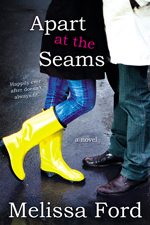
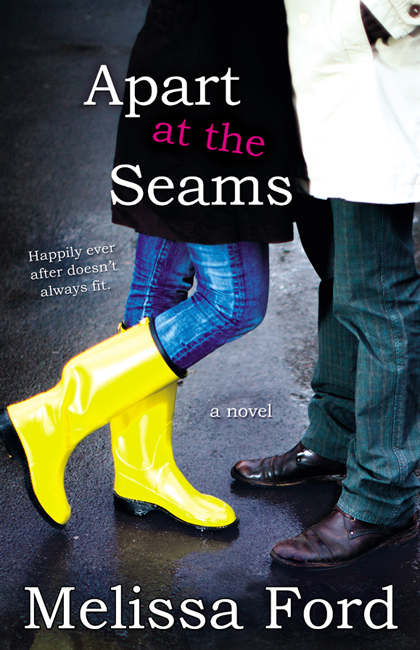
A lot of my favourite scenes from the first draft of Apart at the Seams ended up on the cutting room floor. I mean, whole characters ended up on the cutting room floor, so it’s no surprise that scenes ended up there too. I know Arthur Quiller-Couch gave the oft-quoted writing advice to kill your darlings, and I certainly follow it in my own work. I killed those scenes and characters for the greater good of the book.
But Quiller-Couch said nothing about digging up their corpses and throwing them up as a blog post from time to time. So… welcome to the skeletal remains of my darlings.
[Edited down a bit to take out the incredibly witty and astute tangential ideas that this… darling… contained. Opinions may entirely be my own.]
“Telling the truth doesn’t take balls. Hearing the truth takes balls,” Paul tells me. “So the situation we were debating was that you were alone in the house of someone you love deeply. It could be your house or your friend’s house or your parent’s house; your choice. You’re looking for something like a roll of Scotch tape, and you find a disc marked ‘Thoughts about…’ What is your name again?”
“Arianna,” I offer, taking the beer from Noah as he returns to his spot slightly behind me. I arrange my fingers on the label where his have recently been.
“So the disc says ‘Thoughts about Arianna.’ It’s clear from the way the disc is hidden that the person who made this disc – your loved one – never intended you to find this disc. So would you take it if you knew that it wouldn’t be missed? And moreover, would you listen to it?”
Before he’s finished the question, I am picturing Ethan’s handwriting scrawled across the disc. His messy lettering, the soft tip of his A, the excess of humps constructing the double Ns. What could he possibly say about me that could be more hurtful than describing me as an island with my arms figuratively rigid to keep everyone at bay? Or would he just harp on why he thinks I’m too scared to get married? Maybe it wouldn’t even be bad; it could be love poetry that he’s written about me, too shy to share it.
The conversation comes as a continuation of the truth serum dinner conversation that remained in the book. If you’ve read the scene with Gwen, this comes later at the party when Arianna is speaking with Paul. Who had a different job in the first version of this book. Just in case you’re a little confused.
I love this idea (and that’s why it hurt so much to kill it, and why I need to dig up its rotting corpse and prop it up here): would you listen to a CD marked “Thoughts about [Fill-in-your-name-here]?” Would you take it from the drawer if you knew you could get away with it? Would you leave it behind since the person clearly doesn’t intend for you to listen to it by the way the disc is hidden? Would you really want to know their honest, un-edited thoughts about you? Remember, this is someone you love deeply: your parents, your sibling, your partner.
Well, would you?
By the way, Apart at the Seams continues to roll out in more places. It’s in bookstores. It’s online at Amazon in e-book and paperback. It’s at Barnes and Noble in paperback, though not in Nook yet. Still waiting for iBooks and Kobo. But it is up on Goodreads if you want to mark it as being read… hint hint?
July 1, 2014 16 Comments
Mental Illness and Infertility
I read about the study in a few places this morning: researchers in Copenhagen had concluded that children born via IVF are 33% more likely to be diagnosed with mental illness either in childhood or adulthood. And lest you think that it is tied to IVF itself, the Telegraph (or researchers?) were careful to conclude that even though they only researched women who did IVF, they know that “It is not fertility procedures that are to blame but rather mothers who struggle to get pregnant are passing down faulty genes to their offspring.”
Though, in a moment of scientific paradox, the researcher also concluded in the very same article that “the study could not establish if the increased risk was associated to the mother’s infertility whether genetic or biological or to treatment.”
It’s magic!
It’s your fault.
But it’s not!
But it is!
I hesitate to ever comment on these sorts of studies or these sorts of articles because… they’re both somewhat worthless. (One more than the other.) The study itself obviously is just a starting ground, and until another study is conducted that looks at all children born to infertile women — those conceived via IVF, those conceived via other fertility treatments such as IUI, those conceived without assistance after several failed IVF cycles, etc — it perhaps isn’t worth reporting on at all outside of the fertility medical community.
Which brings us to the media coverage: it isn’t worth reporting on an incomplete study unless your sole purpose is to foment a community. I mean, how are these emphatic titles helpful to furthering our understanding of medical information?
- Children conceived through fertility treatment more likely to have mental health issues (Well, no, we don’t know if it is through treatments or if it is due to infertility itself, in which it’s possible that conceiving any method with infertility puts your child at greater risk)
- IVF babies face greater risk of mental illness (This one goes even farther to blame IVF itself. Despite leading with this sentence: “The results suggest the risk was related to the mother’s genes rather than any fertility treatments such as IVF, warning that genes which could cause psychiatric diseases may be more common in women with fertility problems.”)
- Children ‘at greater risk of mental illness’ if born to women with fertility problems, research claims (Well, no, research doesn’t claim that. The media claims that. Let’s attribute this correctly.)
It is difficult enough to get through infertility. It is difficult enough to get through a mental illness diagnosis in your child after infertility. Do we really need to compound the issue with shoddy reporting that is repeated ad nauseam across the Internet as people glom onto the sensationalized headlines?
Where is the study on how that affects the emotional health of infertile women?
but then it would follow if it was tied to the IF that all children, even IUI etc or those conceived naturally after 10 years would also be 33% more.
June 30, 2014 12 Comments