

Category — Uncategorized
Why We Need Diverse Voices
This post is about a game that contains references to baby loss. Click away if you’re not in a good mental space for that right now.
That opening gives you the warning I wish I had when I sat down to play a game over the weekend. I’m not going to name the game because this really isn’t about the game, and my point isn’t to shame the writers. My reaction was my reaction due to my life experiences.
I chose the game because it was listed as a horror mystery. Love horror, sort of fond of mystery, so it seemed like a good fit. The game came with a warning that it wasn’t suitable for children due to the nature of the content. Excellent — I am so grateful when people give you a heads up about their work.
I was about a minute into the game when I discovered that I was playing as an unborn fetus:
“Never been born? You mean that I’m dead?”
“I’m sorry, but the answer is yes … You have never lived a single day. You died while you were still in your mother’s womb.”
“And how did I die?”
“I don’t know, and in any case, I couldn’t tell you. Maybe an accident, or maybe your mother just didn’t have enough courage to let you come to life. I don’t know.”
“Oh, don’t be a fool, please. He knows what happened to you, girl. We both know. But we can’t tell.”
The point of the game is to go to earth and figure out how you died.
Once I was getting my beta number and my hCG was under 10 mlU/ml. I wrote down the number even though the nurse had already moved on to information for my next cycle. I remember scrunching down inside of myself and then scrunching down literally onto the floor because my body had a sudden need to get as low and small as possible to hold down everything welling up inside of me.
That’s how I felt sitting at the kitchen table, reading the words in the game.
I stopped the game to read a review — was it abortion, loss, or murder? It was murder, of course. I read a little more, using a walk-through because my heart wasn’t into the game. And then I finally closed it around the midway point. There was nothing wrong with the game itself — it was a horror/mystery as promised. But there was nothing in the voice that rang true to my experience with loss, and playing as an unborn fetus felt cheap. It was the sort of set-up only someone who had never lost a baby would use as a plot device.
This isn’t really a debate about whether or not you should write about something if you don’t have personal experience. I am a firm believer that people should write the story they want to write with the characters they want to bring to life. If they do it well, people will respond. If they do it poorly, well, people will respond, too.
But this is why we need games from women who have experienced loss; to counterbalance this poorly executed version. I continued playing this game because I wanted to see my experience come to life in a game; my experience reflected back at me. I didn’t find it, in the same way that billions of people don’t find their own experience in books or movies or games. It’s rare to find that verisimilitude when it doesn’t come from first-hand knowledge though I believe it can be created from very careful research.
I am grateful when infertile writers write infertility into their books. I am not quite as grateful when non-infertile writers drop infertility into their books as a plot device, especially when they only grab a cursory level of knowledge on the topic before writing. Replace “infertile” with any culture, race, gender, etc, and the same feeling holds.
We Need Diverse Books isn’t just a slogan; it’s a fact. People need to see their world come to life because reading and relating to characters and story is one way we process or understand complex emotions.
The other side of this is that the writers gave a content warning in regards to age. They knew that this wasn’t an appropriate game for a ten-year-old. But they didn’t know that this wasn’t an appropriate game for an infertile woman. They couldn’t, and I’m not blaming them for being clueless about this fact. I’m only pointing out how little they knew about loss when they decided to drop loss into their game as a plot device. The same holds true for any emotionally-charged topic — from rape to race relations. If you don’t know enough to know how it could emotionally affect another person, it probably isn’t being used well in the story.
I felt sad the rest of the night, and I woke up in the morning still feeling sad as I started my day. The game brought up all the feelings and memories from our chemical pregnancies, but gave me none of the catharsis of processing that loss since pregnancy loss was only brought up for the sake of the story. It was there to serve the plot; not the reader.
And that’s just it: Plots don’t have feelings. Readers/players do. Never mix that up.
March 8, 2017 14 Comments
The Waiting Game
Many years ago, there was an advice column where a person needed to buy a new bed. The question asker was single, and all she currently needed was a twin bed. But she reasoned that if she got a partner, she would want a queen-sized mattress. So was it better to spend the money and get the queen bed and be done with it, or buy the twin bed she needed in the moment, which made her feel as if she was resigning herself to being eternally single?
The advice columnist told her to get the twin bed. It was the bed she needed in this moment — that she could afford in this moment — and she should only make decisions based on what was happening in this moment. There were billions of what ifs people could use to make purchases, but none were a smart way of making spending decisions. The columnist promised that if life changed in a few months and she was moving in with someone, they could pool their resources and buy a queen bed and make the twin bed the guest bed. The right bed would be purchased at the right time.
Personally, I would have splurged on the queen bed. I hate shopping, and I would have wanted to get it over with once vs. risking having to go to the store twice.
But I digress.
I was thinking about the column because in Curtis Sittenfeld’s American Wife, the main character decides she will buy a house if she’s still unmarried at thirty. She writes, “Although I told no one, keeping this idea in the back of my mind provided reassurance; it made my life seem less like something I was waiting for and more like something I was planning” (p. 95).
I think everyone reading this understands why that thought resonated with me. When you’re going through infertility, it feels like life is something you’re waiting for, not planning. So you look for those places where you can make declarations, you can wrest back some control, you can be the one in the driver’s seat (even if you can’t drive where you really want to go).
I love that she looked for houses. It’s such a small thing, shifting her focus, but it made me care so deeply about the character.
Because we looked for houses when we couldn’t have a child. We looked for houses when we were going through treatments. I think about that when I sit in this space, having no clue whether or not we would ever reach those other goals so going for the one that was within our control.
I guess that’s why I always wanted the question asker in that advice column to buy the queen-sized bed. She can’t control whether she gets married, but she can control the size of her bed. I guess I just liked the idea of a person getting the bed their heart really wanted because of what it represented to her. The idea of taking a break from the waiting game and stretching out across a delicious new mattress.
March 7, 2017 14 Comments
Linus’s New Home
Josh decided that Linus needed a new cage. He has been using Truman’s old cage, which fit Truman’s personality. Truman was a pig that liked to know where I was at all times and not move very much.
Linus, on the other hand, likes to run. He likes to run and jump. He likes to land in his food dish and toss all the pieces of kale in the air. He likes to jump over the food dish and kick his little legs to the side like he’s in the ensemble of Newsies. Everything is exciting in his world, and he likes to make life a full body experience.
Josh was at work when the new cage arrived, but I opened it and let him check out the base. He looks so little in the vast space.
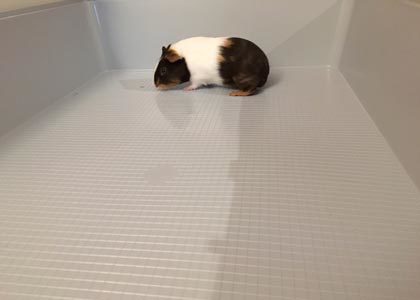
He licked the bottom and sniffed the sides.
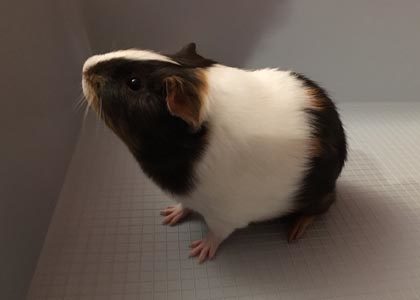
He thought about it long and hard…
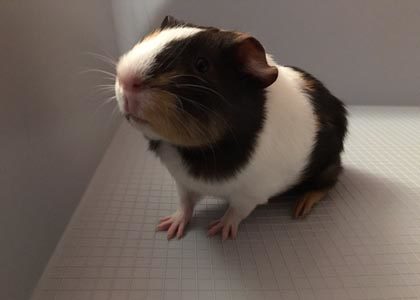
…and peeked out the top.
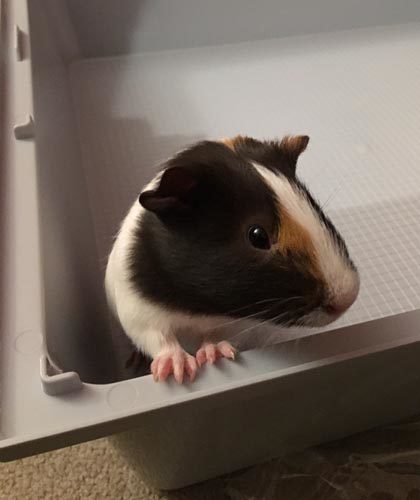
And finally he backed himself into a corner and peed to mark his territory. He was home.
March 5, 2017 8 Comments
Don’t Tilt
I listened to a podcast and read a piece in Slate on the same phenomenon: Tilt. Tilt is a poker term for “when players become overwhelmed by bad news and it starts clouding their decision-making.” It comes from pinball — when you tilt the machine, it stops working — and Annie Duke, the poker player, explained why it’s so prevalent in cards.
Poker is a place where you make a decision and see results from that decision pretty quickly. If things stop going your way, you start blaming the decision itself vs. the fact that you made a guess based on the information you had on-hand in the moment (and remembering that sometimes those guesses will yield good results and sometimes they won’t). You get emotional, and the worrying starts clouding your judgment.
Infertility has more in common with cards than it does with other decisions in life. While you may not find out the results instantly, you find them out comparatively quickly (within a few weeks or a few months), and then the next set of decisions steps up to the plate. This is true regardless of how you’re resolving your infertility — each path demands that you make decision after decision and experience the results.
Compare this to making a decision about what you’re going to eat for breakfast. You’re unlikely to see the results of that decision for decades, whether it buys you better health or clogs your arteries and gives you a heart attack. Whether to transfer two embryos or whether to have an omelette for breakfast are both decisions; only one reveals the outcome early on and the other one hides it for many years.
Annie Duke gives a simple thing you can do to break the sensation of tilt and return to the same mindset you had when you made the first decision — before everything started to go to shit. You ask yourself how you would feel about the moment if it had happened a year ago. Would you still remember the decision, or would it have become a forgotten disappointment in a larger sea of disappointments?
Reflecting on this, I can see how some of my negatives affected me differently than other negatives, even though I treated all the negatives the same way in the moment. I gambled in my cycle and I lost, so I was devastated. But looking back, I can see plenty of those negatives were actually still pretty good decisions even if they didn’t yield the ultimate desired result.
I made a decision with the information I knew in the moment, and remembered that is the best a person can do. They can’t have foresight and know definitively how things will turn out. They acknowledge their emotional capital and spend it accordingly. Doesn’t that make sense if you think about your emotional energy as a stack of poker chips and spend it depending on the hand you’re looking at in the moment? Because that’s all you have — the information in-hand. You can’t know the next card that will turn over except in terms of its probability.
So play the cards in your hand. Accept that you may win and you may lose. Don’t tilt.
March 1, 2017 6 Comments
Friendships and Fertility
This is how I saw the information first: Trying to maintain too many friendships can affect your fertility according to a study out of Oxford University. Robin Dunbar conducted the research, as in the Dunbar of Dunbar’s number fame that I’ve written about before.
But we haven’t gotten to the really interesting part. There was one study that followed 30 teenagers, but publications presented the study in two very different ways.
The Guardian, for example, focused on the ways men and women maintain friendships:
Men need to meet up face-to-face and bond over activities, according to the study of students leaving home for the first time, while for female friendships, long phone conversations can bridge the physical distance.
Whereas the Mirror focused on a very different finding from the study: your fertility. They even used the title to promise fertility to anyone who has five close friends (Women Can Boost Their Fertility “By Having a Core of Five Best Friends”).
Same study. Same 30 teenager participants. Same presentation of the research at a conference. Two vastly different articles.
I only found one other article about the presentation that straddled both facets of the study: The Telegraph. That publication started with the focus on how men and women maintain friendships and then continued with Dunbar’s statements on infertility.
(Yes, I’m aware that it sounds like he is emphatically blaming stress for all infertility, but let’s ignore that for a moment since I can’t find a transcript of the actual presentation.)
The idea of different outlets presenting the facts differently is nothing new; one only needs to turn on MSNBC and Fox News’s coverage of the same event to experience that. But what I found interesting is that instead of assigning meaning to a single quote or action, the news sources chose to focus on two very different aspects of the same study, basically leaving out the other side’s point in their coverage. In the Guardian’s world, infertility isn’t part of the study, and in the Mirror’s world, Dunbar wasn’t focusing on how men and women experience friendship.
The mainstream news sources solely presented or led with the information about friendships, and the tabloids clearly appealed to our fears by focusing on fertility. At this point, the media coverage is infinitely more interesting than the study itself, but if anyone tracks down a copy of the transcript from the presentation, I’d love to read it.
File this under Take Everything with a Grain of Salt.
February 26, 2017 3 Comments