

Posts from — October 2010
309th Friday Blog Roundup
Last night, the twins went to bed sobbing. The ChickieNob curled up like a comma in her bed, her back to me, and cried quietly into her pillow. Her brother tipped his head back, tears streaming down his face, wailing as if I had just told him that I was going to put all of his stuffed animals through the shredder. The source of their grief: bow-tie Mike, the Jeopardy champion.
Our friend rocked the buzzer all night, and we bounced up and down on my bed, cheering her on (shrieking loudest when she got what is Candide because it’s one of my favourite books). She went into the final question with an enormous pot of cash. She wagered it all — a gutsy move — and was felled by a manatee (curse you, manateeeeeeeeeeeeeeeeeeeeeeee. And seals tooooooooooooooo).
I was truly upset for her because it was such a frustrating loss, but I couldn’t even focus on that disappointment because the twins looked as if Alex Trebek had taken a dump on her scoreboard. And then their faces crumpled. And the closing credits song played to their heartfelt cries. I was trying not to laugh, but all I could think of was how terrible it was that my Flip video was downstairs because I would have loved to film it and send it to Alex Trebek.
All in all, it was incredibly cool to watch our friend on television. She was calm and cool and smart and quick. And she rocked that red top.
*******
The Weekly What If: what if you were holding a box with $10,000 inside. There were two boxes in front of you. One has a million dollars and one contains nothing. Would you switch your box holding $10,000 for one of the two boxes on the table? It’s Deal or No Deal … blog style. (I’ve actually never seen that show, so I’m not sure if this is exactly how the game is played, but I’ve often wondered how many people would trade something pretty damn good for the chance to win something fantastic with the possibility of losing it all. How many play it safe and how many go-big-or-go-home?)
*******
Something really cool happened. An autism blogger joined on for the last IComLeavWe because IComLeavWe is not only open to anyone in the blogosphere (blog writer or not), but that diversity is encouraged. She read through dozens of infertility blogs and learned more about our stories. And then she wrote about IComLeavWe and her post went up on the Autism Blogs Directory, where Kim and Kathleen are building a similar community to the ALI community amongst autism bloggers. And others said, “that is a damn fine idea to read more about their stories and hopefully they will learn more about ours.” And a bridge is born.
Autism Mom Rising writes,
Reading their blogs I felt empathy. Is that strange since I don’t share those fertility issues personally? Not really. These blogs house stories of struggle and actualization, from the joys of motherhood to the agony of child loss. I may be fertile but I know grief and loss. My child is still with me, but I did lose my son as I knew him. Of course, this is not the same as actually losing a child, but grief recognizes grief, no matter the degree or manifestation. Such loss splits the heart in a million pieces, then sends them out compassionately in all directions. ICLW week is electric. You can feel it in the air as people buzz from blog to blog leaving a little dose of positivity behind. My blog had so many wonderful new visitors.
And that’s exactly it. IComLeavWe is, of course, about comments (because blogging is a conversation). But it’s also about reading someone else’s story, really thinking about it, and then writing something intelligent back to them to let them know that their words haven’t disappeared into the ether. It’s about making a connection, building a bridge between your life experiences and an unknown situation. And I think it rocks that another community has shown up big time.
And now, the blogs…
Are We There Yet has a post about being pregnant after infertility. She is attending childbirth classes and still attending her infertility support group, feeling as if she knows too much to completely let go, but still has faith that things will work out. I love her final moment juxtaposing her own internal answer to the midwife’s question in yoga class.
The Young and the Infertile has a post exploring what it means to not be extraordinary by random societal measures. In discussing jealousy over reading about a recent recipient of a MacArthur grant, she writes, “He is very wise, Mr. X. He reminded me that the measure of my life is the love that it is in it and what I do to make me happy. Rex raspberried at that moment, probably to reinforce this. He’s right. As usual. Right, right and right. And I know that I am happy with who I am, whether or not I’m given $500,000 for being fabulous.” It’s a good reminder-of-a-post for all those comparative situations in life.
The Hardest Quest issues a challenge this week: “I need to try to get in touch with some of you who do mean a lot to me. And I challenge you to do the same. I challenge you to at least make the offer to three bloggers who have touched your life in some way. Make the offer to write a personal note to them (if they’re willing to give you a snail-mail address) and let them know how or why they have affected you.” It is a post about where her love of writing and her need for community meet. And it’s just a great post (and idea).
Lastly, Infertile Fantasies has a post about explaining pregnancy to her son that runs the gamut from cannibalism to babies inside boobs. Truly, you have to read it to understand. And laugh.
The roundup to the Roundup: Alex Trebek made my kids cry. Answer the Weekly What If. Welcome the autism community to IComLeavWe. And lots of great posts to read.
October 8, 2010 16 Comments
Smidgens
- My friend is on Jeopardy tonight, and I’m practically peeing in my pants with excitement over this fact.
- I know two people on television shows, and I find it very difficult to watch them because I can see them acting. I don’t know other actors, so I just imagine that their character’s personality is their personality. But seeing friends acting on television is a little like seeing the wires when someone is “flying.”
- I really want to see The Social Network and I’m not even into Facebook. What does that say if I’m more excited to see a movie about its creation than use the creation itself?
- I am on the fence about seeing Never Let Me Go. The book was so incredible that I can’t see how the movie will live up to the words. And beyond that, the book creeped me out and upset me so much that I wonder if it’s smart to go see it and put myself mentally there again.
- I’ve often wondered what ever became of Martha Plimpton, and the other day, I read in People magazine that she’s on a new show this fall. So now I know.
- I am beyond in love with the Sookie Stackhouse books. If you had told me a year or two ago that I would be reading vampire fiction, I would have told you that you’re crazy. I am just not a genre fiction sort. But Twilight is like a gateway book and now I’m into the harder stuff. Sookie Stackhouse is the harder stuff, right?
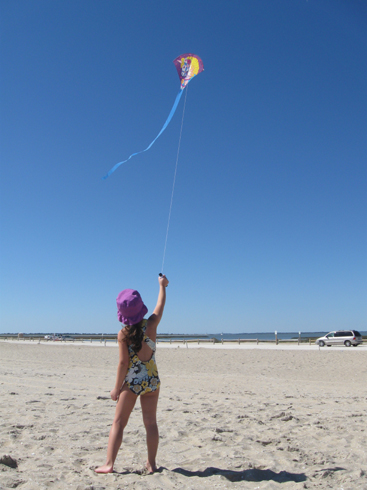
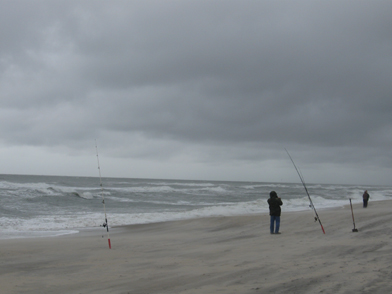
- We decided to up and go to the beach. Before we hit the hotel, we swung by this dive-y pizza spot that the kids love. While I went to the bathroom, this wonderfully creepy man came up to Josh and said, “what nationality is your wife?” I get this question a lot, but what made us giggle nervously over this one (and why Josh tweeted it) is that he asked it in a tone that suggested that he had a series of bodies in the trunk of his car and wanted to make sure that he wasn’t doubling up on one he had already collected. Imagine Spiccoli crossed with … well … Spiccoli as a mass murderer. Plus, he sat in the pizza place and kept raising his eyebrows at me, as if to say, “come on, we’re all friends here. Tell me your freakin’ nationality.”
- Two pictures from the beach. What a difference 24-hours can make.
October 7, 2010 20 Comments
Will a Nobel Prize Change the Way People View IVF?
The New York Times announced this week that Robert Edwards has been awarded the Nobel Prize in medicine due to his work in pioneering in-vitro fertilization (IVF). Patrick Steptoe, who worked with him on creating IVF (and was one of the pioneers of laparoscopic surgery), died and therefore was not included in this prize.
It seems like every year there is a “why now” question asked about a recipient of the prize. Last year, it was President Obama’s Nobel Prize for Peace, a huge statement made by the Nobel committee.
This year, it’s Edwards, with the honour coming long after the creation of IVF. 4 million children have been born due to the procedure, and the first IVF children have since had children of their own. It’s coming 22 years after Steptoe’s death, and frankly, with Edwards at 85-years-old, the committee could have missed the opportunity to honour a man who has created options that benefit infertile men and women.
Is it because IVF was extreme controversial when it was first created, and still continues to be so to this day — kicking off ethical debates such as using frozen embryos for research purposes or contributing to the idea of when life begins?
The New York Times also muses on why it took so long to award Edwards the prize:
The deliberations of the prize-giving committee at the Karolinksa Institute in Sweden are confidential, and it is unclear why it took so long to acknowledge Dr. Edwards’s achievement. The committee routinely ignores the stipulation in Alfred Nobel’s will that the prize should be awarded for a discovery made the preceding year, because it takes longer than that to evaluate most scientific claims, but delays of 30 years or more are unusual. The Lasker Foundation in New York, whose jurors often anticipate the Nobel Prize committee, awarded Dr. Edwards its prize in 2001.
Interestingly, Ian Wilmut, the Scottish scientist who cloned the first sheep, also hasn’t received a Nobel Prize for his work, despite the fact that he won the Shaw Prize (sometimes called the Nobel Prize of the East) in 2008.
Sometimes, the opposite occurs, with the recipient being controversial in nature. Fritz Haber won the prize in 1918 for his work in chemistry in synthesizing ammonia, which led to advances in explosives. He’s also known for his work in chemical warfare, and he contributed to the creation of poisonous gases used in war. While his discovery obviously had good effects (it is used in fertilizers), it also contributed to many human deaths.
Antonio Moniz was honoured for his work in pioneering lobotomies, a surgery that increased in prevalence after he was awarded the prize in 1949. Soon after receiving the prize, new therapies were found that did not sever the brain. On one hand, prior to those advances in oral therapies, lobotomy was the only option for treatment. On the other hand, it was a surgery that some say was over used without regard for the larger picture.
And if you ever wondered why some people believe cancer is contagious, you can look to the 1926 Nobel Prize winner for medicine, Johannes Fibiger, who won the award for discovering the Spiroptera carcinoma, a parasite he claimed caused cancer. Though his research was proved false by other scientists (tumours grew, but it wasn’t the parasite that was carcinogenic), Fibiger kept his prize and the honour continued to influence how people viewed cancer.
Which is a long way of saying that the Nobel Prize does matter. It changes the way the general public views an advancement in medicine, with the idea trickling down from the scientific community into the layperson world. The committee’s acceptance of an idea, the declaration that it should be honoured, carries weight. And it will be interesting to watch public opinion for the next few years following Edward’s prize. Will IVF become less controversial? Or will it still continue to garner headlines daily?
Cross posted with BlogHer.
October 5, 2010 28 Comments
Fear Sells, Thoughtfulness Smells
… a continuation from this post.
I am really not a fan of negative campaigning. If candidate Jim would do a great job in office, then he should spend his time explaining why he would do a great job in office. What turns me off (and I’d keep track of who does this and vote against them, except that everyone does this so it would be difficult to find anyone to give my vote) are those ominous voice-over ads that start with the creepy music while they show you a picture of candidate Suzy’s smiling face and then a voice says, “Suzy voted against the construction of a dog sanctuary, ensuring that thousands of dogs will be put to sleep each year.” The ad then switches to a picture of a puppy dog looking directly at the camera with a single tear rolling down his face and ends: “Vote Jim if you love puppies.”
So you say to yourself, “Smelly Melly, you do love puppies, and this Suzy woman sounds like a real bitch if she doesn’t care about dogs. You should vote for Jim.”
What the ad fails to mention is that Suzy voted against the dog sanctuary, instead using the funds to support an existing animal shelter. She saved the town a great deal of money, protected the animals, and used existing resources rather than put money in the back pocket of the builder who lobbied Jim to support his sanctuary building project. The ad uses big emotions — our love of puppies and our fears for their lives — and it takes a truth (Suzy voted against it) and twists it into a grey area by leaving out important additional information. It’s a truth, but without much truthfulness. And it sort of sucks when all the facts are revealed, and you realize how much your feelings were manipulated.
But we know negative campaigning works. So candidates keep using it.
Negative campaigning isn’t unique to politics. We see it in advertisements. Buy this brand because that brand sucks. Think about the popular Apple commercials showing the conversation between the Mac (Justin Long) and the PC (John Hodgeman). The PC is always flailing about or failing for some reason or another — so the Mac looks damn good in comparison as he usually just stands there with his hands in his pockets.
My feeling has always been that if the Mac is a superior product, Apple should be able to tell me why they rock or how they’ll make my life easier or how it will benefit my work, and that argument should stand on its own. They may need to compare themselves to a PC to show the difference, but comparisons are not always negative. Sometimes, they’re simply neutral. For instance, Apple does this with their current iPad commercials, showing us how this computer is unlike any other computer out there, and they do it without putting down any other computer in the process.
Neutral comparisons can be very helpful, and if I were in charge of the breastfeeding campaign, I’d write the slogan as “Breast First.” Meaning, if it’s possible, aim to breastfeed before you consider other choices. It doesn’t make commentary on the other choices, painting one the best and all others second-rate. We live in a nuanced world where we know that when it comes to choices, first isn’t always the best. I’m not married to the first boy I dated, I’m not still doing the first job I took, and I certainly didn’t use my first choice in family building. (Though I did use my personal best choice. Which won’t be the best for everyone else, therefore, I’d never declare it to be so.)
But we’ve seen through the effects of negative political campaigning and negative advertising that running a clean campaign isn’t as effective. People don’t respond to information about what’s good unless the fire is lit under their ass with what is bad. Got to have a bad guy if you want the world to rally behind you. So my “Breast First” campaign will never have the same fire as “Breast is Best.” It may serve to be less divisive by not ranking options, but like Jon Stewart’s rally (Rally to Restore Sanity) vs. Stephen Colbert’s (Keep Fear Alive), the fact remains that fear, dislike, and anger carry things a lot farther than comfort and kindness.
Which brings us to final point when we look at campaigning of any type from politics to brands. All use forms of manipulation, which means to “handle or control in a skillful manner.” Manipulation has negative connotations, but it’s not always bad. A ceramic artist manipulates clay. Parents manipulate their children towards good behaviour. And some campaigning manipulates us towards a good choice.
But it does become dangerous when someone else is deciding what constitutes a good choice for you without knowing your specific circumstances. Especially when — like negative campaigning — they’re appealing so deeply to your emotions, playing up your greatest fears. (I think Catherine Morgan did a good job explaining this in her post on flu vaccines.) But is preying on your fears always a bad thing if it brings you towards a good choice?
I tried to come up with a grey example, and this was the best I could do. Is it positive or harmful manipulation? And do the ends justify the means?*:
A woman has gone through four IVF cycles with her RE. Her diagnosis is still unexplained. She has a good response to stims, creates a decent amount of embryos, and has gotten to transfer twice. Both times, the embryos didn’t take. She is 41.
She meets with the RE before her next cycle, and he admits that it’s baffling. He’s frankly a little frustrated because on the surface, this seemed like an easy case, but something undiagnosable must be happening. He really doesn’t want this woman to suffer needlessly — he is a kind doctor — so he suggests that she move to donor eggs.
The woman listens to about half of his thoughts before she interrupts and tells him that she wants to continue to use her gametes and she says the reason she wants to use her gametes is that it would make her parents happy. The doctor, now cranky because the woman has rejected the careful arguments he was making for her own good — to save her heartache and money — now turns up the volume, using statistics that will support his case, and ignoring the few cases he can think of that negate his case. He argues so passionately, that by the end of the appointment, the woman has tearfully decided to proceed with donor eggs rather than do another cycle with her gametes.
I could play both sides, argue that this is positive manipulation: the doctor is trying to save her heartache and money because statistically, it is more likely that she will conceive with donor gametes and he knows it’s a child she wants. If he tells her about those four miracle cases he also knows about, she’s going to focus on the four miracle cases and not the bigger picture which is that donor gametes is a better road for her. He believes that she isn’t making sound choices for herself.
But it’s also clearly also negative manipulation: the woman knows what she wants and he bulldozes over her feelings in order to “help” her. He doesn’t give her all the facts and allow her to make her own decisions or even be a true player in her own treatment. If she wants to focus on having a miracle, that’s her right. There may be reasons the doctor cannot begin to fathom for why she’d want one path over another — she has shared but one, and only the patient knows the full picture about her life.
What do you think? Is it more positive or negative manipulation?
Would you be okay being nudged in one direction if that nudge was in a good direction, even if the facts were withheld or misquoted to you?
Any time we try to influence another person — and we do it every second of the day — we are performing manipulation. But just to be clear, I am differentiating between that positive, greyish manipulation in the example and the negative manipulation of that first example of the attack campaign ads. I think most of us would say that we don’t stand behind the latter, becoming cranky when the truth is twisted so deeply that it doesn’t resemble facts anymore. That is the type of comment I would hold for approval, asking for a link that supports the statements made.
But thinking about that situation made me wonder how I feel about the former, that really grey area that comes from a good place, though may do damage simply because your life is being influenced by people who don’t know your personal circumstances? I don’t think there is one clear answer.
* This is an example I created. In other words, if you are seeing yourself in this example, step back — it isn’t grounded in reality at all and you shouldn’t use it to make any decisions about your own life.
October 4, 2010 15 Comments
Missive
Last week, I went to get the mail and I read the return address on an envelope as I pulled it out of the box. “Oh, it’s a letter from Gil at The Hardest Quest,” I thought as I read the name.
Then I paused and said to myself, “that’s really strange because the letter is marked from New York, and not Canada.” And then upon further thought, Gil’s last name isn’t Murphy. The only Gillia.n M.urphy I “know” (as in, I am conscious of her existence, though we’ve never met) is the ABT dancer.
And that was the writer of the letter.
The ChickieNob and Wolvog wrote her a letter last year, enclosing a drawing they each did of her in Swan Lake. I forgot about it, never assuming that we’d hear back.
I wish I had thought to have out my video camera when I handed the letter to the ChickieNob right outside her kindergarten classroom. The look on her face could only be described as stunned bliss: this mixture of amazement that we live in a world where such extraordinary things can happen and happiness that her enormous love boomeranged back at her in the form of a letter exchange from her idol.
Seeing her reaction was a perfect moment. (Thank you for making me notice them, Lori. And Gil, I would have been equally excited to receive a note from you as I would a ballet dancer!)
If you could write anyone in the world and receive a letter back in return, who would it be?
October 3, 2010 17 Comments