

Posts from — October 2009
Mixing Awareness with Remembrance and Hopefully Getting Action
This was a hard post to write, and I walk a fine line of trying not to offend while needing perhaps to offend in order to make my point. Hopefully you will understand that my point is not to forgo what is already being done, but instead to add. To not be satisfied on this plateau, but to step up to the next one.
While at coffee this weekend with a group of highly intelligent, kick-ass women* including the author, M, I brought up the topic she raised in a post called “On Awareness,” relating the idea to Pregnancy and Infant Loss Remembrance Day which takes place each year on October 15th.
In 1988, Ronald Reagan declared October “Pregnancy and Infant Loss Awareness Month” and through the work of multiple individuals and organizations, October 15th has been set as a day of remembrance, with each person lighting a candle at 7 p.m. to burn for an hour, creating a wave of light that crosses the globe in memory of children who have died in utero or shortly after birth.
And I think the convergence of this day of remembrance occurring in this month of awareness has led to all sorts of problems. Namely, no one knows whether the day is there to raise awareness or if it is a community building event meant for group support, and while these two things are not mutually exclusive, without a concrete idea behind the act, I think those who have not made the day their own find themselves foundering a bit in the face of numerous posts that pop up in the blogosphere each October 15th.
I saw some gorgeous posts on the topic. The one that stands out in my mind was by Bagmomma, who points out the fact that “I’ve blogged on this day over the years, and each time I do… I feel emptiness reflecting back on such sorrow.” Like others, I lit a candle as I do every year, and spoke to the twins about infertility and loss. It is simply part of our family, a ritual and knowledge as established as eating matzah on Pesach or putting your shoes away when you walk in the house.
In some of the posts, people referred to it as a remembrance day and in others, people referred to it as an awareness day. Again, it goes back to the fact that the meaning behind the day isn’t exactly clear. Is it to let others know about our losses? To light the candle in secret? If we post about it on a blog, are we possibly educating another person? Or do we not want outsiders to read about it and ask about it?
Is it remembrance or awareness?
Which brings us to M’s post about awareness. M, a cancer survivor and infertile woman, starts out her post with a valid question about breast cancer awareness month: “is there anyone out there un-aware of the dangers?” And she ends with a frank question: “where is the line between “awareness” and simply “being an asshole?” Because how we talk about infertility and pregnancy loss does matter.
You will need to click over to read M’s article to understand her point about taking awareness in negative directions, but I wanted to examine an idea she broaches within her post. She links to an old Barbara Ehrenreich article (the author of Nickel and Dimed and more recently, Bright-Sided) called “Welcome to Cancerland” that dissects the help and harm provided by the breast cancer awareness movement.
M quotes one of Ehrenreich’s most jarring statements which is that the pink ribbons, three-day walks and collective breast cancer awareness activities makes “it, perversely, as a positive and enviable experience.”
I didn’t take this statement to mean that breast cancer in and of itself is enviable, but that the support is enviable.
It is enviable when you consider how much the general public is in the dark when it comes to infertility and pregnancy loss. Wouldn’t many more of us gladly and openly wear pomegranate strings if it would make other people approach discussions with empathy? If we could be open with employers about fertility treatments or adoption and be given time off to pursue them? If having the visual reminder worn on our wrist would help human resource teams choose insurance plans with infertility benefits or provide adoption benefits as a company? Wouldn’t you wear a visual reminder about your disease openly and frankly in exchange for accurate language and ideas conveyed in New York Times articles?
(The best quote of the coffee date came from Two Hot Mamas when I mentioned that the average person can comprehend the term transfer because we’re familiar with it via banking, whereas N quipped something along the lines of “you get breast implants and boom, boobies!” Because what does the general public know about the term implant beyond new breasts? They think just as people get new ta-tas once they slip in their implants, they get a baby once they throw back in that embryo with IVF. And it just doesn’t work that way.)
Pink made it okay to talk about breast cancer. Which is a good thing. It removes isolation and promotes understanding. Hopefully, awareness makes people think before they say hurtful things, makes employers more flexible, family and friends more supportive. At least, that’s what I hope because if that’s not the case, then there isn’t really a lot of point to awareness. Knowing the underlying causes to breast cancer and doing self-breast exams? I think the general public has that under their belts by now (and frankly, with too many people diagnosed yearly who are not engaging in high-risk behaviour and–beyond self-breast exams–tumours misdiagnosed by doctors, I don’t know if that sort of awareness is the best place to devote time and energy anymore).
M and Ehrenreich point out an uncomfortable fact: when pink is slapped on everything in the name of cancer awareness, it smells a bit of businesses using a disease in order to gain brand loyalty (believe me, once I learned about Barilla’s adoption benefits that not only provide financial coverage but also time off from work for family building, I have never bought another pasta. They grabbed my loyalty by having a company policy that speaks to what is important to me. And while there was nothing nefarious about this and only good, if Barilla started making a pomegranate pasta, promising to send part of the money to Resolve, well, it would make me feel a little bit yucky even though I like the idea of Resolve receiving the support). We feel good when we see that a make-up company has come out with a pink case. We pick the bag of pink M&Ms over the plain ones. We try to win a pink Dyson.
All of that feels a bit like awareness for awareness sake. Yes, money is usually given towards research and that is a good thing, but really, those companies could make the donation without involving us. In making things pink, they’re including us in the awareness side of it and taking credit for their good work.
But really, what is the point of that awareness if it doesn’t jog your memory about actual people in your life or your community? I mean, how many times have you seen a pink ribbon and thought of a useful call to action; as in, hey, right now, I could go bring dinner for my friend who has breast cancer? See, a small useful thing you could do tonight that would actively make a difference in another person’s life. That pink ribbon should be a reminder–that very real people have this disease and could use your time and capable hands.
It’s great to donate to large organizations that are helping fund cancer research, but what about reaching out to people in your community who are experiencing the disease? How many times have you reached out with help, sat down and lent a willing ear to hear a vent, run errands for them, asked how they are and wanted to hear the long answer, kept them company in chemotherapy? Giving money feels like we’ve done something. It makes us feel good, as if we’re fighting back against an entity–breast cancer. But figuratively sticking our hands into the mess by getting involved, looking cancer right in the face in someone we love? That is hard. That is really really damn hard.
Perhaps it comes down to the fact that infertility advocates shouldn’t repeat what breast cancer advocates have done in presenting the image of the shining, happy faces doing the Avon walk or the cuddly pink teddy bears. That we should eschew the cheering sisterhood for more of a tone of a friend sitting down next to you on the sofa, holding your hand and saying, “I have something really important I need to tell you.”
Because that image of women triumphantly crossing the finish line at the end of the Avon Walk for Breast Cancer doesn’t convey what breast cancer is actually like–that the majority of the time isn’t the glow of victory, but instead the cold fear of mortality. But would that grab the public’s attention, make them want to become aware? We are all suckers for the happy ending. We like to see the sick character become well by the end of the film and if they die, we want redemption to come for those still living.
When I complain about the media coverage out there, I often ask why they don’t do newspaper stories about the vast majority of us who experience infertility, go through a lot of shit, and build our family, without anything extraordinary happening? We devote pages and pages of newsprint to Nadya Suleman and the Savage’s botched embryo transfer and Kate Gosselin’s sextuplets. Where are the stories of the average family? The one who cried their way through treatments and exited out the other side with a singleton?
But when considering it through this lens, is that the awareness I really want put out there? The victory at the end of the finish line? Because that wasn’t really my infertility experience. It was only a small part. I want people to understand why I came to work looking like I had spent hours the night before lying on my bathroom floor crying. Well, it was because I had spent hours the night before lying on my bathroom floor crying (or, more accurately, I usually curled up in the dry bathtub). I want people to know that I became depressed. That I couldn’t escape it even for a few hours because cycles were happening in my body, that babies were everywhere outside my body. That infertility was humiliating and scary and painful and expensive and made me lose myself sometimes. And then there were the good sides too–the friendships and education and empowerment I felt the first time I gave myself an injection.
Awareness is not action. I can be aware that a car accident has just occurred without pulling over my own car to help the injured. Awareness is, for the most part, a very passive position of being educated with the focus being on the intake of ideas, not the output of action.
Therefore, I don’t want Infertility Awareness. I want some fucking Infertility Action. I want take-your-insensitive-coworker-to-the-clinic day. I want every American to receive the bills we received to build our family.
I don’t want more people to experience infertility or loss because frankly, 7.3 million Americans is an impossibly large number. That’s 1 in 8 people of child-bearing age. 12.5 % of the child-bearing age population. I don’t want people to experience what I experienced.
I just want them to have the same empathy towards my disease as they bring to other diseases out there. If they value their family, I want them to emotionally support me as I work to build mine. And just as they don’t pass judgment on one person’s usage of chemotherapy over another person’s usage of surgery to treat the same illness, I don’t want judgment passed over my decision to use one treatment over another nor do I want the input of outsiders such as “why don’t you just adopt” hurled my way. Because just as cancer treatment should be a decision made between a doctor and patient, infertility treatment should be a decision made between a doctor and patient and family building decisions should be made solely by the person or couple.
Unless, of course, we’d all love a little input from others as to how we should build our families?
I’m sure that next October 15th, I will light a candle again. It feels right to remember those who aren’t here right now. But I also hope there will be a little more Infertility Action next October. Still looking inward with remembrance. Still passive knowledge with awareness. But also more kicking infertility’s ass while bringing more empathy into this world with action.
The revolution may not be televised, but it hopefully will be blogged. Go out there and use your words for change.
Cross-posted with BlogHer.
*I went to coffee with Two Hot Mamas, A Little Sweetness, The Maybe Babies, Body Diaries by Lucy, and Currently-blogless-Audrey-who-will-hopefully-have-a-blog-soon. See, I told you, brilliant, kick-ass women.
October 20, 2009 26 Comments
The New York Times and Stephanie Saul: Infertility! Twins! Danger!
Getting beyond the fact that I usually start twitching when someone sends me something from the New York Times, all the more violently when the byline comes from Stephanie Saul who insists that it’s a good idea to use the wrong terminology when discussing fertility treatments, I couldn’t help but read the series of articles about multiple births and fertility treatments. Unlike others, I did not bother to click on the accompanying comments because I am familiar enough with the New York Times to know that nothing good can come of reading the opinions of people who see nothing wrong with the fact that their newspaper is wrongly using the term implant in regards to embryos.
You can’t argue with the meat of the articles, the first of which can be boiled down to the thesis that multiples increase the risk of prematurity, and therefore, protocols should be in place to discourage practices that would lead to a higher chance of multiples. A pretty sound idea. The second article covers the topic of selective reduction and how IUIs lead to higher order multiples because there is less control than IVF. Again, no one can dispute that fact. A third roundtable discussion covers again the problem with multiple births.
Of course these articles were of interest to me as a mother of twins who were conceived with the help of fertility treatments. They were delivered seven weeks prematurely when they stopped growing in-utero and there was deeply discordant growth. They spent three weeks in the NICU and have been generally healthy with some lingering problems of prematurity. Obviously, I’m one of the target audiences for these articles and you would think that I would have nodded my head a bit more since they do bring up tangentially ideas that I firmly believe.
But the problem begins with the fact that Saul never convinces me that she wants to hold a frank discussion, working together via journalism to solve the problem of multiple births and prematurity in regards to fertility treatments. Instead, the language used, the stories told, and the facts addressed all point to the fact that Saul never closely examines the solutions, instead choosing to only address the problems–and missing the point entirely in the process.
Instead of focusing on reasons why people would risk the transfer of multiple embryos, practicing sound journalism where she would interview numerous subjects and utilize their words to present the story, Saul jumps to conclusions: “patients are eager for children” and they want “to be successful on the first try.” But rather than state the real reason why women wouldn’t want to undergo more fertility treatments than necessary–money and physical pain–time is given as a factor.
Anyone who has paid out of pocket for a chance to conceive knows that there are two main reasons why people take risks with treatments and they are very closely aligned to the reason why people take risks with any medical treatment–especially one that is tied to quality of life. First and foremost, the exorbitant cost of treatments–mostly uncovered by insurance–goes towards a chance rather than a child. Few have the ability to do treatments until they work. Most need to take risks in order to feasibly pay the high price of family building (and for the love, before you suggest adoption, please first understand the cost of adoption and why it isn’t a solution to infertility but instead a wonderful, separate family building option).
Secondly, anyone who has been on the receiving end of a needle knows that you try to complete as few cycles as possible to conceive both due to the physical discomfort associated with treatments as well as the overall health risks that can come from doing treatments. There are times when the risks of prematurity and multiples balances out the risks of doing multiple treatments for both the woman’s mental and physical health.
Saul reveals her bias early on (as if she hasn’t already done so in the past with her other articles concerning infertility), calling it the “fertility industry,” a term used by others to greater impact because it is backed by ideas rather than used unsupported as a slur. We don’t call it the cancer industry, implying that people are being churned through like cans of creamed corn or automobile parts. We don’t imply that people are being moved through the medical factories mindlessly like just another object if they treat a health issue such as breast cancer. We don’t call it the obstetric industry even though we all know the statistics on unnecessary c-sections. The term is as paternalistic as the practices the terms evokes, as if women and men do not have the mental capacity to think for themselves and be careful health consumers.
One of the real financial problems of infertility and prematurity was barely addressed at all in the articles and it serves as the white elephant in the room: if insurance companies covered the cost of treatments, they would save on the back-end in the cost of NICU stays. You would get more people to accept eSET (elective single embryo transfer) or to cancel IUI cycles when too many follicles are made if they knew that they had another chance financial-wise to cycle again.
This has long been the point made by Resolve, the national infertility organization aimed at providing infertility education, lobbying lawmakers, and extending support to those experiencing infertility. It’s an organization that has been working hard for actual change as America reexamines health care, lobbying lawmakers for support of two bills that would require insurance companies to cover fertility treatments. In other words, it is asking America to put their money where their mouth is–either we value the health of women and children and want them to make sound decisions about family building or we don’t. Either we believe that family building is an important endeavour or we don’t.
It is a bit disturbing that an organization that has been at the forefront of infertility education wasn’t quoted in the article. She refers to the fertility industry, yet never ventures outside of a small circle of “factory owners” to broach those who would receive no financial gain or loss by having changes to treatment protocols.
And for the love, it is a fertility doctor–Robert Stillman–who brings actual sense to this discussion with his participation in the treatment roundtable, giving concrete steps one could take to solve the problem rather than stand in the wings like Stephanie Saul, starting the horror movie music in the background as she writes such fear-inducing lines such as “an exploration of the fertility industry reveals that the success comes with a price.”
She takes extreme examples–a woman with two follicles that split into sextuplets (seriously, Saul, I thought I was going to go into convulsions from your misuse of implant and transfer, but when you stated that the doctor saw “two developing eggs” on the ultrasound screen, I think I literally started foaming at the mouth)–a situation that the doctor had never seen in 30 years of practice–and hold it up as your IUI example. It would be like examining IVF solely through the lens of Nadya Suleman–which…er…I forgot…you already did that a few months ago.
Saul’s sole mention of the solution is buried towards the bottom of the first article: create programs that make it financially feasible to perform single embryo transfers. And instead of exploring that option in the second article, Saul chooses to wax on about the dangers of IUI, instead pointing out how much more controlled IVF is (and it is, but that never was made clear in Saul’s first article) in terms of limiting multiples. She gives solutions short-shrift. Which makes me question the point of these articles. Is it to raise questions that require answers? Push society to examine where we place family building on our emotional continuum? Seek solutions to what she deems a pressing enough problem to warrant multiple articles?
At the end of the day, it comes down to money and overall health–physically and emotionally. Make treatments financially feasible and people would make different decisions. Create programs where embryo freezing is free for those who elect to transfer one embryo and you’d have more people take advantage of the program. Make future transfers free as well and you’d have incentive to lean towards eSET over multiple embryos, especially when drug intake in future cycles can be curbed.
When I taught eighth grade and my students would negate their own thesis within the paper, I would circle the sloppy writing and point out the mistake and send back the assignment to be rewritten. And it sort of sucks that I’m not Stephanie Saul’s teacher because I would have given her a second chance to make a strong case. And as is, the New York Times again is the proprietor of what essentially amounts to verbal Wonder Bread–no substance, no mental nutrition, and mostly air taking up valuable space that could have been filled with useful argument.
Cross-posted at BlogHer
October 19, 2009 62 Comments
The TSA Took Her Child…Or Maybe Not…But the Point…
Updated at the bottom
My normal reaction when I see self-created drama unfolding is to walk away. And yet, here I am, two posts in one day on a situation that is wrought with self-created drama. And it’s because I think there is a nugget of something very important at the heart of this. The concept of using a blog as a weapon.
The blogger has since issued an apology of sorts, offering answers to questions people raised, though inviting more questions in the process and still making some pretty heavy accusations. At the end of the day, like other situations that have occurred with blogs in our community, it comes down to each reader choosing what they believe. Either you think the blogger is telling the truth or you don’t, and while we usually believe the blogger when they admit their lies such as the case of Little April Rose, it rarely seems to work the other way around.
The additional problem here is that she is publicly making some huge accusations about the conduct of the TSA–from taking her child to editing video–and she will need to back them up if they come knocking on her door. Which comes to the point I really want to make:
Blogs are not weapons nor should they be used as such.
What bothered me the most about this story–beyond having to slog through so many retweets about it–is how she spoke about the incident on Twitter:
- needless to say, today has been hell… but TSA will be ripped a new asshole thanks to freelance writing.
- no lie. i am writing up every MINUTE that took place of them separating me from my child, without me even seeing him and publishing it.
- srsly? i was just goina go all written on them with “the people” that i know.
- full story can’t be posted on my blog…. publishers want it.
- i’m not posting shit. i’m writing a piece to be published much more widespread than my blog that get 6 hits.
- fuck the letters. my voice is stronger if it goes public. it was HORRIFIC.
- eh, i can put it on my blog, but get paid if someone picks up my story… MWUAHAHAHA…. pay me for my insanity!!!!
- dunno if i’m goina blog about it… may pitch it to publications and go waaaay out with it. i dunno yet.
- cuz i leave for the west coast sat morn at 6 am but want to raise fuckin hell by then.
- thank you love. i appreciate the RTs. will write a post when i am a little more stable. and yeah, they fucked with the wrong mom.
- BIGGER…. i’m writing a post and titling it “TSA TOOK MY SON” so everyone who googles TSA will find it.
And that is what bothers me enough to write about this a second time. Because while it may feel really good to think in your head about the power of the written word when you are being knocked down by an organization or business, it is not a sound idea to put that concept into action, using the blog essentially like a whip to beat down another person, place, or thing.
We are accountable for what we place on the Web. And when we levy accusations or gush glowingly about another person, place, or thing, we better be willing to stand behind our words. In other words, once you start the ball game, you better be willing to stick around and see it through all the innings. You can’t throw out one pitch and then run.
That was one of the points of the FTC’s ruling on disclosure for bloggers doing reviews. It was the idea that people do take what they read online and run with it and we have a responsibility not to steer people towards an item we wouldn’t have paid for ourselves. And it works in both directions–don’t hurl insults or make accusations to punish an organization or business. In other words, don’t use your blog like a weapon or a fairy wand.
Use it as a personal space to express an opinion and share how you see the world. Use it to connect with others or gather support or spread information. But use your powers for good rather than evil.
At the end of the day, the impulse to write the post is just as important as the words on the screen. Are you writing in anger to vent (get out emotions) or are you writing in anger to punish? Are you writing glowingly to praise because you are truly tickled by something you found, or are you writing glowingly to praise because someone gave you a free item?
And frankly, based on her own quote: “eh, i can put it on my blog, but get paid if someone picks up my story… MWUAHAHAHA…. pay me for my insanity!!!!” I have a feeling that her post didn’t come from the right place. This wasn’t about educating the public, holding an organization accountable, or venting about a scary moment. This was about punishment, personal gain, the power of words to hurt another person after we’ve been hurt.
Update:
I stand strongly by my words that blogging–like any communication or interaction with other people–comes with responsibility. With “reality” television, the viewer knows that we’re looking at a heavily edited medium that is leading us to certain thoughts. And I think we come to the same understanding with blogs. We are not looking at raw footage of a life: we’re looking at an edited version of events in a life. And there is plenty of room for personal interpretation of events. Someone might report that someone yelled, and if I had heard the same words, would have said that they were said in a normal tone of voice. I think most of us read blogs taking those things into consideration.
But there is a difference between changing small facts to protect another person’s identity or changing that the sweater was green rather than red because that’s how you think you remember it, and creating an all-out-lie. When we watch reality television, we watch with an understanding that the events, however staged, took place. It would become fiction if they shot some footage of Kate from Jon and Kate against a blue screen and then set her in situations she was never in.
I think there is a social contract between reader and artist. And I think we hashed this discussion to the gills when the whole James Frey incident came out. If it’s fiction, mark it as fiction. If you present it as reality, people utilize the information learned in a different way.
My point with the FTC ruling is that it’s no better to use your blog to gush falsely than it is to use your blog to lie to harm another person, place, or thing–not that this blogger’s situation falls under the FTC guidelines.
October 17, 2009 28 Comments
What Do Balloon Boy, the TSA, and Little April Rose Have in Common?
It’s not really a good riddle.
Quick on the heels of having emotions jerked with the boy-who-was-in-a-balloon-except-he-wasn’t-in-the-balloon (and instead of getting the sigh-of-relief conclusion where we all find catharsis in the fact that the boy is safe, we are instead left questioning the motives of the parents), comes the TSA-took-my-child except they didn’t because the TSA posted the video.
And this is all on the heels of the Little April Rose scandal and who knows what else–it seems like these small implosions of stories are constantly burst all over the blogosphere like fireworks. Interesting to look at, but scary in the damage they could potentially do. Everyone has their own version of these explosions in their corner of the blogosphere and you probably know of some that have rocked your world that I haven’t heard about yet.
Some would say what’s the true harm–you’re emotionally jerked through a story, yes, and the other person receives attention, but no one was injured, nothing was taken, the story explodes and we all walk away shaking our head and it’s over.
Except it’s not over.
Because these incidents make us cynical. They–like a lit firework held in our hands–cause burns and once we’re burned, we’re pretty shy about holding the next story in our heart. I’m not saying that I’ll never watch the news or read a blog post again without my usual naive belief that people are good and tell the truth. But for a period of time after each of these explosions, I sometimes doubt other stories that pass my way, stories I wouldn’t have doubted at another time. I think in the ALI community, the Little April Rose scandal has made us sniff at every story, smelling for something bad before we trust that we can believe it. I think that the TSA story will have the same effect and people who could use support–not doubt–will not receive it due to the lies of others.
Which sort of sucks hardcore.
October 17, 2009 26 Comments
160th Friday Blog Roundup
I went this morning to renew my passport. It expired back in 2004 and the reason I didn’t renew it immediately is that I wanted to do it in person because I had changed my last name with marriage…well…the whole story is a balagan-of-a-reason and the punchline is that when I got to the office this morning, I didn’t need my marriage certificate at all. There had been absolutely no reason to let it go on as long as I did.
Which brings us to two thoughts: I have not been out of the country in five years, with the exception of Canada (the last time I went, you could still go over the border without your passport). I used to travel overseas at least once a year, sometimes multiple times a year. We even put travel as a condition in our tenaim. It’s just strange to think that if I live to be 100, I spent 5% of my life not fulfilling something I love to do. And I’m not sure I’ll be traveling much past 70, so there’s another 30% of my life. And I didn’t travel a lot as a child. So what I’m saying is that I’m in prime travel years and I’m not traveling.
The other thing is how naked I feel without my passport. This morning, I opened it to show the twins and went through some of the stamps. I know I still have the photographs and the journals here, but that particular book contained a lot of memories and I loved standing in line at the airport, looking at my stamps and remember where I’ve been.
My first trip with Josh, when he asked me in a cafe if I thought I wanted to marry him one day. Our spontaneous trip to Paris that we planned and executed in under 5 days. A trip to Ireland where I came in from the rain and ate Linda McCartney vegetarian sausages and milky tea on the floor by the heater. A month in Italy where we had a shower with a window in it. Trying to learn Catalan in Spain. A week in London where I convinced Josh to ask a shopkeeper on Portobello Road if he sold any bedknobs. Running away to Israel to avoid an ex-boyfriend. A trip to Canada after my first Follistim injection in a hotel in Buffalo, NY. Taking pictures in a graveyard at midnight in Oslo.
When I get my new book, it will be blank. The first clerk won’t know when he stamps it that I’ve been to a bunch of places. Isn’t that a strange idea? That you can become a clean slate in regards to travel every ten years.
*******
Weekly What If: What if in replacing your passport, they also wiped clean all of your travel memories? What place would you love to see with new eyes (as in erase bad memories from a past trip or get to experience something all over again for the first time)? Which trip would you be saddest to lose from your memory?
*******
Last night, we got into the house a few minutes past seven. The twins washed up and I set up a candle on the counter. They helped me light it and we went upstairs.

We kept losing power yesterday, including a few minutes after we lit the candle so it seemed extra fitting to have that established light. An hour or so after the twins were in bed, I heard a strange popping noise in the kitchen. It sounded like something plastic had fallen off the counter and onto the floor.
At first I couldn’t locate the source of the sound, but then I saw this:
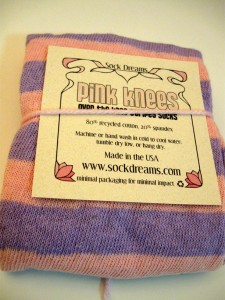
The heat from the candle had blown out part of the glass. I had used these candle holders numerous times in the past, so I’m not sure why this happened last night. Perhaps it was a sign.
*******
In happier news, I got two surprises in the mail last week. The first came from Jen who has started her own etsy. She made the Wolvog and ChickieNob t-shirts with their favourite things–iPods and ballet. Jen also sends the twins her old blackberries and cell phones therefore they already loved her hardcore. The shirts were just the icing on the cake:
I’m hiring her to make a special onesie for me through the etsy. Seriously high quality work–it’s gorgeous.
The other thing that came was from Nancy (who I owe a nice comment on this post and still have it saved in my Reader, not because I can’t think of something nice to say, but because I want to make it special). She sent me my own pair of roller derby socks!
I am pairing them with a little black jumper and black platform heels. I will take a picture once I’ve actually gotten myself dressed. Which is a fancy way of saying, “showered.”
*******
Newsy News:
A bunch of things came in quick succession so I thought it was worth repeating.
- The Blogger Bingo list closes over the weekend. The first clue will be up in that first section of the right sidebar on Monday. This is your last chance to sign up.
- The IComLeavWe list for October closes mid-week next week and commenting starts on Wednesday. Heads up if you wanted to sign up.
- Next book for book club is the Phantom Tollbooth. We wanted to keep it easy with all the holiday craziness coming up. Sign up if you want to participate.
- I’m going to be doing a bunch of Q&A’s at Fertility Authority next week.
- If you live in Philadelphia, Cherry Hill, Southern New Jersey…er…that whole area, I’m going to be reading at the Borders in Marlton, NJ on October 23rd (next Friday). I’d love to meet you if you live nearby!
*******
I also got to meet Christy last weekend:

If you’ve ever thought to yourself, “I bet Christy rocks,” you would be correct. She is funny and sassy and has an incredibly delicious son. I was so excited when I learned that she was going to be coming into town.
*******
And now, the blogs…
An Unwanted Path has a post about the word ineffectual. Fertility treatments aren’t working for her and she writes: “I hate wasting all that time, all that money, all that emotional energy, on something that just isn’t working- and yet we keep doing it. It makes me feel like I’m delusional at times, and I ask myself why I bother.” It’s a wistful post and I closed it, still thinking about the words for days after.
Still Passing Open Windows has a post about the economics of infertility. When she inquires about the price of a camera, she can’t help but put it in terms of a cycle cost, medication bills, donor gamete prices. And the post drives home the fact that when you buy something at the store, you pay for the product and when you spend your money on treatments, you pay for the chance.
A Real Life has a post about a setback in terms of her job and what she learned from the experience. She writes: “To put it mildly, my response was not appropriate for the situation I was facing.” I think what is most touching about this post is not just the honesty, but the enormous intelligence she brings to looking at her life.
Lastly, You Call Me a Bitch Like It’s a Bad Thing has a post about how she should have been 12 weeks pregnant. It is a simple, sad post about waiting rather than being in action. I just thought it was well-written and moving.
The roundup to the Roundup: Bye-bye old passport. Answer the Weekly What If. Cool things came in the mail and in person. Lots of projects coming to a close or starting up–depending on how you look at it. And great blogs to read.
October 16, 2009 22 Comments