

Posts from — August 2010
Graduation
I wrote this a while back and didn’t feel the need to post it until now…
The Wolvog and ChickieNob have graduated from nursery school. It is, like most milestones, bittersweet. None of us have dealt with it well, instead bumping along the edges of that grief, feeling our way through the dark. There have been a lot of tears already. I’m sure there will be more at the end of summer too.
My son and I experienced our grief in the same way–with tears and sleeplessness. He cried on graduation day morning, continued at school, and ended up in the rocking chair with me after school, his body shaking from the sobs.
The night before, he came into our room at 12:30 pm and placed his head on Josh’s side of the bed. When we asked him why he was there, he simply said, “I’m tired.” I asked if he wanted me to take him back to bed and he wobbled out of the room with me, climbing back beneath his blanket and falling asleep again.
He woke up grieving time.
There was a point that afternoon, a few hours after graduation, when he asked me if I missed the time when he fit in the palm of my hand. He held out his tiny hand to demonstrate this idea, marveling at the few inches between wrist and elbow where he once fit on my arm. And I admitted that while I missed his babyhood, missed even the way his damn soy formula smelled when it came back up (because it always came back up), I didn’t miss feeling that scared.
When he was that tiny, everything felt so fraught. Leaving him to sleep in his room? What if the heart monitor didn’t go off and he died before morning? How could I leave him with another person if they didn’t know infant CPR? I couldn’t believe when I held his two pound body that he would ever grow into the boy he is today, dancing on stage with his sister and fellow classmates to the same songs I sang when I was a child.
I have so many different fears now. It feels horrible to have someone grow apart from you–as if my heart muscle is literally being torn from my chest. And it is also a wonderful pain to observe someone you love discover the world. And they need to walk away from your sometimes in order to do that.
I held it together for most of graduation day. There was advice I was given at the wedding to step back with Josh and observe the reception from a corner of the room, taking in the enormity of the moment because it’s too easy to race through the day and realize you remembered nothing. I remembered Josh and I sliding back to a corner of the room, holding hands, giddily looking at our friends and family dancing to music from Hedwig and the Angry Inch.
So I did this on graduation day (sans the Hedwig soundtrack). I ducked into a nook and watched all the kids running around outside. It was raining, but they took the kids outside for a beach party. They were throwing water balloons and standing under the sprinkler and shrieking and running and jumping. And I just stood there and observed the moment. My kids are so wonderful. Their friends are wonderful too and the way these tiny preschoolers interact, like mini adults. They love so deeply and they don’t even have the ability to understand that yet.
In between the party and pick-up, I gave them a half hour alone with their friends and I went to my car to call my own best friend and cry into the phone. I didn’t even need her to speak and she didn’t try to make it better. She just listened to me cry without words, a deep rooted grief which began with the twins and ended with future children who aren’t coming. I may never go through this again. I just held my hand over my face and cried. And after a half hour of headache-inducing tears, I cleaned up and went back to their classroom to deal with my son’s half-hour goodbye. He couldn’t leave the room, couldn’t leave his teachers. He was so incredibly sad, stood in the hallway and cried inconsolably.
The ChickieNob turned inward, spending a large portion of the afternoon working on an art project by herself while I cleaned. We all did our own personal stress-relievers. The Wolvog curled up in the rocking chair with me, the ChickieNob worked on an intricate art project (a paper vampire that she named Scoobee), and I cleaned, throwing away piles of papers, old receipts, expired coupons.
We have this summer. And after this summer, they will start kindergarten. And I will have to learn how to untangle myself a bit more because there is no other option. As Elizabeth Stone famously said, “Making the decision to have a child is momentous. It is to decide forever to have your heart go walking around outside your body.” I made this choice to let my heart go walking apart from me; I knew what I signed up for. I just didn’t know that it would make me so enormously sad; so enormously sad and so enormously joyful at the same time.
August 23, 2010 36 Comments
DIY MFA: What Happens Next — Wrap Up (Part Eleven)

Welcome back to your Do-it-Yourself MFA program.
We’re now at the end of the journey — the book is in hand, the readings are set-up, the reviews are pouring in … so what happens next?
Well, first of all, I think we need to examine where you are emotionally. Anne Lamott described it best in Bird by Bird, and if you haven’t yet read her book, this will be the perfect receptacle for all of the anxiety that accompanies the release of a book.
I believed, before I sold my first book, that publication would be instantly and automatically gratifying, an affirming and romantic experience, a Hallmark commercial where one runs and leaps in slow motion across a meadow filled with wildflowers into the arms of acclaim and self esteem.
This did not happen for me.
It didn’t really happen for me either. Which is not to say that there weren’t exciting moments; happy moments that came close to Hallmark-land. For instance, the first time I held the galleys, the first time I held the finished book, the first time someone read it and told me they liked it, the first review to go up on Amazon. All of these were huge happy moments.
But in between, there was self-doubt and jealousy and anxiety and frustration. You wonder if you chose the best words for that paragraph and wish you could still pick at the manuscript. You’re jealous of other writers and what you perceive to be their easy success (after talking to them, you realize that they too are going through the same emotions as you, so “easy success” becomes more myth than reality.) You worry that no one will read the book. You’re frustrated with the pace — it’s race, race, race, wait.
Hopefully, knowing that everyone else is going through those same emotions will help you be able to set them aside for the moment and savour the happy parts of the experience. Because if you don’t, you may miss the fact that this is a very happy experience too — a nerve-wracking one where you never feel as if you are doing “enough” or getting “enough,” but happy nonetheless.
And you wouldn’t trade having a traditionally published book for the world.
You’re also probably wondering what happens next, I mean, after the book signing parties and interviews and readings and reviews peter out. Because traditional publishing is a bit like a drug. You want to quit — book writing feels so good, but publishing makes you feel terrible — yet you can’t because you’re also addicted to the book publishing highs. I mean, there is someone out there who thought your writing was good enough that they were willing to make an investment in it. And then there are people — not even people who know you at all — who are willing to buy your book and read it. And those highs are what make you wrack your brain for the next book project.
Something you should know before you dive into the next book is that you probably have a ROFR or Right of First Refusal written into your book contract. This means that your publisher has the right to see your next project before anyone else and decide whether or not to purchase it. Even if you have a fantastic ROFR that says that you can show your next project to your publisher two days after you turn in your final manuscript, you are probably going to see a large lag time between when you can start working on your next project and when you should.
Publishers are going to want to wait and see how the first book does with sales. Unless you already have a multi-book contract, they are not going to want to see your next idea for a bit unless there has already been incredible pre-sale buzz for your book. So you may find that there are years between when you turn in the manuscript for your non-fiction book and when you should aim to turn in the next book non-fiction book proposal to that publisher (and yes, baring a terrible working relationship, you do usually want to remain with the same publisher if you had a decent deal the first time around. There is a lot to be gained from an ongoing publisher-writer relationship).
So what do you do with yourself in the meantime?
You can always go a different route and try your hand at a different piece of writing. For instance, if your last book was non-fiction, you can fill the gap with a fiction book at a different publisher (which is the route I took). You can write freelance articles, directing traffic to your published book (and you should do this regardless). You can take the time off to really savour and reflect on your first publishing experience. Or you can race ahead with the next proposal and tuck it away so the second your agent tells you that it’s okay to shop it, it’s ready to send out.
Now that you’re an author, you’re going to field two kinds of requests — ones that help you while helping someone else, and ones that only help someone else. Let’s examine both kinds:
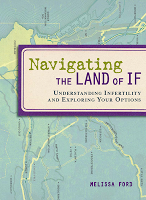
- Interviews Requests: you are going to get requests for quotes or interviews from journalists, and I recommend that you help them for two reasons. (1) It helps get information about your book out there, even if it’s simply a line such as, ” … says Melissa Ford, author of Navigating the Land of If.” (2) They are a writer just like you, and it is karmically good to help another writer with their project.
- Book Blurbs or Book Reviews: you are going to be asked to blurb books or review someone else’s book, and I recommend that you do it. This helps the other author a lot more than it helps you, and it is a big time commitment, but it is difficult to get book blurbs and reviews. Hopefully, what goes around will come around again when it comes to your next project. This is about supporting a fellow author.
- Agent Introductions: you will probably be asked to introduce people to your agent. Sometimes, you’ll be excited to pass along a good find to your agent because it helps both your friend and the agent. Sometimes, you won’t know the person doing the asking, but their project will sound so interesting, that it’s probably worth your time to pass the introduction along. I’ve never been asked by a complete stranger to vouch for them, but if this was an ongoing situation, I would probably put up a statement on my website explaining why I don’t do this. I love my agent and would hate to abuse her time by becoming a human slushpile. So, for anyone reading this who was considering asking a stranger to recommend them to the writer’s agent, please rethink that. People you know = okay to ask. People you’ve never met or even emailed with = please don’t go there.
Hopefully, you’ve gotten to the end of this series and haven’t been scared away from the world of publishing. I think it’s always best to enter with your eyes open and realize that there is a HUGE difference between book writing and book publishing. Again, Anne Lamott said it perfectly in Bird by Bird:
I just try to warn people who hope to get published that publication is not all that it is cracked up to be. But writing is … It’s like discovering that while you thought you needed the tea ceremony for the caffeine, what you really needed was the tea ceremony. The act of writing turns out to be its own reward.
Writing is unbelievably wonderful, and I’ll always be grateful that I get to attempt to make a living doing something I love. But book writing has nothing in common with book publishing. They are two completely separate entities (hence why self-publishing has little in common with traditional publishing, and why self-publishing may be the best route for you if you love book writing, but can’t stand book publishing). I went into book publishing thinking it would be just as much fun and just as creative as the writing side of things, and it probably is for the editor or publisher. But for the author, it’s the hard work. It’s a struggle because it’s outside your expertise. You are a writer, after all, not a salesperson.
But you learn how to fit these other hats on your head because to return to the original point, there is no business like book business, to paraphrase Ethel Merman. There is nothing like getting that phone call from your agent that an offer is on the table. There is nothing like opening the envelope that holds your advance check. There is nothing like walking through a bookstore and seeing your book on the shelf. And that’s why you keep plugging away, even when you have a huge stack of rejections and you’re frustrated as all get out with the publishing industry. Because, unfortunately, if you want the highs, you also need to take the lows. You need to send out those query letters and edit that book opening and beg other writers for book blurbs. But I promise you, it’s worth it.
Okay class, any questions on what was discussed here or in any other section of this series? Please leave them in the comment section below and I will answer them in the comment section below. This is the last installment in this series, so consider it a free-for-all for any unanswered questions.
Heads Up and Looking Back: topics that will be covered in future installments or that were covered in past installments
1. Before You Even Get Started
2. Are You Ready to Be an Author?
3. How to Write a Non-Fiction Book Proposal
7. What Happens Next–Waiting for a Book Sale
8. Self-publishing and Self-representation
10. Be Your Own Publicist
11. THIS POST
August 22, 2010 4 Comments
302 Friday Blog Roundup
The Wolvog has his own email account, which came after much begging (it is only used for family and fictive kin). He needed it, you see, to set up his private blog — a space that he picks at every day, calling it his “work.” He writes music with Garage Band and then takes these crazy-ass pictures and combines them into these stop-action videos (he is very, very into gamelan at the moment). Sometimes, I don’t even know what I am looking at. He is entering kindergarten.

What is this?

How the Wolvog conceptualizes our kitchen
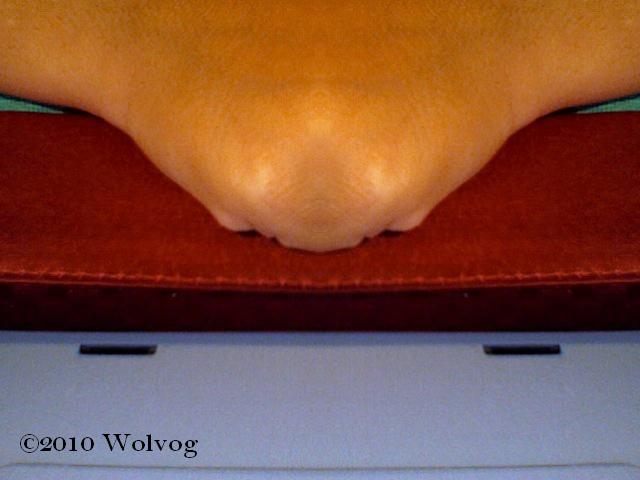
This picture made me queasy; as if I was looking at something out of a Margaret Atwood novel … oooh, so apropos.
The computer is set up so I can watch what he’s doing while I’m cooking, and this week, I was peering over his shoulder when I said, “are you in Daddy’s email account?” You see, down the left sidebar were a series of folders, much like Josh’s account, with all of them neatly titled from “personal” to “car.”
“I’m in my email,” he insisted.
I motioned to the sidebar and said, “what is that?”
“They’re my folders,” he explained. “‘Car’ is for when I receive an email that mentions a car. ‘Stories’ is for when someone tells me a good story. ‘Shoes’ is for when Grandma sends me an email telling me that she is going to make me try on shoes.”
But how did you do that?
The folders, with the first letter neatly capitalized, alphabetized for good measure — that is the child I always wanted to raise. I mean, creativity is well and good, but organization skills? Taking the time to capitalize the first letter and keep it consistent? That is love.
*******
The Weekly What If: would you rather be super creative, blowing people’s minds with your brilliant ideas, but be terribly disorganized, unable to find your keys or even your pants when you pull them down to pee — OR — would you rather be hyperorganized, always knowing where everything is, but leading a fairly straightforward, rational life?
*******
IComLeavWe begins this weekend on Saturday. I will be slow to add new people to the list over the weekend because we are going to be ensconced in some offline activities. Therefore, be patient. You will get on the list if you sign up before 11 p.m. EST on Saturday.
*******
And now, the blogs…
Tales of Rachel has a post called “Choice or Circumstance” that I thought was brilliant. She asks a tough question: is she infertile if she has a non-functioning uterus (and permanently impaired her fertility with tubal ligation in order to remove the chance of a pregnancy she should not attempt to carry) but never tried to have a child? She finds herself unable to relate to those who have chosen to be child-free, nor feels she belongs with those who have tried for years to get pregnant and have now resolved their infertility by living child-free. She writes: “I’m stuck somewhere between choice and circumstance. And wondering, really wondering, if anyone out there understands that feeling.”
Storm in my Tea Cup has a post about coping skills. She writes: “I need some coping skills. Perferably, ones that don’t involve 2 hour naps, lots of salt or anything chocolate covered.” It is just an honest, simple post.
Attempting to Love Life Without Her has a post about all the things she didn’t know before she lost her daughter. It is almost poetry, and you are lulled into a sigh by the ending. It’s really beautiful.
Lastly, HolyMoly Toledo(s) has a post about reaching out to a woman that she suspected had miscarried. You need to click over to read the whole post in order to understand, but it is about the small clues that only someone infertile would notice.
The roundup to the Roundup: email folders and trippy pictures. Answer the Weekly What If. IComLeavWe begins this weekend. And lots of great posts to read.
August 20, 2010 31 Comments
Elizabeth Carr and Conceiving “Normally”
I know that Elizabeth Carr (now Elizabeth Comeau), the first child conceived via IVF in America, is put off by the term “test tube baby” (rightfully so), but I take offense at the term “normal” from the headlines last week when she delivered her child. First IVF Baby Delivers a Normal Baby Boy. As if all children born via fertility treatments are abnormal. Alien. A freak show.
If he’s not “normal,” then he’s natural. He was conceived naturally as opposed to unnaturally. Or as, NPR reports,
She answers the big question pretty quickly. Little Trevor was conceived the old-fashioned way — no test tubes or Petri dishes required.
The general public is curious whether someone created in a petri dish can produce an offspring unassisted, perhaps secretly (or not so secretly) believing that when you fiddle that much with Mother Nature, you create someone akin to a mule. But it’s also the question echoing around in our hearts too: when we use fertility treatments to conceive, are we also risking passing along our infertility to our children?
There are other genes I’m not terribly eager to pass along to my kids — a risk for diseases and conditions that frankly suck — but my biggest fear, as a woman with high FSH, clotting factors, and a LPD, is that I will pass along these conditions to my daughter. And it is not because it is a pain-in-the-ass to engage in assisted conception –that is the smallest part of the matter — but the emotions that accompany needing assisted conception. I know that for some, they are simply amazed and grateful that this science exists and they can utilize it. But I experienced a very different emotional landscape, and I’d rather my daughter never curl up on the bathroom floor and sob as her period begins.
As the first IVF generation comes of age and begins having children, I think we’re all watching with our collective breath held. Will they need fertility treatments to conceive? Will they also experience infertility? Or is it simply a fluke of the individual, not something we necessarily pass along if we manage to circumvent the issue with treatments?
Elizabeth Comeau beat the media by releasing her own story via the Boston Globe. Which strangely enough, despite her feelings about the term, still used the headline: “First Test Tube Baby Gives Birth.”
And just as we have fears that our children will also be infertile, repeat our horrible experiences, Comeau holds up her child as proof of her commonality with non-IVF children, taking the inverse of our moment when she states:
However, I had a normal conception and pregnancy despite my abnormal childhood. And early yesterday, my husband and I had a baby boy “the normal way,’’ proving (I hope) that I’m just like everyone else.
We want the same thing: to have our children be just like everyone else. And they, in turn, want to be just like everyone else. Our reasons may diverge — the mother who doesn’t want her daughter to experience the darkness she experienced in trying to conceive her vs. the daughter who simply wants to be viewed undifferentiated from a sea of children — but in the end, we stand on exactly the same ground, which, to me, is a chasm apart from why the general public follows this story. It isn’t about the freak show, the abnormal child, the unnatural.
It’s about very real, very human emotions.
Do you ever wonder if your children will inherit your infertility, in the same way my children will probably get our terrible eye sight that we’ve circumvented with glasses? Did it ever give you pause if you did (or are doing) fertility treatments, not knowing if in having a child, you would pass along the reason for your infertility?
August 18, 2010 53 Comments
Punk Rock Girls, Cabbies, and Ghost Strollers
Updated at the bottom
Yesterday, I was waiting outside for the library to open, sweating in the almost 100 degree air, and the twins were chattering on about things. We were standing next to a punk rock teenager who had no concept of personal space and kept sliding herself so our arms could rest against one another even though we were standing outside, in a somewhat infinite space, with only one or two other people. And did I mention that it was 100 degrees?
The punk rock girl kept laughing at everything the twins said; not the light snicker of a stranger overhearing a conversation about the best way to lure mermaids from the ocean, but a deep laugh that conjures tears to the person’s eyes. She kept saying, “they are so funny! They are just so damn funny!” and then appraising me with her eyes, looking me up and down from my grey hairs to my flip flops, as if wondering how a woman like me could parent such kick-ass amusing and sassy children like them.
I wanted to tuck my sweaty arm around her (our arms were already touching so it wouldn’t have been that big a deal to exchange a little more sweat) and said, “sweetie, once upon a time, I was just like you. I went to DC hardcore concerts and danced in the mosh pit and painted my nails black and wore blue lipstick. And this just might happen to you too — the nerdy jeans from LL Bean and the frizzy hair. Even little punk rock girls can turn into this down the line.”
But she was having such a good time listening to their musings about mermaids that I didn’t want to burst her little Manic Panic bubble.
*******
Because I am now old and grey, I decided to give in to my middle-agedness and take a cab when I got off the train in New York for the reading. Up until this point, I’ve always taken the subway, but this time, I went out to the cab stand and blew the ten bucks.
While stopped at a red light, the cab driver rolled down the window and had an excited conversation with the cab driver in the car next to ours; a series of excited exclamations in Amharic. He rolled back up the window as the car started again and apologized for the conversation.
“Why are you apologizing?” I asked.
“I didn’t mean to do that, but I was so excited to see him,” he explained. “I never see him, and suddenly he was right there at the red light.”
The cab driver informed me that this was unusual. That in a city as large as New York, while cab drivers knew other cab drivers, it was unlikely that two people would pull up to the same red light at the same time and get to have one of those moments. I witnessed something incredibly rare, something that only occurs (at least for this cab driver) once every few months.
It made my day perhaps as much as it made his.
*******
While I sat in Starbucks, waiting for my brother to be done with meetings so I could work in his office, Josh sent me an article from the New York Times about a ghost stroller.
Sometimes the passers-by look curious; sometimes they are distraught, concerned by the three plastic roses — peach, pink and red — tucked behind the straps, which give the stroller the distinct look of a memorial commemorating some grim accident … Who went to the effort of painting the stroller that uncomfortably chalky Mylanta white — taking a paint brush to the cup holder, the bag zipped in back, the mesh basket below, even the chain and padlock attaching it to the parking sign. People at the New York City Street Memorial Project, which installs most of the “ghost bikes” — white-painted bikes throughout the city that commemorate sites where cyclists have been killed — said they had no idea who had installed the stroller. And a police spokesman could find no record of a fatal car accident this summer in the area.
It’s impossible to read the article and not think of our blogs in the same vein — infertility blogs (especially loss blogs) as the white painted strollers of the Internet. The ones people would rather rush past without noticing, that make people wonder, that make people a tad uncomfortable.
This past weekend, we were with people who don’t know us at all and they questioned if twins run in the family. “No,” I said in the same matter-of-fact voice I always use, the same one I use to give directions to the nearest Starbucks or say hello to people at the food store. “The twins are the product of fertility treatments.”
The woman looked as if I had just taken an enormous dump on her plate of pasta and proclaimed it a meatball. She sputtered around for a moment and then said, “I see,” even though she wasn’t even looking at them or me anymore. And then she changed the subject.
I’ve never seen the stroller, but I’ll be in Park Slope tonight, and I’m going to take a pilgrimage out there if it isn’t a pain in the ass. Someone made it, someone placed it out there, it’s on someone else’s mind. The very least I can do is look at it. Abide with it. Learn something from it.
Update:
After dinner, we walked back to my brother’s apartment, crossing through 6th and Union. We searched all four street corners, walking down each block a bit, but the stroller was gone. A film crew was speaking outside the bar mentioned in the article. But that was the only hint that something had once been there.
When we got back to my brother’s apartment, he looked it up online and apparently, someone cut the padlock and threw the stroller in a dumpster on Monday night. A crossing guard saved the stroller and moved it in front of a school on Berkeley Place. We didn’t see it when we were walking around last night.
I know it’s silly, but I wanted to see it.
August 17, 2010 33 Comments